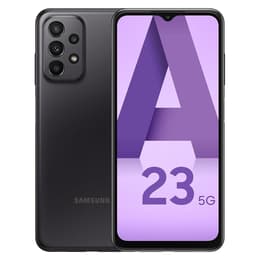
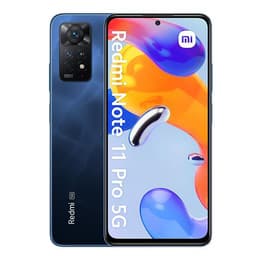


Galaxy A23 5G Vs Xiaomi Redmi Note 11 Pro 5G

Galaxy A23 5G
Galaxy A23 5G
Starting at

Refurbished price:102.00

Versus €600.00 new

See options
Xiaomi Redmi Note 11 Pro 5G
Starting at

Refurbished price:112.00

Versus €349.00 new

See options

Ratings

The Samsung Galaxy A23 5G, released in August 2022, and the Xiaomi Redmi Note 11 Pro 5G, launched in January 2022, are both smartphones designed to offer a balanced experience with 5G connectivity. While they share a similar core processor, their main differentiators lie in display technology, camera features, and battery charging capabilities. Both devices operate on the Android platform, with Samsung's One UI and Xiaomi's MIUI providing distinct user interfaces.

Scores

Durability

The practical lifespan of these devices is influenced by their release timeline and software support policies.

  • Release Timeline: The Redmi Note 11 Pro 5G was released in January 2022, making it slightly older than the Galaxy A23 5G, which launched in August 2022.
  • Software Longevity: The Galaxy A23 5G launched with Android 12 and is expected to receive two major OS upgrades and four years of security patches, potentially extending its secure and functional life. The Redmi Note 11 Pro 5G debuted with Android 11 and typically receives fewer major OS updates, though security patches are provided.
  • Physical Durability: Both phones feature Corning Gorilla Glass 5 on the front for screen protection. The Redmi Note 11 Pro 5G also includes an IP53 rating, offering a degree of dust and splash resistance, which can contribute to its resilience in everyday use. The Galaxy A23 5G lacks an official IP rating.
  • Repairability: The Samsung Galaxy A23 5G has a repairability score of 8.1 out of 10, indicating good ease of repair. The Xiaomi Redmi Note 11 Pro 5G also scores well with a repairability index of 8.75 out of 10, suggesting components like the battery and screen are accessible for servicing.

Year of Release

2022

2022

Compatible with latest Update

Yes

No

OS

Android

Android

Foldable

No

No

Performance

Both smartphones are equipped with a similar current-generation processor, providing comparable performance for daily tasks and 5G connectivity.

  • Daily Responsiveness: Both devices handle common applications, web browsing, and social media smoothly, offering a fluid user experience for typical daily usage.
  • Multitasking Capability: With similar RAM configurations available across their variants (6GB or 8GB), both phones manage multiple open applications effectively, allowing for smooth transitions between tasks.
  • Storage Options: Both devices offer 128GB of internal storage, with the option to expand via a microSD card, providing ample space for apps, photos, and media.
  • Battery Behavior: Both phones are powered by a 5,000mAh battery, generally providing a full day of use for most users. The Redmi Note 11 Pro 5G supports significantly faster 67W wired charging, allowing for quicker replenishment of its battery compared to the Galaxy A23 5G's 25W charging.

Memory (GB)

4 GB

8 GB

Screen quality

The display technology is a key area where these two smartphones offer different visual experiences.

  • Display Technology: The Redmi Note 11 Pro 5G features a Super AMOLED display, known for producing deep blacks, high contrast, and vibrant colors. In contrast, the Galaxy A23 5G utilizes a PLS LCD panel, which offers good color reproduction but typically has less contrast and brightness compared to AMOLED screens.
  • Resolution and Clarity: Both devices offer a Full HD+ resolution (2408x1080 pixels for A23 5G, 2400x1080 pixels for Redmi Note 11 Pro 5G), providing sharp and clear visuals for everyday viewing.
  • Refresh Rate: Both smartphones feature a 120Hz refresh rate, contributing to smoother scrolling and a more fluid visual experience, particularly noticeable during gaming or navigating user interfaces.
  • Brightness Levels: The Redmi Note 11 Pro 5G's AMOLED screen can achieve higher peak brightness, making content easier to view clearly in bright outdoor conditions.

Resolution

1080 x 2408

1080 x 2400

Screen type

PLS LCD

Super AMOLED

Audiovisual

Both phones offer versatile camera setups, but with different primary sensor approaches and features.

  • Main Camera Performance: The Redmi Note 11 Pro 5G features a 108-megapixel main sensor, capable of capturing detailed images in good lighting conditions. The Galaxy A23 5G uses a 50-megapixel main sensor that includes optical image stabilization (OIS), which helps reduce blur from handshakes, particularly beneficial in challenging light or when recording video. Users often praise the A23 5G's main camera for its balanced and natural look.
  • Low-Light and Everyday Photography: While the Redmi Note 11 Pro 5G's 108MP sensor can capture detail, its low-light performance and secondary cameras (ultrawide and macro) have received mixed reviews, with some users noting a lack of detail and softer images. The Galaxy A23 5G's main camera performs well in low light with its Night mode, though ultrawide low-light shots are less impressive.
  • Video Recording Quality: Both devices are limited to 1080p video recording at 30 frames per second, a common characteristic for devices in this category. The Redmi Note 11 Pro 5G's inability to record in 4K is a notable point for users prioritizing higher resolution video.
  • Front Camera: The Redmi Note 11 Pro 5G features a 16MP front camera, while the Galaxy A23 5G has an 8MP front camera.

Main camera

50 megapixels

108 megapixels

Front camera

8 megapixels

16 megapixels

Miscellaneous

Beyond core specifications, several practical elements contribute to the overall user experience of these smartphones.

  • Connectivity Options: Both devices support 5G connectivity, Wi-Fi 5 (802.11 a/b/g/n/ac), and Bluetooth 5.1, ensuring modern wireless communication capabilities.
  • Port Types: Both smartphones include a 3.5mm headphone jack and a USB-C port for charging and data transfer. The Redmi Note 11 Pro 5G also features an infrared (IR) blaster, allowing it to function as a universal remote control for various home appliances.
  • Biometric Security: Both phones incorporate a side-mounted fingerprint sensor for secure and convenient unlocking.
  • Weight and Dimensions: The Galaxy A23 5G weighs 197 grams and measures 165.4 x 76.9 x 8.4mm. The Redmi Note 11 Pro 5G is slightly heavier at 202 grams and has dimensions of 164.19 x 76.10 x 8.12mm. These differences are minor and unlikely to significantly impact daily handling.

Weight

197 g

202 g

Screen size (in)

6.6

6.67

Network

5G

5G

SIM card

Dual Physical SIM

Dual Physical SIM

Carrier compatibility

Unlocked

Unlocked

Users frequently praise the Samsung Galaxy A23 5G for its long battery life, user-friendly interface, and capable main camera, particularly its optical image stabilization. Some users have noted that the overall user experience can feel sluggish, especially with lower RAM configurations. The Xiaomi Redmi Note 11 Pro 5G is often lauded for its vibrant AMOLED display, exceptionally fast charging, and robust stereo speakers. However, criticisms often point to its secondary cameras and the limitation of 1080p video recording.

Users prioritizing a longer software support timeline and optical image stabilization in their main camera may find the Samsung Galaxy A23 5G a suitable choice. Conversely, those who value a superior display experience with deep blacks, faster battery charging, and an IR blaster might lean towards the Xiaomi Redmi Note 11 Pro 5G. Both devices offer solid performance for everyday tasks, making the decision often come down to these specific feature preferences. For those considering either device, exploring quality-assured refurbished options can provide an eco-friendly alternative.


See all articles

Our recent comparisons