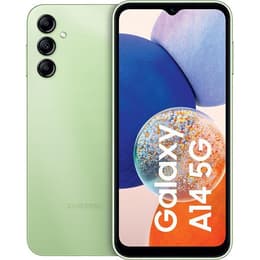
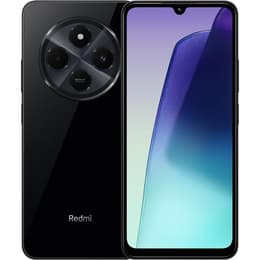


Galaxy A14 5G Vs Xiaomi Redmi 14C

Galaxy A14 5G
Galaxy A14 5G
Starting at

Refurbished price:102.00

Versus €289.00 new

See options
Xiaomi Redmi 14C
Xiaomi Redmi 14C
Starting at

Refurbished price:128.20

Versus €189.00 new

See options

Ratings

The Samsung Galaxy A14 5G, released in January 2023, and the Xiaomi Redmi 14C, launched in late 2024 or early 2025, are both smartphones designed for everyday use. While both devices offer essential functionalities, they present differences in their display technology, processing capabilities, and software support timelines. Both run on the Android operating system, with the Redmi 14C featuring a more recent version at launch.

Scores

Durability

When considering the practical lifespan of these devices, several factors come into play, including their release dates and the manufacturers' typical software support policies. The Galaxy A14 5G was released earlier, in January 2023, while the Redmi 14C followed later, with various sources indicating a launch in August 2024 or January 2025.

  • Software Longevity: The Galaxy A14 5G launched with Android 13 and typically receives two major OS updates and four years of security updates from Samsung, extending its support into early 2027. The Redmi 14C, launching with Android 14 and HyperOS, is expected to receive two major OS updates and three years of security updates, potentially extending its support into late 2027 or early 2028.
  • Repairability: Both devices are generally considered to have similar repairability profiles, often featuring plastic constructions that can be more forgiving than glass in some repair scenarios.
  • Expected Practical Lifespan: Users prioritizing longer software support from the initial purchase date might find the Redmi 14C to offer a slightly extended period of up-to-date software, given its later release.

Year of Release

2023

2024

Compatible with latest Update

Yes

Yes

OS

Android

Android

Foldable

No

No

Performance

The performance of both the Galaxy A14 5G and the Redmi 14C is tailored for general daily tasks, with distinctions arising from their respective internal components and optimization. Both devices are equipped to handle common applications and multitasking.

  • Processing Power: The Galaxy A14 5G is powered by a processor that efficiently manages typical smartphone operations, providing smooth navigation and app launches. The Redmi 14C, depending on the variant, may feature a MediaTek Helio G81 Ultra for 4G models or a Qualcomm Snapdragon 4 Gen 2 for 5G models, both offering capable performance for everyday use and light gaming.
  • Multitasking and Storage: Both phones offer various RAM configurations, typically ranging from 4GB to 8GB, which influences their ability to keep multiple applications open simultaneously. Storage options on both devices include 64GB, 128GB, and 256GB, with expandable storage via microSD card, providing flexibility for user data.
  • Overall Responsiveness: Users can expect a responsive experience for browsing, social media, and communication on both devices. The Redmi 14C's 5G variant, with its newer generation processor, might offer a marginal advantage in handling slightly more demanding applications or future software updates.

Memory (GB)

4 GB

4 GB

Screen quality

The visual experience on the Galaxy A14 5G and the Redmi 14C differs primarily in display technology, resolution, and refresh rate, impacting clarity and smoothness.

  • Display Technology and Resolution: The Galaxy A14 5G features a 6.6-inch PLS LCD display with a Full HD+ resolution (1080 x 2408 pixels), offering clear and detailed visuals. The Redmi 14C, with a larger 6.88-inch display, primarily uses an IPS LCD panel, though some sources mention OLED, and has an HD+ resolution (720 x 1640 pixels). The higher pixel density of the Galaxy A14 5G results in sharper text and images.
  • Refresh Rate and Brightness: Both devices offer a 90Hz refresh rate, contributing to smoother scrolling and a more fluid user interface experience. However, some Redmi 14C variants may offer a 120Hz refresh rate, providing an even smoother visual experience. Brightness levels are generally sufficient for indoor use on both, with the Redmi 14C potentially offering slightly higher peak brightness for better outdoor visibility.
  • Viewing Experience: The Galaxy A14 5G provides a more detailed viewing experience due to its higher resolution, while the Redmi 14C offers a larger screen size, which can be beneficial for media consumption.

Resolution

1080 x 2408

720 x 1640

Screen type

PLS LCD

IPS LCD

Audiovisual

Both smartphones are equipped with multi-camera setups designed to capture everyday moments, with their primary sensors offering similar megapixel counts but potential differences in image processing and auxiliary lenses.

  • Main Camera Performance: Both the Galaxy A14 5G and the Redmi 14C feature a 50 MP main camera, capable of capturing detailed photos in good lighting conditions. The Galaxy A14 5G includes dedicated 2 MP macro and depth sensors. The Redmi 14C also includes auxiliary lenses, often a 2 MP macro or depth sensor, though some sources describe it as an unspecified auxiliary lens.
  • Front Camera and Video: For selfies and video calls, the Galaxy A14 5G has a 13 MP front camera. The Redmi 14C typically features a 13 MP front camera, though some 5G variants might have an 8 MP sensor. Both devices support 1080p video recording at 30 frames per second.
  • Photography Experience: Users can expect competent performance for casual photography from both phones. The Galaxy A14 5G's camera system is well-rounded for its segment, while the Redmi 14C's performance is generally reliable for daylight photography.

Main camera

50 megapixels

50 megapixels

Front camera

13 megapixels

13 megapixels

Miscellaneous

Beyond core specifications, several practical features and design elements differentiate the Galaxy A14 5G and the Redmi 14C, influencing their daily usability and handling.

  • Connectivity and Ports: The Galaxy A14 5G offers 5G connectivity, Wi-Fi 5 (802.11 a/b/g/n/ac), and Bluetooth 5.2. The Redmi 14C is available in both 4G and 5G variants, with Wi-Fi 5 and Bluetooth 5.4, offering a slightly newer Bluetooth standard. Both devices include a USB-C port for charging and data transfer, and a 3.5mm headphone jack.
  • Security and Build: Both phones incorporate a side-mounted fingerprint sensor for secure unlocking. The Redmi 14C also supports face unlock. In terms of construction, both feature a glass front with a plastic frame and back, contributing to their durability. The Redmi 14C may also offer a silicone polymer (eco-leather) back option.
  • Dimensions and Handling: The Galaxy A14 5G measures 167.7 x 78 x 9.1 mm and weighs 202g. The Redmi 14C is slightly larger and potentially heavier, with dimensions of 171.9 x 77.8 x 8.2 mm and a weight between 204g and 211g, depending on the variant. These differences can impact one-handed use and pocketability.

Weight

201 g

207 g

Screen size (in)

6.6

6.88

Network

5G

4G

SIM card

Dual Physical SIM

Dual Physical SIM

Carrier compatibility

Unlocked

Unlocked

Connector

USB-C + Jack 3.5mm

USB-C

User feedback for the Samsung Galaxy A14 5G often highlights its consistent performance for daily tasks, reliable battery life, and the clarity of its Full HD+ display as praise points. Some users have noted that its design, while functional, is straightforward. The Redmi 14C, being a newer entrant, receives positive remarks for its large display, smooth refresh rate (especially the 120Hz variants), and generally good daylight camera performance. Criticisms sometimes point to the HD+ resolution on a large screen, which can result in less sharp visuals compared to higher-resolution displays.

Users prioritizing a sharper display and a slightly more established software update track record might find the Galaxy A14 5G well-suited to their needs. Conversely, those who value a larger screen, potentially higher refresh rate, and a more recent Android version out of the box may lean toward the Redmi 14C. Both devices offer solid performance for general smartphone use, making them suitable for students, professionals, or travelers seeking dependable functionality without advanced features. For those considering an eco-friendly alternative, both models are available as quality-assured refurbished options, providing a sustainable choice for their next device.


See all articles

Our recent comparisons