


Compare models

Google Pixel Fold Vs Xiaomi Redmi Note 13 4G

  • 1-year minimum warranty
  • Free delivery on all orders
  • Free 30-day returns
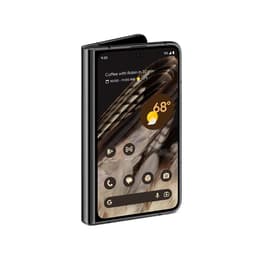
Google Pixel Fold
Starting at

Refurbished price:€617.00

Versus €1,750.29 new

See options
Xiaomi Redmi Note 13 4G
Starting at

Refurbished price:€188.00

Versus €299.00 new

See options

Differences at a glance

The Google Pixel Fold (2023) and Xiaomi Redmi Note 13 4G (2024) occupy completely different segments of the smartphone market, catering to vastly different user priorities. The Google Pixel Fold is a foldable flagship featuring a dual-screen design that transforms a compact handset into a tablet-sized workspace, operating on Android. In contrast, the Xiaomi Redmi Note 13 4G is a conventional, single-screen mid-range device focused on delivering daily utility within a standard smartphone format, also running Android with a custom interface.

While the Google Pixel Fold introduces multitasking versatility via its folding screen and high-end processing capabilities, the Xiaomi Redmi Note 13 4G prioritizes straightforward functionality and everyday communication needs. Understanding how these two distinct approaches handle daily tasks, battery management, and physical durability helps clarify which device fits specific user routines.

Available Models

Colour

Storage

Scores

Durability

When examining longevity and hardware endurance, both devices offer different lifespans influenced by their initial market positioning and software update commitments.

  • Software support timeline: The Google Pixel Fold benefits from a multi-year software update commitment typical of flagship devices, ensuring prolonged security patches and system upgrades. The Xiaomi Redmi Note 13 4G receives a standard mid-range update cycle, providing stable system software for a shorter duration.
  • Repairability and physical build: The folding hinge mechanism and flexible inner display of the Google Pixel Fold require careful handling over time and more specialized maintenance. The Xiaomi Redmi Note 13 4G features a traditional candybar construction that is more straightforward to service and less mechanically complex.
  • Expected practical lifespan: High-tier internal components in the Google Pixel Fold help it handle demanding software updates smoothly over several years, whereas the Xiaomi Redmi Note 13 4G suits standard daily communication tasks reliably for a more moderate operational window.

Year of Release

2023

2024

Compatible with latest Update

Yes

Yes

OS

Android

Android

Foldable

Yes

No

Performance

System performance and responsiveness differ significantly between these models, driven by their contrasting hardware tiers and multitasking architectures.

  • Multitasking and processing power: The Google Pixel Fold handles heavy apps, split-screen workflows, and demanding mobile games smoothly thanks to its high-capacity processor and generous RAM allocation. The Xiaomi Redmi Note 13 4G manages standard messaging, web browsing, and social media efficiently, though intensive gaming or heavy multi-window use can push its mid-range processor limits.
  • Battery behavior: The Google Pixel Fold's dual-screen configuration consumes additional power during extended inner-screen usage, requiring regular recharging for heavy workflows. The Xiaomi Redmi Note 13 4G features a single, energy-efficient display that comfortably sustains a full day of typical usage on a single charge.
  • Storage capacity: Both models offer ample internal storage variants to accommodate personal files, applications, and media libraries, though the Google Pixel Fold leans toward higher storage configurations suited for power users.

Screen quality

Display technology represents one of the most prominent points of divergence between these two devices, affecting everything from media consumption to outdoor legibility.

  • Display technology and design: The Google Pixel Fold utilizes flexible OLED technology for its inner folding screen paired with an outer cover display, delivering deep contrast levels and vibrant color reproduction. The Xiaomi Redmi Note 13 4G features a flat AMOLED panel known for crisp clarity and consistent brightness during everyday viewing.
  • Refresh rate and smoothness: Both devices support elevated refresh rates, ensuring fluid scrolling through web pages, system menus, and supported applications.
  • Outdoor visibility: High peak brightness levels on both screens allow content to remain legible under direct sunlight, though the larger surface area of the Pixel Fold's inner screen offers an expansive canvas for viewing documents and videos.

Resolution

1840 x 2208

1080 x 2400

Screen type

Foldable OLED

AMOLED

Audiovisual

Audio-visual capabilities and multimedia performance reflect the distinct hardware categories and engineering priorities of each handset.

  • Camera system versatility: The Google Pixel Fold is equipped with a versatile multi-lens rear array that utilizes advanced computational software to capture detailed low-light photos and crisp portraits. The Xiaomi Redmi Note 13 4G relies on a high-resolution main sensor that performs well in daylight conditions, supplemented by standard auxiliary lenses for basic wide-angle shots.
  • Video recording and audio output: The Google Pixel Fold supports stable high-resolution video capture with advanced stabilization features, paired with balanced stereo speakers suitable for media streaming. The Xiaomi Redmi Note 13 4G provides reliable video recording quality for casual sharing and features clear audio output for calls and media playback.

Main camera

48 megapixels

108 megapixels

Front camera

8 megapixels

16 megapixels

Miscellaneous

Practical physical characteristics, connectivity standards, and daily handling elements shape the user experience outside of core computing tasks.

  • Build materials and handling: The Google Pixel Fold is a heavy and substantial device due to its complex hinge and dual-screen structure, making it noticeable in the hand or pocket. The Xiaomi Redmi Note 13 4G adopts a lightweight, slim profile with a traditional plastic frame that is easy to hold for extended periods.
  • Connectivity and security: Both devices offer modern 5G or 4G network connectivity, Wi-Fi standards, and Bluetooth pairing, alongside biometric security features such as fingerprint recognition or face unlock to secure personal data.

Weight

283 g

175 g

Screen size (in)

7.6

6.67

Network

5G

4G

SIM card

Physical SIM + eSIM

Dual Physical SIM

Carrier compatibility

Unlocked

Unlocked

Connector

USB-C

USB-C

What the community thinks

User discussions across community forums highlight distinct patterns of praise and criticism for both models. Owners of the Google Pixel Fold frequently commend its expansive inner screen for multitasking and reading, though some note the considerable weight and the crease across the folding display as trade-offs. Meanwhile, users of the Xiaomi Redmi Note 13 4G appreciate its reliable daily battery duration, lightweight build, and straightforward reliability, while occasionally mentioning performance limitations during heavy multitasking.

Users prioritizing productivity, a tablet-like workspace, and advanced photography capabilities may prefer the Google Pixel Fold, while users seeking a lightweight, traditional smartphone for everyday communication will find the Xiaomi Redmi Note 13 4G well-suited to their needs. For consumers looking to make a sustainable choice, opting for a quality-assured refurbished option provides an eco-friendly alternative that extends the lifecycle of these electronics without compromising on performance standards.









