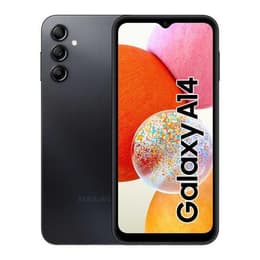
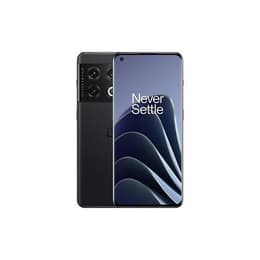


Galaxy A14 5G Vs OnePlus 10 Pro

Galaxy A14 5G
Galaxy A14 5G
Starting at

Refurbished price:102.00

Versus €289.00 new

See options
OnePlus 10 Pro
OnePlus 10 Pro
Starting at

Refurbished price:236.00

Versus €999.00 new

See options

Ratings

The Samsung Galaxy A14 5G, released in January 2023, and the OnePlus 10 Pro, launched globally in March 2022, represent distinct segments within the Android smartphone market. While both devices operate on the Android platform, the Galaxy A14 5G focuses on delivering essential features and 5G connectivity, whereas the OnePlus 10 Pro offers a more advanced, performance-oriented experience with a premium display and camera system.

Scores

Durability

The expected lifespan of a smartphone is influenced by its release date, software support, and physical durability. These two devices, released about a year apart, offer different trajectories for long-term usability.

  • Release Timeline: The OnePlus 10 Pro, launched in early 2022, is an older device compared to the Galaxy A14 5G, which arrived in early 2023. This difference in release means the OnePlus 10 Pro has already received a significant portion of its software support.
  • Software Longevity: The Galaxy A14 5G was promised two major Android OS upgrades (up to Android 15) and four years of security updates, extending its support until 2027. The OnePlus 10 Pro, initially expected to receive three major Android upgrades (up to Android 15) and four years of security updates, surprisingly received Android 16 (OxygenOS 16) in February 2026, marking its fourth major OS upgrade. However, it is unlikely to receive Android 17.
  • Physical Durability: The OnePlus 10 Pro features a more robust build with Gorilla Glass Victus on the front and Gorilla Glass 5 on the back, encased in an aluminum frame, and an IP68 rating in some regions for dust and water resistance. The Galaxy A14 5G utilizes a plastic back and frame, which offers some inherent flexibility but generally less scratch and shatter resistance than glass.

Year of Release

2023

2022

Compatible with latest Update

Yes

Yes

OS

Android

Android

Foldable

No

No

Performance

Performance varies significantly between these two smartphones, reflecting their different market positions. The OnePlus 10 Pro is designed for demanding tasks, while the Galaxy A14 5G handles everyday functions efficiently.

  • Processing Power: The OnePlus 10 Pro is equipped with a high-end processor, enabling it to handle graphically intensive games, complex applications, and extensive multitasking with fluidity. The Galaxy A14 5G features a mid-range processor that provides a satisfactory experience for daily activities like browsing, social media, and light gaming, though users might notice occasional slowdowns when switching between many apps or running very demanding applications.
  • Multitasking and Storage: The OnePlus 10 Pro offers higher RAM configurations (8GB or 12GB) and faster internal storage options (up to 512GB), contributing to smoother multitasking and quicker app loading. The Galaxy A14 5G comes with 4GB, 6GB, or 8GB of RAM and 64GB or 128GB of internal storage, which is expandable via a microSD card, offering flexibility for users who need more space for media and files.
  • Battery Behavior: Both devices house a 5000mAh battery. The Galaxy A14 5G generally offers strong battery life, often lasting a full day or more for moderate users. The OnePlus 10 Pro also provides good battery endurance, with some users reporting it lasting a full day even with heavy use, though opinions on its longevity can vary. The OnePlus 10 Pro supports significantly faster wired charging (80W, or 65W in North America) and also offers wireless and reverse wireless charging, features absent on the Galaxy A14 5G which supports 15W wired charging.

Memory (GB)

4 GB

8 GB

Screen quality

The visual experience on these devices differs considerably due to their display technologies and specifications.

  • Display Technology and Resolution: The OnePlus 10 Pro features a 6.7-inch Fluid AMOLED display with a high resolution of 3216x1440 pixels (QHD+), resulting in sharp images and vibrant colors with deep blacks. The Galaxy A14 5G has a 6.6-inch PLS LCD panel with a 1080x2408 pixel (FHD+) resolution, offering clear visuals suitable for everyday viewing.
  • Refresh Rate and Smoothness: The OnePlus 10 Pro boasts an adaptive 120Hz refresh rate, utilizing LTPO technology to dynamically adjust the refresh rate from 1Hz to 120Hz based on content, providing a very smooth scrolling experience while conserving battery. The Galaxy A14 5G offers a 90Hz refresh rate, which provides a smoother experience than standard 60Hz displays, particularly noticeable during scrolling and animations.
  • Brightness and Outdoor Visibility: The OnePlus 10 Pro's AMOLED display can reach high brightness levels, making it comfortable to view even in direct sunlight. The Galaxy A14 5G's LCD screen, while offering decent clarity, may be less visible in bright outdoor conditions.

Resolution

1080 x 2408

1440 x 3216

Screen type

PLS LCD

LTPO2 Fluid AMOLED

Audiovisual

The camera systems on these phones cater to different user expectations, with the OnePlus 10 Pro offering a more versatile and advanced setup.

  • Rear Camera System: The OnePlus 10 Pro features a triple camera setup co-developed with Hasselblad, including a 48MP main sensor with optical image stabilization (OIS), a 50MP ultra-wide lens with a wide field of view, and an 8MP telephoto lens capable of 3.3x optical zoom with OIS. The Galaxy A14 5G also has a triple camera array, consisting of a 50MP main camera, a 2MP macro camera, and a 2MP depth sensor. It lacks an ultra-wide camera.
  • Photography Performance: The OnePlus 10 Pro generally delivers detailed photos with accurate colors in good lighting, and its main and ultra-wide cameras perform well in various conditions, including low light. The 8MP telephoto lens, however, is noted to be less impressive. The Galaxy A14 5G's 50MP main camera captures good images in well-lit environments, but its performance, particularly in low light, is less consistent, and the macro and depth sensors offer limited utility.
  • Video Recording and Front Camera: The OnePlus 10 Pro supports video recording up to 8K at 24fps and 4K at 120fps, offering more advanced video capabilities. It has a 32MP front-facing camera. The Galaxy A14 5G records video at 1080p at 30fps and features a 13MP front camera, suitable for casual video calls and selfies.

Main camera

50 megapixels

48 megapixels

Front camera

13 megapixels

32 megapixels

Miscellaneous

Beyond core features, several practical elements differentiate these two devices in terms of connectivity, design, and user interaction.

  • Connectivity and Ports: Both phones support 5G connectivity. The OnePlus 10 Pro features Wi-Fi 6 and USB-C 3.1, offering faster data transfer speeds. The Galaxy A14 5G supports Wi-Fi 5 and USB-C 2.0. A notable difference is the presence of a 3.5mm headphone jack on the Galaxy A14 5G, which is absent on the OnePlus 10 Pro.
  • Biometrics and Design: The OnePlus 10 Pro incorporates an in-display optical fingerprint sensor for secure unlocking. The Galaxy A14 5G uses a side-mounted fingerprint sensor integrated into the power button. In terms of physical design, the OnePlus 10 Pro has a more refined feel with glass and metal construction, while the Galaxy A14 5G has a practical plastic build.
  • Dimensions and Handling: The OnePlus 10 Pro measures 163 x 73.9 x 8.55mm and weighs 200.5g. The Galaxy A14 5G is slightly larger and thicker at 167.7 x 78 x 9.1mm and weighs 202g to 204g. Both are large devices, but the OnePlus 10 Pro's curved display and slightly narrower build may offer a more comfortable in-hand feel for some users.

Weight

201 g

201 g

Screen size (in)

6.6

6.7

Network

5G

5G

SIM card

Dual Physical SIM

Physical SIM

Carrier compatibility

Unlocked

Unlocked

Connector

USB-C + Jack 3.5mm

USB-C

The Samsung Galaxy A14 5G and the OnePlus 10 Pro cater to different user needs and priorities. User feedback for the Galaxy A14 5G often praises its reliable battery life, the inclusion of NFC for contactless payments, and Samsung's commitment to software updates for its price point. Common criticisms include its slower processor, which can lead to occasional delays, and its camera's mixed performance, especially in challenging lighting conditions. The display, while clear, can be dim in direct sunlight, and the mono speaker is a frequent point of concern.

Conversely, the OnePlus 10 Pro is frequently lauded for its fast and smooth performance, vibrant AMOLED display with a high refresh rate, and rapid charging capabilities. Its main and ultra-wide cameras are generally well-regarded, though the telephoto lens receives less praise. Some users have noted that while battery life is good, it might not be exceptional for very heavy usage, and software stability has occasionally been a point of discussion. The lack of an official IP rating in all regions and the absence of a headphone jack are also mentioned.

Users prioritizing a long-lasting battery, expandable storage, a headphone jack, and a solid software update policy for essential smartphone functions may find the Galaxy A14 5G well-suited to their needs. It serves as a practical, everyday device for communication, browsing, and casual media consumption. On the other hand, users who value a high-performance processor for gaming and demanding applications, a superior display for media consumption, faster charging, and a more advanced camera system will likely lean towards the OnePlus 10 Pro. Both devices, whether new or as a quality-assured refurbished option, offer distinct advantages for different user profiles, enabling informed and sustainable choices.


See all articles

Our recent comparisons