

Galaxy A13 Vs Galaxy S23+

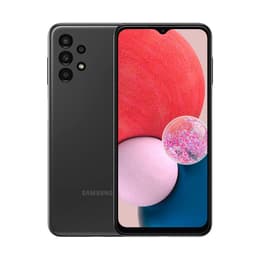
Galaxy A13
Galaxy A13
Starting at

Refurbished price:96.00

Versus €249.00 new

See options
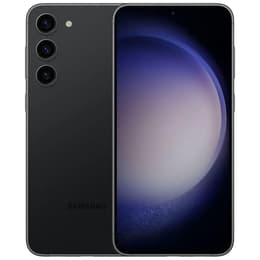
Galaxy S23+
Galaxy S23+
Starting at

Refurbished price:295.00

Versus €1,019.00 new

See options

Ratings

The Samsung Galaxy A13, released in March 2022, and the Samsung Galaxy S23 Plus, launched in February 2023, represent distinct segments within Samsung's smartphone lineup. While both operate on the Android platform with Samsung's One UI, they cater to different user expectations regarding performance, display quality, and camera capabilities. The S23 Plus offers a more advanced experience, whereas the A13 focuses on core smartphone functionalities.

Scores

Durability

When considering the longevity of these devices, several factors come into play, including their release timelines, software support, and physical resilience.

  • Software Support: The Galaxy S23 Plus, being a more recent release, is expected to receive software updates for a longer duration than the Galaxy A13. The A13 launched with Android 12 and has since received updates, currently running Android 14 with One UI 6.1. The S23 Plus launched with Android 13 and is already seeing Android 16 with One UI 8 beta, indicating a longer future support window.
  • Physical Durability: The Galaxy A13 features Corning Gorilla Glass 5 for screen protection and a plastic build, contributing to its repairability. The Galaxy S23 Plus incorporates more advanced Gorilla Glass Victus 2 on both its front and back, along with an Armor Aluminum frame, offering enhanced resistance to drops and scratches. Despite these protections, drop tests indicate that the S23 Plus can still sustain damage, though its functionality often remains intact.
  • Repairability: The Galaxy A13 has a reported repairability score of 8 out of 10, suggesting it is relatively straightforward to repair. The Galaxy S23 Plus also demonstrates a good repairability score of 8.2 out of 10, indicating Samsung's efforts to make its newer devices more accessible for repairs.

Year of Release

2022

2023

Compatible with latest Update

No

Yes

OS

Android

Android

Foldable

No

No

Performance

The performance capabilities of these two smartphones differ significantly, impacting how smoothly they handle various tasks and applications.

  • Processing Power: The Galaxy A13 is powered by an octa-core processor, which capably handles everyday tasks like browsing, social media, and light applications. However, users have reported that it can become laggy and unresponsive with heavier use or over time. In contrast, the Galaxy S23 Plus features a current-generation processor designed for demanding applications and multitasking, providing a consistently smooth and responsive user experience.
  • Multitasking and Storage: The Galaxy A13 offers various RAM configurations, from 3GB to 6GB, and expandable storage options up to 128GB. The Galaxy S23 Plus comes with 8GB of RAM and non-expandable internal storage options of 256GB or 512GB, allowing for more seamless multitasking and ample space for applications and media.
  • Battery Behavior: Both devices feature a substantial 5000 mAh battery in the A13 and a 4700 mAh battery in the S23 Plus. The A13's battery is praised for its longevity, often lasting a full day of continuous use. The S23 Plus also offers excellent battery life, with users reporting that it easily lasts through a full day, even with heavy usage, supported by faster charging capabilities.

Memory (GB)

4 GB

8 GB

Screen quality

The visual experience on these devices is shaped by their display technologies, resolutions, and overall screen characteristics.

  • Display Technology and Clarity: The Galaxy A13 features a 6.6-inch PLS TFT display with a 1080 x 2408 pixel resolution, offering clear visuals for general use. The Galaxy S23 Plus boasts a 6.6-inch Dynamic AMOLED 2X display with a 2340 x 1080 pixel resolution, known for its deep blacks, vibrant colors, and excellent contrast.
  • Brightness and Refresh Rate: The A13's display is generally considered bright enough for outdoor use, though it is a standard 60Hz panel. The S23 Plus offers significantly higher peak brightness, making it very easy to view even in bright sunlight, and features an adaptive refresh rate of 48Hz to 120Hz, providing a noticeably smoother scrolling and viewing experience.
  • Viewing Experience: While both offer large screens, the AMOLED technology and higher refresh rate of the S23 Plus provide a more immersive and fluid viewing experience, particularly for multimedia content and gaming. The A13's display is functional and good for its category, but does not offer the same level of visual fidelity.

Resolution

1080 x 2408

1080 x 2340

Screen type

PLS LCD

Dynamic AMOLED 2X

Audiovisual

The camera systems on the Galaxy A13 and Galaxy S23 Plus are designed for different levels of photographic capability and user expectations.

  • Rear Camera System: The Galaxy A13 features a quad-camera setup with a 50-megapixel main sensor, accompanied by ultrawide, macro, and depth sensors. Users find its camera usable in good lighting conditions, but performance diminishes significantly in low-light environments. The Galaxy S23 Plus has a triple-camera system, including a 50-megapixel main sensor with optical image stabilization (OIS), a 12-megapixel ultrawide, and a 10-megapixel telephoto lens with 3x optical zoom, providing greater versatility and image quality.
  • Photography Performance: The S23 Plus delivers solid camera performance across various scenarios, including improved zoom capabilities and better detail resolution. Its OIS contributes to clearer photos, especially in challenging conditions. The A13's camera is suitable for casual photography but lacks the advanced features and low-light performance of the S23 Plus.
  • Video and Audio: The A13 records video at 1080p at 30 frames per second, with no video stabilization. The S23 Plus supports 8K video recording at 30 frames per second, offering higher resolution and more advanced video features. Both devices offer decent audio output, with the S23 Plus featuring loud stereo speakers with Dolby Atmos support for an enhanced media consumption experience.

Main camera

50 megapixels

50 megapixels

Front camera

8 megapixels

12 megapixels

Miscellaneous

Beyond core features, several practical elements differentiate these two Samsung smartphones, influencing daily usability and connectivity.

  • Connectivity: The Galaxy A13 supports 4G LTE, Wi-Fi, and Bluetooth, with some variants including NFC for mobile payments. The Galaxy S23 Plus offers more advanced connectivity, including 5G capabilities and newer Wi-Fi standards, ensuring faster data speeds and more reliable connections.
  • Ports and Sensors: The A13 retains a 3.5mm headphone jack and uses a USB Type-C 2.0 port for charging and data transfer. It features a side-mounted fingerprint sensor. The S23 Plus foregoes the headphone jack, relying solely on its USB-C port, and incorporates an in-display ultrasonic fingerprint sensor for biometric authentication.
  • Design and Handling: The Galaxy A13 has a plastic construction, which some users appreciate for its durability, and weighs 195 grams. The S23 Plus features a more premium build with Gorilla Glass Victus 2 and an Armor Aluminum frame, weighing 196 grams. Its design is often described as minimal and professional, with a matte back that resists fingerprints.

Weight

195 g

168 g

Screen size (in)

6.6

6.6

Network

4G

5G

SIM card

Dual Physical SIM

Dual Physical SIM + eSIM

Carrier compatibility

Unlocked

Unlocked

User feedback for the Galaxy A13 often highlights its strong battery life and adequate performance for basic tasks as key advantages. However, common criticisms include its tendency to become slow over time, particularly with multiple apps open, and its camera's limited performance in low light. The Galaxy S23 Plus, conversely, receives consistent praise for its exceptional performance, vibrant display, and capable camera system. Some users note its minimalist design, which might not appeal to everyone, but generally, it is seen as a well-rounded device with few significant flaws.

Users prioritizing extended software support, a premium build, and high-end performance for demanding applications, gaming, and advanced photography will find the Galaxy S23 Plus well-suited to their needs. Its superior display and camera versatility make it ideal for content creation and media consumption. Conversely, individuals seeking a reliable device for essential smartphone functions, excellent battery longevity, and a more budget-conscious approach may prefer the Galaxy A13. It serves well for communication, browsing, and casual use without the need for top-tier specifications.

For those considering either device, exploring quality-assured refurbished options can provide an eco-friendly alternative, offering access to these technologies while supporting sustainable consumption.


See all articles

Our recent comparisons