

Galaxy A13 Vs Galaxy S20 FE

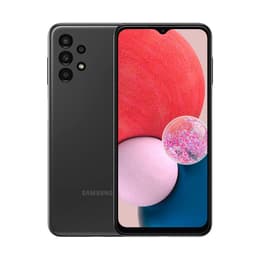
Galaxy A13
Galaxy A13
Starting at

Refurbished price:97.00

Versus €249.00 new

See options
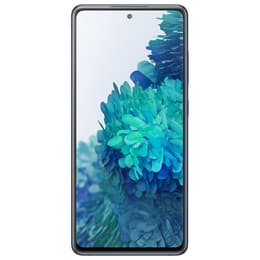
Galaxy S20 FE
Galaxy S20 FE
Starting at

Refurbished price:151.00

Versus €779.00 new

See options

Ratings

The Samsung Galaxy A13 (released March 2022) and the Samsung Galaxy S20 FE (released October 2020) are two distinct smartphones from Samsung, targeting different user expectations. While the Galaxy A13 is positioned as a budget-friendly device for everyday essentials, the Galaxy S20 FE was introduced as a more accessible version of a flagship, offering a blend of premium features. Both devices operate on the Android platform, featuring Samsung's One UI for their user interface.

Scores

Durability

The longevity and physical resilience of a smartphone are important considerations for many users.

  • Release Timeline and OS Support: The Galaxy A13, being a newer device, launched with Android 12 and is expected to receive software updates for a longer period, with the 4G model potentially reaching Android 14. The Galaxy S20 FE, released earlier, launched with Android 10 and received updates up to Android 13. This means the A13 may offer a slightly extended period of official software support.
  • Build Materials and Protection: The Galaxy A13 features a plastic construction with Gorilla Glass 5 protecting its display. It does not carry an official IP rating for water and dust resistance. In contrast, the Galaxy S20 FE combines a plastic back with an aluminum frame and Gorilla Glass 3 on the front. A key differentiator for the S20 FE is its IP68 rating, indicating significant resistance to dust and water immersion.
  • User Experiences: Some users of the Galaxy A13 have reported a decline in performance and various issues after about a year of use, suggesting potential concerns regarding its long-term practical lifespan. The Galaxy S20 FE, despite its earlier release, generally receives positive feedback for its sustained performance and update consistency over time.

Year of Release

2022

2020

Compatible with latest Update

No

No

OS

Android

Android

Foldable

No

No

Performance

The performance capabilities of these two devices cater to different usage intensities, influencing how smoothly applications run and how efficiently tasks are handled.

  • Processing Power: The Galaxy A13 is equipped with an Exynos 850 or MediaTek Dimensity 700 processor, depending on the variant. This hardware is designed for basic smartphone functions, and users may experience slower app loading times, occasional stutters during transitions, and limited performance in graphically demanding games. The Galaxy S20 FE, on the other hand, features a more powerful processor, either the Snapdragon 865 or Exynos 990. The Snapdragon 865 variant, in particular, delivers robust performance, allowing for smooth multitasking, quick app launches, and a capable gaming experience.
  • Memory and Storage: The Galaxy A13 typically comes with 3GB, 4GB, or 6GB of RAM and storage options of 32GB, 64GB, or 128GB. The Galaxy S20 FE generally offers 6GB or 8GB of RAM with 128GB or 256GB of internal storage. Higher RAM in the S20 FE contributes to more fluid multitasking and app retention in memory. Both devices support expandable storage via a microSD card.
  • Real-World Responsiveness: Users of the A13 often note that the device can feel sluggish, especially with prolonged use or when running multiple applications simultaneously. The S20 FE maintains a high level of responsiveness, with users frequently praising its consistent speed and ability to handle daily tasks without significant slowdowns, even after extended periods of ownership.

Memory (GB)

4 GB

6 GB

Screen quality

The visual experience offered by a smartphone's display is a primary factor in daily interaction, from browsing content to viewing media.

  • Display Technology and Resolution: The Galaxy A13 features a 6.6-inch PLS LCD panel with a resolution of 1080 x 2408 pixels for the 4G model. The 5G variant of the A13 has a 6.5-inch 720p LCD with a 90Hz refresh rate. The Galaxy S20 FE sports a 6.5-inch Super AMOLED display with a 1080 x 2400 pixel resolution. The Super AMOLED technology in the S20 FE provides deeper blacks and more vibrant colors compared to the LCD panel of the A13.
  • Refresh Rate and Smoothness: The 4G Galaxy A13 has a standard 60Hz refresh rate, which provides a typical scrolling and animation experience. The 5G A13 offers a 90Hz refresh rate. The Galaxy S20 FE significantly enhances visual fluidity with its 120Hz refresh rate, resulting in noticeably smoother scrolling and more responsive interactions.
  • Brightness and Outdoor Visibility: The Galaxy A13's display offers decent brightness for indoor use, peaking around 483 nits in tests. While adequate, outdoor visibility can be challenging in direct sunlight. The Galaxy S20 FE's Super AMOLED display generally offers good brightness, though some users have noted that outdoor visibility could be improved in very bright conditions. The flat display design of the S20 FE can also make screen protector application easier.

Resolution

1080 x 2408

1080 x 2400

Screen type

PLS LCD

Super AMOLED

Audiovisual

For many users, the camera system is a crucial component, influencing how they capture and share moments.

  • Rear Camera Systems: The Galaxy A13 is equipped with a quad-camera setup, including a 50-megapixel main sensor, a 5-megapixel ultrawide, a 2-megapixel macro, and a 2-megapixel depth sensor. The 50-megapixel main camera can produce decent images in well-lit conditions, but the secondary lenses, particularly the ultrawide and macro, are often considered less capable. The Galaxy S20 FE features a versatile triple-camera system: a 12-megapixel main sensor with optical image stabilization (OIS), a 12-megapixel ultrawide lens, and an 8-megapixel telephoto lens offering 3x optical zoom. The S20 FE's main camera delivers strong performance across various lighting conditions, and its optical zoom is a notable advantage for capturing distant subjects.
  • Low-Light and Video Capabilities: The Galaxy A13 struggles in low-light environments due to the absence of a dedicated night mode. Video recording is limited to 1080p at 30 frames per second, without 4K support. The Galaxy S20 FE offers an improved Night Mode and generally performs well in low-light scenarios. It supports video recording up to 4K at 60 frames per second from both its front and rear cameras, providing more flexibility for high-quality video content creation.
  • Front-Facing Camera: The Galaxy A13 has an 8-megapixel front camera, suitable for basic selfies and video calls. The Galaxy S20 FE significantly upgrades the selfie experience with a 32-megapixel front camera, capable of capturing more detailed self-portraits and 4K video.

Main camera

50 megapixels

12 megapixels

Front camera

8 megapixels

32 megapixels

Miscellaneous

Beyond core specifications, several practical features and design elements contribute to the overall user experience of a smartphone.

  • Connectivity and Ports: The Galaxy A13 offers 4G or 5G connectivity depending on the specific model, along with Wi-Fi 5 and Bluetooth 5.0. It includes a USB-C port for charging and data transfer, and notably retains a 3.5mm headphone jack. The Galaxy S20 FE supports 5G connectivity (in its Snapdragon variant), Wi-Fi 6, and Bluetooth 5.0. It features a USB-C port but omits the traditional 3.5mm headphone jack.
  • Biometric Security and Audio: For security, the Galaxy A13 uses a side-mounted fingerprint sensor. The Galaxy S20 FE incorporates an optical in-display fingerprint sensor. In terms of audio, the A13 has a single downward-firing speaker. The S20 FE provides a more immersive audio experience with stereo speakers.
  • Design and Handling: The Galaxy A13 has a plastic build, contributing to its lighter weight of approximately 195 grams. Its dimensions are 165.1 x 76.4 x 8.8 mm. The Galaxy S20 FE also features a plastic back but with an aluminum frame, weighing around 190 grams. Its dimensions are 159.8 x 74.5 x 8.4 mm. The S20 FE's matte finish on the back is noted for resisting fingerprints and scratches effectively.

Weight

195 g

190 g

Screen size (in)

6.6

6.5

Network

4G

4G

SIM card

Dual Physical SIM

Dual Physical SIM

Carrier compatibility

Unlocked

Unlocked

The Samsung Galaxy A13 and Galaxy S20 FE cater to different user needs and priorities. The Galaxy A13 is often praised for its large display and a main camera that performs adequately for its segment. However, common criticisms revolve around its sluggish performance, which some users report deteriorates over time, and the limited utility of its secondary cameras.

Conversely, the Galaxy S20 FE receives consistent acclaim for its robust performance, vibrant 120Hz AMOLED display, and a versatile camera system that includes optical zoom and optical image stabilization. Its IP68 water and dust resistance and wireless charging capabilities are also frequently highlighted as significant advantages. Some users have noted that the plastic back, while durable, might not convey the same premium feel as glass-backed devices.

Users who prioritize essential smartphone functions like communication, basic browsing, and media consumption, and for whom high-end performance is not a primary concern, may find the Galaxy A13 suitable. For individuals seeking a device capable of handling demanding applications, gaming, and high-quality photography and videography, or those who value features such as water resistance and wireless charging, the Galaxy S20 FE aligns well with those requirements. Both models are available as quality-assured refurbished options, providing a sustainable choice for consumers.


See all articles

Our recent comparisons