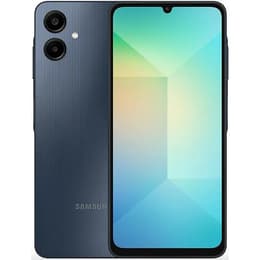
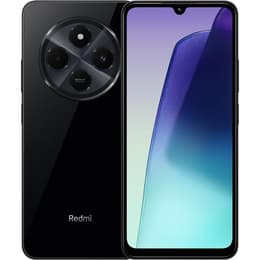


Galaxy A06 Vs Xiaomi Redmi 14C

Galaxy A06
Galaxy A06
Starting at

Refurbished price:108.00

Versus €186.96 new

See options
Xiaomi Redmi 14C
Xiaomi Redmi 14C
Starting at

Refurbished price:128.20

Versus €189.00 new

See options

Ratings

The Samsung Galaxy A06 and the Xiaomi Redmi 14C are both smartphones released in late 2024, targeting users seeking essential features for daily communication and media consumption. While both devices operate on the Android platform, they differentiate themselves through display technology, camera configurations, and software experiences. This comparison aims to highlight their practical differences to assist in making an informed purchasing decision.

Scores

Durability

When considering the longevity of a smartphone, factors such as release timeline, software support, and physical durability play a significant role. Both devices offer a reasonable expected lifespan for their category.

  • Release Timeline: The Samsung Galaxy A06 was released in August 2024, while the Xiaomi Redmi 14C also launched in August 2024. This places both devices at a similar starting point for their lifecycle. [1, 3, 4, 6]
  • Software Support: The Galaxy A06 shipped with Android 14 and One UI 6.1, and is expected to receive two major OS upgrades and four years of security updates, extending support until 2028. The Redmi 14C also runs on Android 14 with Xiaomi's HyperOS, but specific long-term OS upgrade commitments are less clearly defined, though Xiaomi typically provides several years of security updates. [1, 2, 4, 6]
  • Durability Features: The Redmi 14C features a glass front and offers options for a glass or eco-leather back, along with an IP52 rating for dust and splash resistance, suggesting a degree of protection against everyday elements. The Galaxy A06 does not prominently feature specific advanced durability ratings, but its build is designed for general daily use. [4, 15]

Year of Release

2024

2024

OS

Android

Android

Foldable

No

No

Performance

The performance of a smartphone is crucial for smooth daily operation, from launching applications to multitasking. Both the Galaxy A06 and Redmi 14C are equipped to handle common tasks, though with some distinctions in their underlying hardware.

  • Processing Power: The Galaxy A06 is powered by an octa-core processor designed for efficient handling of everyday applications, social media browsing, and video streaming. The Redmi 14C features an octa-core processor that also aims to provide smooth performance for similar daily tasks, with some sources indicating it can manage light gaming and multitasking. [2, 4, 5, 9, 11]
  • Memory and Storage: The Galaxy A06 typically comes with 4GB of RAM and offers 64GB or 128GB of internal storage, which is expandable via a microSD card up to 1TB. The Redmi 14C provides more varied RAM options, including 4GB, 6GB, and 8GB, alongside 128GB or 256GB of internal storage, also expandable with a microSD card. [2, 3, 4, 6, 8, 10]
  • System Responsiveness: For general use, both devices offer adequate responsiveness. Users of the Galaxy A06 can expect smooth navigation through its One UI interface. The Redmi 14C, running HyperOS, is also designed for a fluid user experience, though some minor stutters might occur during intensive multitasking on the lower RAM configurations. [1, 11]

Memory (GB)

4 GB

4 GB

Screen quality

The display is a primary interface for smartphone interaction, influencing everything from media consumption to text readability. The Galaxy A06 and Redmi 14C present different approaches to their screen technology and features.

  • Display Technology and Size: The Galaxy A06 features a 6.7-inch PLS LCD display. In contrast, the Redmi 14C offers a slightly larger 6.88-inch display, which is primarily an IPS LCD panel, though some information suggests an OLED option for certain variants. [2, 4, 5, 8, 9, 12, 16]
  • Resolution and Clarity: Both phones provide an HD+ resolution (720x1600 pixels for A06, 720x1640 pixels for Redmi 14C), which is suitable for general viewing. This resolution ensures text and images appear clear enough for typical smartphone use without being exceptionally sharp. [2, 3, 4, 6, 8, 9, 14, 16]
  • Refresh Rate and Brightness: The Galaxy A06 has a standard 60Hz refresh rate, providing a consistent visual experience. The Redmi 14C, however, steps up with a 120Hz refresh rate, which contributes to smoother scrolling and more fluid animations. The Redmi 14C also boasts a peak brightness of 600 nits, which can be beneficial for outdoor visibility. [2, 3, 4, 6, 8, 14]

Resolution

720 x 1600

720 x 1640

Screen type

PLS LCD

IPS LCD

Audiovisual

Camera capabilities are a significant consideration for many users, and both smartphones offer multi-camera setups designed for capturing everyday moments.

  • Rear Camera System: The Galaxy A06 is equipped with a dual-camera setup on the rear, featuring a 50-megapixel main sensor and a 2-megapixel depth sensor. The Redmi 14C also includes a 50-megapixel main sensor, often accompanied by an auxiliary lens, which may function as a depth or macro sensor. [3, 4, 5, 6, 8, 9, 13, 14, 16]
  • Photography Performance: The 50-megapixel main cameras on both devices are capable of capturing detailed photos in well-lit conditions. The Galaxy A06's camera is noted for capturing quality photos, while the Redmi 14C's camera is reported to produce appealing pictures with decent contrast and sharpness in daylight. Both are suitable for casual photography. [5, 9, 11, 13, 14]
  • Front Camera and Video: For selfies, the Galaxy A06 features an 8-megapixel front camera, while the Redmi 14C offers a 13-megapixel front camera. Both devices support Full HD video recording, with the Galaxy A06 capable of 60fps and the Redmi 14C typically recording at 1080p. [3, 4, 5, 6, 8, 9, 14, 16]

Miscellaneous

Beyond core specifications, several practical elements contribute to the overall user experience, including connectivity, physical design, and additional features.

  • Connectivity and Ports: Both smartphones support 4G connectivity, Wi-Fi, and Bluetooth. The Galaxy A06 features Bluetooth v5.3, while the Redmi 14C offers Bluetooth v5.4. Both devices include a USB Type-C port for charging and data transfer, and notably, both retain a 3.5mm headphone jack. [3, 4, 6, 7, 8, 10, 14]
  • Physical Design and Handling: The Galaxy A06 measures 167.30 x 77.30 x 8.00mm and weighs around 189-196 grams. The Redmi 14C is slightly larger and heavier, with dimensions of 171.9 x 77.8 x 8.2 mm and a weight ranging from 204 to 211 grams. Both devices feature a side-mounted fingerprint sensor for secure unlocking. [3, 4, 8, 9, 10, 14]
  • Additional Features: The Redmi 14C includes NFC in some regions, which can be useful for contactless payments and quick pairing. The Galaxy A06 emphasizes its One UI software experience, offering a user-friendly interface. [3, 6, 8, 10]

Weight

189 g

207 g

Screen size (in)

6.7

6.88

Network

4G

4G

SIM card

Dual Physical SIM

Dual Physical SIM

Carrier compatibility

Unlocked

Unlocked

Connector

USB-C + Jack 3.5mm

USB-C

The Samsung Galaxy A06 and Xiaomi Redmi 14C both present compelling options in the entry-level smartphone segment, each with its own set of strengths. Users generally praise the Galaxy A06 for its reliable software experience and consistent performance for everyday tasks. Its battery life is also frequently highlighted as a strong point, providing ample power for a full day of use. Some common criticisms might revolve around its standard refresh rate display compared to some competitors. [14]

The Redmi 14C often receives positive remarks for its larger display with a higher refresh rate, offering a smoother visual experience, and its versatile RAM and storage configurations. Its battery capacity is also a consistent point of praise among users. Potential concerns might include the clarity of its auxiliary camera lenses and the varying display technology across different regional models. [11]

Users prioritizing a consistent software experience with guaranteed updates and a slightly more compact design may find the Samsung Galaxy A06 well-suited to their needs. Conversely, those who value a larger, smoother display with a higher refresh rate, more flexible memory options, and potentially faster charging might lean towards the Xiaomi Redmi 14C. Both devices serve as practical choices for individuals seeking essential smartphone functionalities without advanced features. For those looking for an eco-friendly alternative, considering a quality-assured refurbished option for either model can be a sustainable choice.


See all articles

Our recent comparisons






