

Compare models

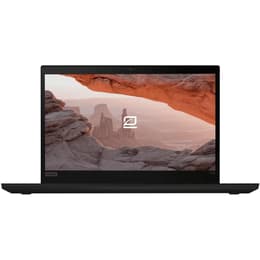
Dell Latitude 5430 14" Vs Lenovo ThinkPad T490 14"

  • 1-year minimum warranty
  • Free delivery on all orders
  • Free 30-day returns
Dell Latitude 5430 14"
Starting at

Refurbished price:€380.00

Versus €1,024.78 new

See options
Lenovo ThinkPad T490 14"
Starting at

Refurbished price:€300.00

Versus €700.00 new

See options

Differences at a glance

The Dell Latitude 5430 (2022) and the Lenovo ThinkPad T490 (2019) are fourteen-inch business laptops designed for professional users, students, and remote workers. While both machines prioritize productivity, durability, and secure everyday operation, they represent different generations of enterprise computing hardware. The Dell Latitude 5430 brings updated processing architecture and modern connectivity options, whereas the Lenovo ThinkPad T490 relies on an established hardware platform known for typing comfort. Both models operate on standard desktop software ecosystems, though their underlying components reflect their respective release years.

Available Models

Storage

Processor

Memory

Scores

Durability

When evaluating hardware longevity and support cycles, both laptops offer different timelines based on their respective release years and internal component architectures.

  • Release Timeline and Age: The Lenovo ThinkPad T490 launched in 2019, while the Dell Latitude 5430 arrived in 2022, giving the Dell model a newer hardware baseline for ongoing driver updates.
  • Software Longevity: Both devices support standard operating system upgrades, though the newer processor generation in the Dell model positions it to handle future system updates for a longer duration.
  • Repairability and Build: Both chassis designs allow for straightforward access to internal components like storage drives and memory modules, making quality-assured refurbished options sustainable choices that extend device lifecycles.

Year of Release

2022

2019

Last Os Compatibility

Yes

Yes

OS

Windows 11

Windows 11

Performance

Processing capabilities and daily responsiveness differ due to the generational gap between the two laptop models.

  • Everyday Responsiveness: The Dell Latitude 5430 handles web browsing, document editing, and multiple active applications smoothly thanks to its current-generation processor and faster memory architecture.
  • Multitasking and Storage: Both laptops accommodate varying configurations of storage and memory, but the newer hardware standard in the Dell model allows for quicker file transfers and more responsive application switching.
  • Battery Behavior: The Dell Latitude 5430 generally provides longer active use away from a power outlet during standard office tasks, whereas the Lenovo ThinkPad T490 may require more frequent recharges during heavy workloads.

Graphic card

Integrated Graphics

Integrated Graphics

Screen quality

Visual workspace features vary across both fourteen-inch displays, influencing daily reading and media consumption experiences.

  • Display Technology: Both laptops offer clear panels with wide viewing angles, though the Dell Latitude 5430 typically features higher peak brightness levels for comfortable use in bright environments.
  • Resolution and Clarity: Standard configurations for both models provide sharp text rendering and adequate workspace for spreadsheets, writing, and video conferencing.
  • Surface Finish: Both screens utilize matte anti-glare coatings that reduce distracting reflections from overhead office lighting or natural sunlight.

Resolution

1920 x 1080

1366 x 768

Screen type

IPS

IPS

Camera

Audiovisual

Multimedia hardware, audio output, and conferencing tools differ between the two business-focused portables.

  • Conferencing Capabilities: The Dell Latitude 5430 features an updated camera sensor and improved noise-reduction microphones that provide clearer video call quality than the older ThinkPad model.
  • Speaker Output: Both devices deliver clear audio suitable for voice calls and spoken-word podcasts, though media playback lacks deep bass response on both systems.
  • Input Devices: The Lenovo ThinkPad T490 is recognized for its tactile keyboard design and traditional trackpoint controls, while the Dell Latitude 5430 offers a responsive keyboard layout and a smooth tracking surface.

Miscellaneous

Physical design choices, port selections, and daily portability factors shape the user experience outside of pure computing tasks.

  • Port Selection: Both laptops include a comprehensive array of physical connections, including USB-A ports, USB-C ports with charging support, and full-sized video outputs for external displays.
  • Mobility and Weight: Both machines feature similar dimensions and weights around one point four kilograms, making them easy to slip into a backpack for daily commuting.
  • Security Features: Both models incorporate enterprise-grade security options such as fingerprint readers and smart card readers for secure login procedures.

Weight

1360 g

1460 g

Screen size

14

14

What the community thinks

User discussions across community forums highlight distinct preferences for each of these business laptops. Owners of the Lenovo ThinkPad T490 frequently praise its comfortable typing experience, robust keyboard durability, and reliable day-to-day performance for basic administrative tasks. Common criticisms for the older model focus on shorter battery life under heavy loads and lower webcam resolution during video calls. Conversely, users of the Dell Latitude 5430 emphasize its improved battery efficiency, faster multitasking execution, and modern port selection, while noting that its keyboard offers a shallower feel compared to traditional ThinkPad standards.

Users prioritizing extended battery life, faster processing speeds, and modern webcam hardware for remote meetings may prefer the Dell Latitude 5430. Meanwhile, users prioritizing a traditional tactile keyboard and a proven enterprise design may lean toward the Lenovo ThinkPad T490. Choosing a quality-assured refurbished option for either model provides an eco-friendly alternative that minimizes electronic waste while delivering reliable computing power. Selecting between these two devices ultimately depends on whether a user values newer internal components or classic input ergonomics.
Our recent comparisons







