
Compare models
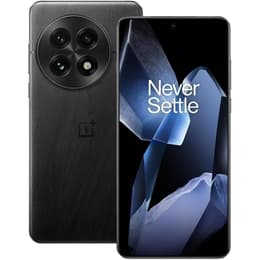
OnePlus 13 Vs OnePlus Open
- 1-year minimum warranty
- Free delivery on all orders
- Free 30-day returns
Differences at a glance
The OnePlus 13 (2025) and the OnePlus Open (2023) represent two distinct approaches to mobile device engineering within the smartphone category. While the OnePlus 13 follows a traditional slate form factor focused on internal hardware refinements, the OnePlus Open introduces a foldable design that transforms into a tablet-sized workspace. These models differ fundamentally in their physical structure, display layout, and intended daily handling experience while sharing a common brand ecosystem and operating system framework.
Available Models
Colour
Storage
Scores
Durability
When examining software longevity and structural durability, both devices offer robust support timelines and build quality standards suited for long-term ownership as quality-assured refurbished options.
- Software support: Both models receive multi-year operating system upgrades and security patches, though the newer release date of the OnePlus 13 extends its overall software lifecycle window by two years.
- Repairability and physical wear: The traditional slate build of the OnePlus 13 presents simpler maintenance requirements over time, whereas the folding hinge mechanism and flexible internal screen of the OnePlus Open require careful handling and specialized structural maintenance.
- Expected lifespan: Internal components on both devices handle everyday demands reliably, though users selecting the folding model should factor in the natural aging process of folding display layers during extended daily use.
Year of Release
2025
2023
Compatible with latest Update
Yes
Yes
OS
Android
Android
Foldable
No
Yes
Performance
System responsiveness and hardware capabilities differ between the two devices due to their generation gap and internal cooling layouts for multitasking and heavy applications.
- Multitasking and storage: Both configurations offer generous RAM allocations and high storage capacities, allowing seamless switching between demanding background applications and split-screen workflows.
- Everyday fluidity: The current-generation processor inside the OnePlus 13 manages intense processing tasks and app loading with slightly higher thermal efficiency compared to the previous-generation hardware inside the OnePlus Open.
- Battery behavior: The larger physical footprint of the OnePlus 13 accommodates a higher-capacity battery that easily lasts through a full day of heavy use, whereas the dual-screen configuration of the OnePlus Open results in more frequent charging cycles during extended multitasking sessions.
Screen quality
Display technology represents the most visible divergence, contrasting a high-resolution traditional panel against a versatile dual-screen folding setup.
- Display configuration: The OnePlus 13 provides a single curved glass panel with high peak brightness and vivid color reproduction, while the OnePlus Open utilizes an outer cover screen alongside a tablet-sized inner folding display for expanded viewing space.
- Outdoor visibility: Both screens reach high maximum brightness thresholds, ensuring clear legibility and sharp text rendering under direct sunlight during outdoor navigation.
- Motion smoothness: High refresh rates on both devices ensure fluid scrolling through web pages, smooth animations, and responsive touch feedback during daily interaction.
Resolution
1440 x 3168
2268 x 2440
Screen type
AMOLED
Foldable LTPO3 Flexi-fluid AMOLED
Audiovisual
Optics and media consumption features vary depending on how each chassis accommodates camera sensors and internal speaker assemblies.
- Photography performance: Both devices feature versatile multi-lens rear camera arrays co-engineered with prominent optics brands, delivering balanced color accuracy and sharp detail in everyday lighting conditions and low-light environments.
- Video and audio output: Video recording remains stable and detailed across both models, while their stereo speaker setups provide clear vocal projection and balanced sound output for media playback and hands-free calls.
- Microphone clarity: Integrated multi-microphone arrays isolate background noise effectively during phone calls and voice recordings.
Miscellaneous
Practical everyday features, physical dimensions, and connectivity options shape how each device fits into travel and professional routines.
- Connectivity and ports: Both models support modern 5G networks, fast Wi-Fi standards, and Bluetooth connectivity, utilizing reversible USB-C ports for charging and data transfer.
- Security and biometrics: Fast facial recognition and responsive fingerprint sensors integrated into the power button or display offer secure and immediate device unlocking.
- Handling and dimensions: The OnePlus 13 maintains a familiar, slim slate profile that rests comfortably in one hand, whereas the OnePlus Open is thicker and heavier when folded but offers a much larger workspace when unfolded.
Weight
213 g
239 g
Screen size (in)
6.82
7.82
Network
5G
5G
SIM card
Dual Physical SIM
Dual Physical SIM + eSIM
Carrier compatibility
Unlocked
Unlocked
Connector
USB-C
USB-C
What the community thinks
User feedback from online communities highlights distinct advantages for each device configuration. Owners of the OnePlus 13 frequently praise its reliable battery longevity, comfortable ergonomics, and swift performance during demanding tasks, though some note that a traditional slate form factor lacks the expansive workspace of a tablet. Conversely, users of the OnePlus Open appreciate the genuine productivity benefits of a folding inner screen and seamless multitasking layout, while acknowledging that the heavier chassis and visible crease on the folding display require some adjustment.
Users who prioritize traditional ergonomics, maximum battery endurance, and long-term hardware simplicity will find the OnePlus 13 well-suited to their daily routines. Meanwhile, users prioritizing expanded screen real estate for multitasking, media consumption, and document editing may lean toward the OnePlus Open as a sustainable choice in a refurbished condition. Selecting between these two devices depends entirely on whether a user values a streamlined single-screen smartphone experience or the versatile transformation of a foldable workspace.