

iPhone 16 Pro Max Vs OnePlus 10 Pro

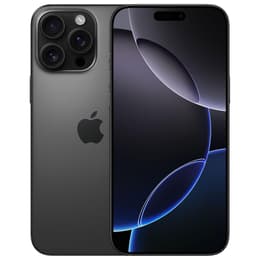
iPhone 16 Pro Max
iPhone 16 Pro Max
Starting at

Refurbished price:821.00

Versus €1,489.00 new

See options
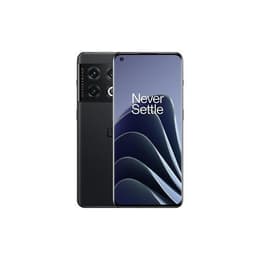
OnePlus 10 Pro
OnePlus 10 Pro
Starting at

Refurbished price:228.00

Versus €999.00 new

See options

Ratings

The iPhone 16 Pro Max, released in September 2024, and the OnePlus 10 Pro, launched in early 2022, represent different generations and ecosystems within the smartphone market. While both are designed as flagship devices, the iPhone 16 Pro Max offers Apple's latest advancements in hardware and software, running on iOS 18, whereas the OnePlus 10 Pro operates on Android, initially with OxygenOS 12. This comparison will explore their core differences in design, capabilities, and user experience.

Scores

Durability

When considering the long-term usability of these devices, their release timelines and software support are key factors.

  • Release Timeline and OS Support: The iPhone 16 Pro Max, being a 2024 release, benefits from a longer expected period of major iOS updates, typically extending for five to six years from its launch. The OnePlus 10 Pro, released in 2022, has already received several Android updates, with OxygenOS 16 anticipated in early 2026, but its overall software support window will naturally be shorter than the newer iPhone model.
  • Physical Durability: The iPhone 16 Pro Max features a titanium frame and Ceramic Shield front cover, contributing to its robust build and IP68 water and dust resistance. The OnePlus 10 Pro utilizes Gorilla Glass Victus for screen protection, but some international versions lack an official IP rating, and early durability tests indicated a susceptibility to bending under significant pressure.
  • Practical Lifespan: Users prioritizing the longest possible software longevity and robust physical construction may find the iPhone 16 Pro Max a more suitable option for extended use. The OnePlus 10 Pro, while offering a premium feel, may require more careful handling and will reach its end-of-software-support sooner.

Year of Release

2024

2022

Compatible with latest Update

Yes

Yes

Foldable

No

No

Performance

Both devices are equipped with powerful internal components designed for smooth operation, though they approach performance from different architectural standpoints.

  • Processing Power: The iPhone 16 Pro Max is powered by Apple's A18 Pro chip, which provides substantial processing capabilities for demanding applications, intensive multitasking, and advanced gaming. The OnePlus 10 Pro features the Qualcomm Snapdragon 8 Gen 1 processor, which also delivers strong performance for everyday tasks and gaming, though it is an older generation chipset.
  • System Responsiveness and Multitasking: The iPhone 16 Pro Max, with its optimized iOS ecosystem and 8GB of RAM, offers fluid navigation and efficient app management. The OnePlus 10 Pro, available with 8GB or 12GB of RAM, provides a responsive Android experience, handling multiple applications and heavy workloads effectively.
  • Storage Options: The iPhone 16 Pro Max is available with internal storage options up to 1TB, catering to users with extensive media and application libraries. The OnePlus 10 Pro offers configurations up to 256GB of internal storage.

Memory (GB)

8 GB

8 GB

Screen quality

The visual experience on both smartphones is a highlight, with each offering a high-quality display tailored to their respective designs.

  • Display Technology and Clarity: The iPhone 16 Pro Max features a 6.9-inch LTPO Super Retina XDR OLED display, known for its deep blacks, vibrant colors, and high resolution of 2868x1320 pixels. The OnePlus 10 Pro comes with a 6.7-inch Fluid AMOLED display with a 3216x1440 pixel resolution, also providing excellent clarity and color reproduction.
  • Brightness and Refresh Rate: The iPhone 16 Pro Max offers a typical brightness of 1000 nits, peaking at 2000 nits for HDR content, and an adaptive 120Hz ProMotion refresh rate for smooth scrolling and responsiveness. The OnePlus 10 Pro's display reaches a peak brightness of 1300 nits and utilizes LTPO 2.0 technology for a variable refresh rate from 1Hz to 120Hz, optimizing power efficiency.
  • Viewing Experience: The iPhone 16 Pro Max provides a large, immersive viewing area with minimal bezels. The OnePlus 10 Pro features a curved display, which some users find enhances immersion for media consumption, though it can also introduce minor visual distortions or accidental touches.

Resolution

1320 x 2868

1440 x 3216

Screen type

LTPO Super Retina XDR OLED

LTPO2 Fluid AMOLED

Audiovisual

Both devices offer advanced camera systems, but with different approaches to imaging and feature sets.

  • Rear Camera Systems: The iPhone 16 Pro Max boasts a versatile triple camera setup, including a 48MP main sensor, a 48MP ultrawide lens with a 120-degree field of view, and a 12MP telephoto lens capable of 5x optical zoom. The OnePlus 10 Pro also features a triple camera array with a 48MP main sensor, a 50MP ultrawide lens offering a wide 150-degree field of view, and an 8MP telephoto lens with 3.3x optical zoom.
  • Photography Performance: The iPhone 16 Pro Max excels in various lighting conditions, with improved low-light performance and advanced computational photography features like Spatial Video. The OnePlus 10 Pro, with its Hasselblad collaboration, aims for natural color calibration and offers a Pro Mode for manual adjustments, performing well in everyday scenarios.
  • Video Capabilities: The iPhone 16 Pro Max supports 4K video recording at up to 120 frames per second, along with ProRes and Cinematic modes. The OnePlus 10 Pro is capable of 8K video recording at 24fps and 4K at up to 120fps, with features like Optical Image Stabilization (OIS) and Electronic Image Stabilization (EIS for smooth footage.

Main camera

48 megapixels

48 megapixels

Front camera

12 megapixels

32 megapixels

Miscellaneous

Beyond the core specifications, several other features contribute to the overall user experience of these smartphones.

  • Connectivity and Ports: The iPhone 16 Pro Max supports the latest Wi-Fi 7 standard and 5G connectivity, featuring a USB-C port for charging and data transfer. It also utilizes eSIM technology, with some regions offering dual eSIM support. The OnePlus 10 Pro supports Wi-Fi 6 and 5G, also featuring a USB-C port, but typically includes a physical SIM tray alongside eSIM capabilities in some regions.
  • Biometric Security and Design: Both devices offer advanced biometric security. The iPhone 16 Pro Max relies on Face ID for secure authentication. The OnePlus 10 Pro incorporates an optical in-display fingerprint sensor. The iPhone 16 Pro Max has a titanium design, while the OnePlus 10 Pro features a glass back and metal frame.
  • Battery and Charging: The iPhone 16 Pro Max has a battery capacity of approximately 4676 mAh, supporting up to 40W wired charging and 25W MagSafe wireless charging. The OnePlus 10 Pro houses a larger 5000 mAh battery and offers faster 80W SuperVOOC wired charging (65W in North America) and 50W AirVOOC wireless charging.

Weight

227 g

201 g

Screen size (in)

6.9

6.7

Network

5G

5G

SIM card

Physical SIM + eSIM

Physical SIM

Carrier compatibility

Unlocked

Unlocked

Connector

USB-C (USB 3)

USB-C

User feedback for the iPhone 16 Pro Max frequently highlights its exceptional battery life, often cited as one of the longest-lasting iPhones, and its significant camera improvements, particularly in low-light conditions and video capabilities. Users also appreciate the seamless integration within the Apple ecosystem and the robust performance for demanding tasks. Some common praise points for the OnePlus 10 Pro include its vibrant display, very fast wired charging speeds, and generally smooth Android experience.

Conversely, the OnePlus 10 Pro faced some criticisms regarding inconsistencies in camera performance compared to top-tier rivals at its launch, and notable concerns were raised about its structural durability in bend tests. While the iPhone 16 Pro Max generally receives positive feedback, some users might find its larger size and weight a consideration.

Users prioritizing the absolute latest in mobile technology, a long software support lifespan, and a highly refined camera system with strong video capabilities will find the iPhone 16 Pro Max well-suited to their needs. Its extended battery life also makes it a strong contender for heavy users. For those who value rapid charging, a customizable Android experience, and a vibrant display, the OnePlus 10 Pro remains a capable device. It could be a practical choice for users who are comfortable with a slightly older flagship and appreciate the unique features of OxygenOS. Both devices are available as quality-assured refurbished options, offering a sustainable choice for consumers.


See all articles

Our recent comparisons