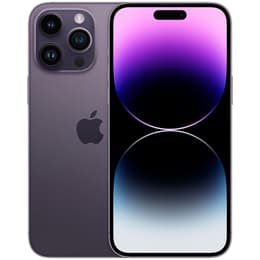


iPhone 14 Pro Max Vs Xiaomi Redmi Note 14 Pro

iPhone 14 Pro Max
iPhone 14 Pro Max
Starting at

Refurbished price:446.00

Versus €1,489.00 new

See options
Xiaomi Redmi Note 14 Pro
Starting at

Refurbished price:260.77

Versus €349.99 new

See options

Ratings

The iPhone 14 Pro Max (2022) and the Xiaomi Redmi Note 14 Pro (2025) are both large-screen smartphones, yet they cater to different user expectations and priorities. While the iPhone offers a premium ecosystem with advanced processing and camera capabilities, the Redmi Note 14 Pro focuses on delivering a feature-rich experience with a modern design and robust display technology.

Scores

Durability

The practical lifespan of a smartphone is influenced by its release timeline, software support, and physical durability.

  • Release Timeline: The iPhone 14 Pro Max was released in September 2022, making it an older model compared to the Xiaomi Redmi Note 14 Pro, which launched globally in January 2025. This difference in release dates impacts their respective software support cycles.
  • Software Longevity: The iPhone 14 Pro Max, running on iOS, typically receives major software updates for approximately 5-6 years from its release, extending its functional life well into the future. The Xiaomi Redmi Note 14 Pro, based on Android with HyperOS, is expected to receive 2-3 years of major OS updates and around 4 years of security updates, offering a shorter, though still substantial, support period.
  • Physical Durability: Both devices feature robust build materials. The iPhone 14 Pro Max utilizes a Ceramic Shield front and a stainless steel frame, contributing to its resilience. The Redmi Note 14 Pro boasts Corning Gorilla Glass Victus 2 protection on its display and an IP68 rating for dust and water resistance, indicating a high level of protection against environmental elements.

Year of Release

2022

2025

OS

iOS

Android

Foldable

No

No

Performance

Performance is a key differentiator, impacting how smoothly applications run and how efficiently the device handles demanding tasks.

  • System Responsiveness: The iPhone 14 Pro Max is equipped with a powerful processor designed for seamless multitasking, rapid app loading, and fluid navigation through its operating system. Users can expect consistent high performance even with graphically intensive applications and games.
  • Multitasking and Storage: The iPhone 14 Pro Max comes with 6GB of RAM, which supports efficient multitasking across various applications. It offers storage options up to 1TB, providing ample space for extensive media libraries and numerous applications. The Redmi Note 14 Pro, with 8GB or 12GB of RAM, also handles multiple applications effectively, though some users report occasional stutters with the most demanding games. Its storage options go up to 512GB.
  • Battery Behavior: The iPhone 14 Pro Max features a 4323 mAh or 4352 mAh battery, known for providing excellent endurance through a full day of heavy use, though the always-on display can influence this. The Redmi Note 14 Pro houses a larger 5500 mAh battery, which generally translates to extended usage times for most users.

Memory (GB)

6 GB

8 GB

Screen quality

The display is the primary interface for user interaction, and both devices offer high-quality viewing experiences with distinct characteristics.

  • Display Technology and Clarity: The iPhone 14 Pro Max features a 6.7-inch Super Retina XDR OLED display, delivering deep blacks, vibrant colors, and a sharp resolution of 2796x1290 pixels. The Redmi Note 14 Pro also sports a 6.67-inch AMOLED display with a 1.5K resolution (2712x1220 pixels), offering clear visuals and rich color reproduction.
  • Brightness and Refresh Rate: The iPhone 14 Pro Max provides a typical brightness of 1000 nits and can reach a peak of 2000 nits for outdoor visibility, alongside a 120Hz ProMotion adaptive refresh rate for smooth scrolling and responsiveness. The Redmi Note 14 Pro matches this with a 120Hz refresh rate and an impressive peak brightness of 3000 nits, ensuring excellent visibility even in bright conditions.
  • Unique Display Features: The iPhone 14 Pro Max introduces the Dynamic Island, an interactive area around the front camera cutout that displays alerts and live activities. It also includes an Always-On display. The Redmi Note 14 Pro emphasizes its curved display design and features like 1920Hz PWM dimming for eye comfort and wet hand touch control for practical use.

Resolution

1290 x 2796

1080x2400

Audiovisual

Both smartphones offer advanced camera systems designed to capture high-quality photos and videos, though with different approaches and capabilities.

  • Rear Camera Systems: The iPhone 14 Pro Max features a versatile triple-camera setup, including a 48MP main sensor with sensor-shift optical image stabilization (OIS), a 12MP ultra-wide lens, and a 12MP telephoto lens with 3x optical zoom. It also offers a 2x optical zoom option utilizing the main sensor. The Redmi Note 14 Pro comes with a 200MP main camera with OIS, an 8MP ultra-wide lens, and a 2MP macro sensor.
  • Photography Performance: The iPhone 14 Pro Max is praised for its excellent detail, realistic color reproduction, and strong low-light performance, enhanced by features like Photonic Engine and Apple ProRAW. The Redmi Note 14 Pro's 200MP sensor captures detailed photos, especially in good lighting, and utilizes pixel binning for improved low-light shots.
  • Video Recording and Front Camera: The iPhone 14 Pro Max supports 4K video recording at up to 60 frames per second, with advanced features like Cinematic mode (up to 4K HDR at 30fps) and Action mode for stabilized footage. Its 12MP front camera includes autofocus. The Redmi Note 14 Pro offers 4K video recording on its 5G variant and features a 20MP front camera, though it lacks autofocus and 4K video recording for selfies.

Front camera

12 megapixels

32 MP

Miscellaneous

Beyond core performance and display, several practical features contribute to the overall user experience and device utility.

  • Connectivity and Ports: Both devices support 5G cellular connectivity and modern Wi-Fi standards. The iPhone 14 Pro Max uses a Lightning port for charging and data transfer, while the Redmi Note 14 Pro features a USB-C port. The Redmi Note 14 Pro also retains a headphone jack in some variants.
  • Biometric Security and Navigation: The iPhone 14 Pro Max relies on Face ID for secure facial recognition. The Redmi Note 14 Pro incorporates an in-display fingerprint sensor and Face Unlock for biometric authentication.
  • Design and Handling: The iPhone 14 Pro Max has a stainless steel frame and weighs 240 grams, offering a substantial feel. The Redmi Note 14 Pro, with its curved design and glass or vegan leather finishes, weighs around 190 grams, providing a lighter in-hand feel. The iPhone 14 Pro Max sold in the US does not support physical SIM cards, relying solely on eSIM.

Weight

120 g

180 g

Screen size (in)

6.7

6.67

Network

5G

4G

SIM card

Physical SIM + eSIM

Dual Physical SIM

Carrier compatibility

Unlocked

Unlocked

The iPhone 14 Pro Max and the Xiaomi Redmi Note 14 Pro offer distinct propositions for users seeking a large-screen smartphone. User feedback for the iPhone 14 Pro Max often highlights its exceptional camera quality, powerful performance for demanding applications, and the intuitive experience of the Dynamic Island. Common criticisms sometimes point to its weight and the impact of the always-on display on battery life.

For the Xiaomi Redmi Note 14 Pro, users frequently praise its vibrant and bright AMOLED display, robust build quality with Gorilla Glass Victus 2, and its capable main camera. Some users note that its processor, while generally good for everyday tasks, might struggle with the most graphically intensive games, and the software update policy is shorter compared to its competitor.

Users prioritizing a long-term software commitment, a highly refined ecosystem, and top-tier video capabilities may find the iPhone 14 Pro Max well-suited to their needs. Conversely, individuals who value a modern design with a very bright display, a high-megapixel main camera, and a larger battery capacity, while being open to a shorter software support window, might lean towards the Xiaomi Redmi Note 14 Pro. Both devices are available as quality-assured refurbished options, providing an eco-friendly alternative for consumers.

See all articles

Our recent comparisons






