

iPhone 14 Pro Max Vs iPhone SE (2020)

iPhone 14 Pro Max
iPhone 14 Pro Max
Starting at

Refurbished price:446.00

Versus €1,489.00 new

See options
iPhone SE (2020)
iPhone SE (2020)
Starting at

Refurbished price:99.00

Versus €319.00 new

See options

Ratings

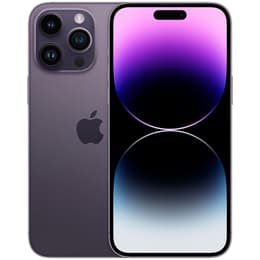
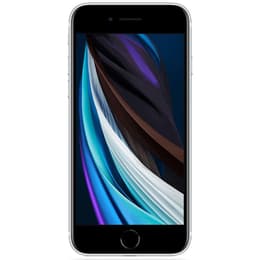
The iPhone 14 Pro Max, released in September 2022, and the iPhone SE 2020, launched in April 2020, represent distinct approaches within Apple's smartphone lineup. While both operate on the iOS platform, the 14 Pro Max offers a larger, more advanced display and a sophisticated camera system, catering to users seeking premium features. The iPhone SE 2020, conversely, provides a compact form factor and a more streamlined feature set, appealing to those who prefer a traditional design.

Scores

Durability

When considering the practical lifespan of these devices, several factors come into play, including their release timelines, software support, and repairability.

  • Release Timeline and OS Support: The iPhone 14 Pro Max, being a 2022 model, benefits from a longer expected period of iOS updates compared to the iPhone SE 2020, which was released two years earlier in 2020. This means the 14 Pro Max will likely receive new software features and security updates for a longer duration, extending its functional life. The iPhone SE 2020 was originally supplied with iOS 13.4 and has received updates to every version of iOS since, including iOS 26 released in 2025.
  • Repairability: The iPhone SE 2020 has been noted for its relatively straightforward repairability, scoring a 6 out of 10 by iFixit. Many of its components are modular and some are cross-compatible with the iPhone 8, making parts easier to source and repairs for common issues like screen and battery replacement more accessible. Information regarding the repairability score for the iPhone 14 Pro Max is less readily available, but generally, newer flagship iPhones tend to have more complex internal designs.
  • Expected Practical Lifespan: Users prioritizing the longest possible software support and access to the latest features may find the iPhone 14 Pro Max a more future-proof option. However, for users who value ease of repair and a device that can be maintained for several years with readily available parts, the iPhone SE 2020 presents a practical choice.

Year of Release

2022

2020

Compatible with latest Update

Yes

Yes

OS

iOS

iOS

Foldable

No

No

Performance

The performance capabilities of the iPhone 14 Pro Max and the iPhone SE 2020 differ significantly, impacting how smoothly they handle demanding applications and multitasking.

  • Processor Capabilities: The iPhone 14 Pro Max features a more recent generation processor, which translates to noticeably faster app loading times, smoother transitions between applications, and enhanced performance for graphically intensive games and complex tasks. The iPhone SE 2020, while still capable for everyday use, relies on an older generation processor, which may show limitations when running the most demanding applications or engaging in heavy multitasking.
  • Storage Options: The iPhone 14 Pro Max offers a wider range of storage configurations, starting from 128GB and going up to 1TB, providing ample space for extensive photo and video libraries, numerous applications, and large files. The iPhone SE 2020 comes with storage options of 64GB, 128GB, and 256GB, which may be sufficient for average users but could be restrictive for those who store a lot of media or large applications.
  • Battery Behavior: The iPhone 14 Pro Max is equipped with a larger battery, providing extended usage times. Users often report that it can comfortably last through a full day of heavy use, with some tests indicating over 13 hours of web browsing on a cellular network. The iPhone SE 2020 has a smaller battery capacity, meaning it typically requires more frequent charging, especially for users with moderate to heavy usage patterns.

Memory (GB)

6 GB

3 GB

Screen quality

The display experience is a key differentiator between these two iPhone models, impacting visual clarity, brightness, and overall viewing enjoyment.

  • Display Technology and Size: The iPhone 14 Pro Max features a large 6.7-inch Super Retina XDR OLED display, offering deep blacks, vibrant colors, and excellent contrast. In contrast, the iPhone SE 2020 has a more compact 4.7-inch Retina HD LCD display, which provides good color accuracy but does not match the contrast and black levels of an OLED panel.
  • Resolution and Brightness: The 14 Pro Max boasts a higher resolution of 2796 x 1290 pixels at 460 pixels per inch (ppi), resulting in sharper text and more detailed images. It also offers significantly higher peak brightness, reaching up to 2000 nits outdoors, making it highly visible even in direct sunlight. The iPhone SE 2020 has a resolution of 1334 x 750 pixels at 326 ppi and a typical maximum brightness of 625 nits, which is adequate for most indoor conditions but can be less visible in bright outdoor environments.
  • Refresh Rate and Features: The iPhone 14 Pro Max includes ProMotion technology, allowing for an adaptive refresh rate up to 120Hz. This results in smoother scrolling and more fluid animations, enhancing the overall user experience. It also features an Always-On display and the Dynamic Island, which integrates notifications and activities into a dynamic area at the top of the screen. The iPhone SE 2020 has a standard 60Hz refresh rate and lacks these advanced display features.

Resolution

1290 x 2796

750 x 1334

Screen type

LTPO Super Retina XDR OLED

Retina IPS LCD

Audiovisual

The camera systems on the iPhone 14 Pro Max and iPhone SE 2020 offer different capabilities, particularly in terms of versatility and low-light performance.

  • Rear Camera System: The iPhone 14 Pro Max features a sophisticated triple-lens rear camera system, including a 48MP Main sensor, a 12MP Ultra Wide lens, and a 12MP Telephoto lens, providing a wide range of photographic options and optical zoom capabilities. The 48MP main sensor, in particular, allows for greater detail capture and improved low-light performance through pixel binning. The iPhone SE 2020 has a single 12MP wide-angle rear camera, which is capable of good photos in well-lit conditions but lacks the versatility and advanced features of the 14 Pro Max's multi-lens setup.
  • Low-Light and Video Performance: The 14 Pro Max excels in low-light photography due to its larger sensor and advanced image processing, including the Photonic Engine, which enhances detail and color in challenging lighting. It also offers advanced video recording features like Cinematic mode up to 4K HDR at 30 fps and Action mode for stabilized video. The iPhone SE 2020's low-light performance is more limited, and its video capabilities, while including 4K recording, do not feature the advanced stabilization or cinematic effects found on the 14 Pro Max.
  • Front Camera and Audio: The iPhone 14 Pro Max includes a 12MP TrueDepth front camera with autofocus, leading to sharper selfies and improved video calls. The iPhone SE 2020 has a 7MP front camera without autofocus. Both devices offer good microphone quality for calls and recording, and their speakers provide a clear audio experience for media consumption, though the 14 Pro Max generally offers a richer sound profile.

Main camera

48 megapixels

12 megapixels

Front camera

12 megapixels

7 megapixels

Miscellaneous

Beyond core features, several practical elements differentiate the iPhone 14 Pro Max and iPhone SE 2020, influencing daily usability and connectivity.

  • Connectivity Options: The iPhone 14 Pro Max supports 5G cellular connectivity, offering faster download and upload speeds in compatible areas, along with Wi-Fi 6 and Bluetooth 5.3. The iPhone SE 2020 supports 4G LTE, Wi-Fi 6, and Bluetooth 5.0, which are still robust for most tasks but do not offer the same peak speeds as 5G. The 14 Pro Max also includes Emergency SOS via satellite for critical situations outside cellular and Wi-Fi coverage.
  • Ports and Sensors: Both devices utilize the Lightning port for charging and data transfer. A key difference lies in biometric authentication: the iPhone 14 Pro Max uses Face ID for secure facial recognition, while the iPhone SE 2020 features Touch ID integrated into its home button for fingerprint recognition.
  • Design and Build Materials: The iPhone 14 Pro Max features a larger design with a stainless steel frame and Ceramic Shield front cover, contributing to its premium feel and enhanced durability. It also has an IP68 rating for dust and water resistance, allowing for submersion up to 6 meters for 30 minutes. The iPhone SE 2020 has a more compact design with an aluminum frame and glass front and back, and an IP67 rating for dust and water resistance, protecting against submersion up to 1 meter for 30 minutes. The 14 Pro Max weighs 240g, while the SE 2020 is significantly lighter at 148g.

Weight

120 g

148 g

Screen size (in)

6.7

4.7

Network

5G

4G

SIM card

Physical SIM + eSIM

Physical SIM + eSIM

Carrier compatibility

Unlocked

Unlocked

Connector

Lightning

Lightning

User sentiment for the iPhone 14 Pro Max frequently highlights its exceptional battery life, powerful performance, and advanced camera system as major praise points. Users appreciate the immersive display and the versatility offered by its photographic capabilities. Common criticisms, though less frequent, sometimes point to its large size and weight, which might not suit all users' preferences for one-handed use. The iPhone SE 2020 is often praised for its compact form factor, familiar design with Touch ID, and its ability to handle everyday tasks reliably. Users value its portability and the continued software support it receives. Some frequent criticisms include its smaller, less vibrant LCD display compared to newer models, and its battery life, which may require more frequent charging for heavy users.

Users prioritizing a large, vibrant display, cutting-edge camera technology, and extended battery life for demanding tasks and media consumption will find the iPhone 14 Pro Max well-suited to their needs. Its advanced features cater to those who want the latest smartphone innovations. Conversely, users who prefer a smaller, more traditional iPhone design with a physical home button, and who primarily use their device for everyday communication, browsing, and casual photography, may lean toward the iPhone SE 2020. It remains a capable device for those who value portability and a familiar user experience.

For those considering either of these models, exploring quality-assured refurbished options can be an eco-friendly alternative to purchasing new, offering a sustainable choice without compromising on functionality.

See all articles

Our recent comparisons