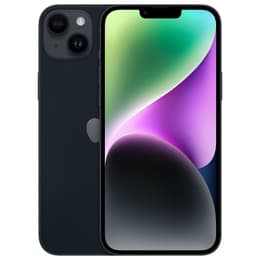
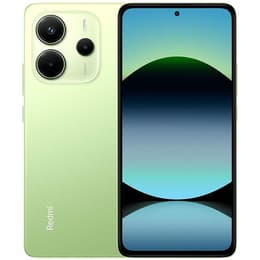


iPhone 14 Plus Vs Xiaomi Redmi Note 14 4G

iPhone 14 Plus
iPhone 14 Plus
Starting at

Refurbished price:317.00

Versus €879.00 new

See options
Xiaomi Redmi Note 14 4G
Starting at

Refurbished price:162.00

Versus €229.99 new

See options

Ratings

The iPhone 14 Plus, released in October 2022, and the Xiaomi Redmi Note 14 4G, launched in late 2024 or early 2025, represent distinct approaches to smartphone design and functionality. While both devices offer large displays and capable cameras, they differ significantly in their underlying operating systems and core hardware philosophies. The iPhone 14 Plus operates on Apple's iOS, emphasizing a streamlined user experience, whereas the Redmi Note 14 4G runs on Android with Xiaomi's HyperOS, offering more customization.

Scores

Durability

When considering the long-term usability of these devices, their release timelines and software support policies are key differentiators.

  • Release and Software Support: The iPhone 14 Plus, released in October 2022, typically receives iOS updates for approximately five to six years from its launch, extending its software longevity. The Redmi Note 14 4G, a newer device released in late 2024 or early 2025, is notable for its extended Android support, promising four major OS upgrades (up to Android 18) and six years of security updates, with an estimated end-of-life for updates in 2031.
  • Physical Durability: The iPhone 14 Plus features a Ceramic Shield front and an aluminum design, along with an IP68 rating for dust and water resistance, indicating a high level of protection against environmental elements. The Redmi Note 14 4G offers Corning Gorilla Glass 5 for screen protection and carries an IP54 rating, providing resistance against dust and splashes.
  • Expected Lifespan: Both devices are built to last, but their practical lifespan can be influenced by software support and physical resilience. The iPhone's robust build and consistent, long-term software updates contribute to its extended usability. The Redmi Note 14 4G's impressive commitment to software updates for an Android device also positions it for a considerable functional lifespan, allowing users to benefit from new features and security patches over many years.

Year of Release

2022

2025

OS

iOS

Android

Foldable

No

No

Performance

The performance of a smartphone is crucial for daily tasks, app usage, and overall responsiveness, and these two devices offer different experiences.

  • Processing Power: The iPhone 14 Plus is equipped with a powerful processor that ensures smooth operation for demanding applications, multitasking, and graphically intensive games. This hardware allows for efficient handling of complex tasks and provides a responsive user experience. The Redmi Note 14 4G features a Mediatek Helio G99 Ultra processor, which delivers smooth performance for general usage, multitasking, and streaming. While capable for most games, it may experience occasional stutters with very high graphics settings.
  • Multitasking and Storage: The iPhone 14 Plus comes with 6GB of RAM, facilitating efficient multitasking and app management. It offers internal storage options of 128GB, 256GB, and 512GB. The Redmi Note 14 4G is available with either 6GB or 8GB of RAM and 128GB or 256GB of internal storage, with the added flexibility of expandable storage via a microSDXC card, utilizing a hybrid SIM slot.
  • Battery Behavior: The iPhone 14 Plus, with its 4325 mAh battery, is known for its excellent battery endurance, often providing a full day or more of usage for many users. The Redmi Note 14 4G houses a larger 5500 mAh battery, also delivering very strong battery life that can easily last through a full day of heavy use. It supports 33W wired fast charging.

Memory (GB)

6 GB

6 GB

Screen quality

The visual experience is a primary interaction point for users, and both phones offer large, vibrant displays with distinct characteristics.

  • Display Technology and Size: The iPhone 14 Plus features a 6.7-inch Super Retina XDR OLED display, known for its deep blacks and vibrant colors. The Redmi Note 14 4G also boasts a 6.67-inch AMOLED display, providing rich colors and strong contrast.
  • Resolution and Clarity: The iPhone 14 Plus offers a resolution of 2778 x 1284 pixels, resulting in a pixel density of 458 pixels per inch (ppi), which delivers sharp and detailed visuals. The Redmi Note 14 4G has a resolution of 1080 x 2400 pixels, with approximately 395 ppi, offering clear and crisp imagery for everyday viewing.
  • Brightness and Refresh Rate: For outdoor visibility, the iPhone 14 Plus achieves a typical maximum brightness of 800 nits and a peak HDR brightness of 1200 nits. Its display operates at a standard 60Hz refresh rate. The Redmi Note 14 4G offers a higher peak brightness, reaching up to 1800 nits (with some sources indicating 2100 nits), ensuring excellent visibility even in bright sunlight. It also features a smoother 120Hz refresh rate, which enhances scrolling and animation fluidity.

Resolution

1284 x 2778

1080x2400

Audiovisual

Both smartphones provide camera systems designed to capture moments, though with different strengths and capabilities.

  • Rear Camera System: The iPhone 14 Plus is equipped with a dual 12MP rear camera system, featuring a main lens with a wide f/1.5 aperture and an ultrawide lens with an f/2.4 aperture. It includes features like Photonic Engine, Deep Fusion, and Smart HDR 4 for enhanced image processing. The Redmi Note 14 4G features a triple rear camera setup, highlighted by a 108MP main sensor with an f/1.7 aperture and 3x in-sensor zoom, complemented by 2MP macro and 2MP depth sensors. It notably lacks an ultrawide camera.
  • Photography Performance: In good lighting conditions, the iPhone 14 Plus's main camera delivers detailed and color-accurate photos, with its low-light performance being generally strong. The ultrawide camera, however, may show some limitations in challenging light. The Redmi Note 14 4G's 108MP main camera captures sharp and detailed images in well-lit environments, but its low-light performance can struggle due to the absence of optical image stabilization.
  • Video Recording and Front Camera: Both devices offer capable video recording. The iPhone 14 Plus supports up to 4K video recording at 60 frames per second and includes Cinematic Mode for depth-of-field effects. Its 12MP TrueDepth front camera has an f/1.9 aperture. The Redmi Note 14 4G's video quality is generally considered acceptable, though not exceptional, particularly in low light. It features a 20MP front camera with an f/2.4 aperture, which can automatically switch to wide-angle for group shots.

Miscellaneous

Beyond core performance, several practical elements contribute to the overall user experience and daily convenience.

  • Connectivity and Ports: The iPhone 14 Plus supports 5G cellular connectivity and features a Lightning port for charging and data transfer. The Redmi Note 14 4G, as its name suggests, is limited to 4G connectivity but includes Wi-Fi 5 and Bluetooth 5.3. It uses a USB Type-C port and retains a 3.5mm headphone jack, a feature not present on the iPhone.
  • Biometric Security and Other Features: For security, the iPhone 14 Plus relies on Face ID for facial recognition. The Redmi Note 14 4G incorporates an in-display fingerprint sensor for secure access. Additionally, the Redmi Note 14 4G includes an IR Blaster, allowing it to function as a universal remote control for household appliances, and offers NFC in some regions.
  • Design and Handling: The iPhone 14 Plus measures 160.8 x 78.1 x 7.80 mm and weighs 203 grams, featuring a glass back and aluminum frame. The Redmi Note 14 4G has dimensions of 163.25 x 76.55 x 8.16 mm and weighs 196.5 grams, with flat edges designed for a comfortable grip.

Weight

150 g

196 g

Screen size (in)

6.7

6.67

Network

5G

4G

SIM card

eSIM

Physical SIM + eSIM

Carrier compatibility

Unlocked

Unlocked

User feedback for the iPhone 14 Plus frequently highlights its exceptional battery life and large, immersive display as significant advantages. Many users appreciate the consistent performance and the seamless integration within the Apple ecosystem. A common point of discussion, however, is the standard 60Hz refresh rate of its display, which some users note as a difference compared to devices with higher refresh rates.

The Xiaomi Redmi Note 14 4G receives praise for its vibrant 120Hz AMOLED display, robust battery life, and the strong performance of its main camera in good lighting conditions. Users also value its extended software support policy, which is a notable commitment for an Android device. Criticisms often revolve around the absence of an ultrawide camera, the camera's performance in low light, and the presence of pre-installed applications. Some users also question the relevance of a 4G-only device in the current market.

Users prioritizing a large display, long battery life, and a highly integrated software experience with consistent updates may find the iPhone 14 Plus well-suited to their needs. Its strong performance and durable build make it a reliable choice for those invested in the Apple ecosystem. Conversely, individuals who value a smoother display refresh rate, expandable storage, a 3.5mm headphone jack, and an extended software support timeline on an Android platform might lean towards the Redmi Note 14 4G. Its high-resolution main camera and large battery capacity also cater to users focused on photography in good light and all-day power.

Both devices are available as quality-assured refurbished options, providing an eco-friendly alternative for consumers seeking to make informed and sustainable choices.

See all articles

Our recent comparisons






