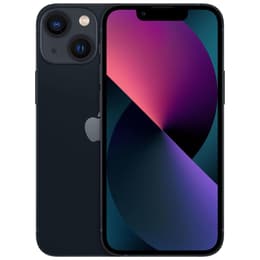
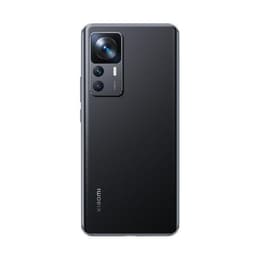


iPhone 13 mini Vs Xiaomi 12T

iPhone 13 mini
iPhone 13 mini
Starting at

Refurbished price:228.00

Versus €829.00 new

See options
Xiaomi 12T
Xiaomi 12T
Starting at

Refurbished price:135.00

Versus €649.00 new

See options

Ratings

The iPhone 13 Mini, released in September 2021, and the Xiaomi 12T, launched in October 2022, represent distinct approaches to smartphone design and functionality. While the iPhone 13 Mini offers a compact experience within Apple's iOS ecosystem, the Xiaomi 12T provides a larger display and a different set of features running on Android. These devices cater to users with varying preferences for size, operating system, and specific capabilities.

Scores

Durability

The practical lifespan of a smartphone is influenced by its build quality, software support, and ease of repair. Both devices offer different aspects in these areas.

  • Software Longevity: The iPhone 13 Mini, running on iOS, typically receives software updates for approximately five to six years from its release, with compatibility extending to iOS 18 and beyond. The Xiaomi 12T, an Android device, generally receives major Android version updates for about two to three years, with security updates potentially lasting longer.
  • Physical Durability: The iPhone 13 Mini features a Ceramic Shield front cover and an IP68 rating for water and dust resistance, indicating a high level of protection against environmental elements. The Xiaomi 12T utilizes Corning Gorilla Glass 5 for its display and has a plastic frame, but generally lacks an official IP rating for water and dust resistance.
  • Repairability: The iPhone 13 Mini initially received lower repairability scores due to proprietary parts and adhesive, though software updates have addressed some issues, bringing its score to around 6 out of 10. The Xiaomi 12T's repairability involves careful disassembly of the back cover and internal components, with some adhesive use.

Year of Release

2021

2022

Compatible with latest Update

Yes

Yes

OS

iOS

Android

Foldable

No

No

Performance

Performance in smartphones is crucial for daily tasks, from navigating apps to engaging in demanding activities like gaming. These two devices offer different hardware foundations.

  • Processing Power: The iPhone 13 Mini is equipped with a powerful current-generation processor that handles demanding applications and multitasking smoothly, ensuring a responsive user experience. The Xiaomi 12T features a capable processor designed for efficient performance, allowing for fast and smooth operation across various tasks and applications.
  • Multitasking and Storage: The iPhone 13 Mini comes with 4GB of RAM, which is sufficient for typical multitasking and app management. It offers storage options up to 512GB. The Xiaomi 12T includes 8GB of RAM, providing more headroom for extensive multitasking and running multiple applications simultaneously. Its storage options go up to 256GB.
  • Battery Behavior: Users of the iPhone 13 Mini generally report a full day of use for moderate tasks, though heavy usage may require more frequent charging due to its smaller battery capacity. The Xiaomi 12T, with its larger battery, is designed to provide extended screen-on time, often lasting through a full day of heavy use for many users.

Memory (GB)

4 GB

8 GB

Screen quality

The display is a primary interface for any smartphone, and both the iPhone 13 Mini and Xiaomi 12T offer distinct visual experiences.

  • Display Technology and Clarity: The iPhone 13 Mini features a 5.4-inch Super Retina XDR OLED display, known for its deep blacks, vibrant colors, and sharp resolution of 2340x1080 pixels at 476 pixels per inch. The Xiaomi 12T boasts a larger 6.67-inch AMOLED display with a resolution of 2712x1220 pixels at 446 pixels per inch, offering a spacious viewing area.
  • Brightness and Refresh Rate: The iPhone 13 Mini's display reaches a typical brightness of 800 nits and a peak of 1200 nits for HDR content, ensuring good visibility even in bright outdoor conditions. It operates at a standard 60Hz refresh rate. The Xiaomi 12T offers a typical brightness of 500 nits and a peak brightness of 900 nits, along with a smoother 120Hz refresh rate for fluid scrolling and animations.
  • Viewing Experience: The iPhone 13 Mini's compact screen is ideal for one-handed use and users who prefer a smaller device, while still delivering a high-quality visual experience with HDR and True Tone. The Xiaomi 12T's larger display provides an immersive experience for media consumption and gaming, enhanced by its higher refresh rate and HDR10+ support.

Resolution

1080 x 2340

1220 x 2712

Screen type

Super Retina XDR OLED

AMOLED

Audiovisual

Camera capabilities are a significant factor for many users, and both devices provide tools for capturing photos and videos.

  • Rear Camera System: The iPhone 13 Mini features a dual 12-megapixel camera system, including a wide-angle lens with a wide aperture and sensor-shift optical image stabilization, and an ultra-wide lens with a 120-degree field of view. This setup is praised for its consistent image quality, especially in low-light conditions. The Xiaomi 12T offers a versatile triple camera system, highlighted by a 108-megapixel main sensor with optical image stabilization, an 8-megapixel ultra-wide lens, and a 2-megapixel macro lens.
  • Photography Features: Both phones include features like Night mode, Portrait mode, and advanced computational photography. The iPhone 13 Mini introduces Photographic Styles and Cinematic mode for video, which adds a shallow depth of field effect. The Xiaomi 12T also provides various photography modes and features for different shooting scenarios.
  • Video and Audio: The iPhone 13 Mini supports 4K video recording at up to 60 frames per second and offers Cinematic mode at 1080p at 30 frames per second. It has stereo speakers for media playback. The Xiaomi 12T records 4K video at up to 30 frames per second and features dual stereo speakers with Dolby Atmos and Hi-Res Audio for an enhanced sound experience.

Main camera

12 megapixels

108 megapixels

Front camera

12 megapixels

20 megapixels

Miscellaneous

Beyond core features, several practical elements contribute to the overall user experience of these smartphones.

  • Connectivity and Ports: The iPhone 13 Mini uses a Lightning port for charging and data transfer. It supports 5G cellular networks, Wi-Fi 6, and Bluetooth 5.0. The Xiaomi 12T features a USB-C port, offering broad compatibility with modern accessories. It also supports 5G, Wi-Fi 6, and a more recent Bluetooth 5.3 standard.
  • Biometric Security: For secure unlocking and authentication, the iPhone 13 Mini relies on Face ID, Apple's facial recognition system. The Xiaomi 12T incorporates an in-display fingerprint sensor, providing a convenient and secure method for unlocking the device.
  • Physical Characteristics: The iPhone 13 Mini is notably compact and lightweight, measuring 131.5 x 64.2 x 7.65 mm and weighing 141 grams, making it comfortable for one-handed use and easy to carry. The Xiaomi 12T is a larger device, with dimensions of 163.1 x 75.9 x 8.6 mm and a weight of 202 grams, offering a more substantial feel in hand.

Weight

140 g

220 g

Screen size (in)

5.4

6.67

Network

5G

5G

SIM card

Physical SIM + eSIM

Dual Physical SIM

Carrier compatibility

Unlocked

Unlocked

Connector

Lightning

USB-C

User feedback often highlights the iPhone 13 Mini's appeal for its compact form factor, powerful performance in a small package, and consistent camera quality. Criticisms sometimes point to its relatively smaller battery life compared to larger phones and the standard 60Hz display refresh rate. The Xiaomi 12T is frequently praised for its large, high refresh rate display, fast charging capabilities, and capable camera system. Some users note its plastic build materials and potentially shorter software support window compared to iOS devices.

Users prioritizing a highly portable device with long-term software support and a premium build will find the iPhone 13 Mini well-suited to their needs. Its compact size makes it ideal for one-handed operation and easy pocketability. Conversely, users who prefer a larger, more immersive display for media and gaming, coupled with rapid charging and a versatile camera setup within the Android ecosystem, may lean towards the Xiaomi 12T. This device offers a more expansive viewing experience and a focus on battery endurance.

Both models are available as quality-assured refurbished options, providing an eco-friendly alternative for consumers.


See all articles

Our recent comparisons







