

Google Pixel 8 Pro Vs iPhone 14 Pro Max

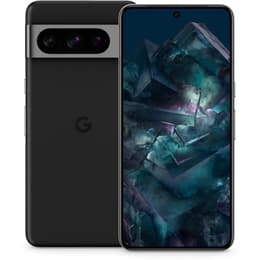
Google Pixel 8 Pro
Google Pixel 8 Pro
Starting at

Refurbished price:331.00

Versus €1,099.00 new

See options
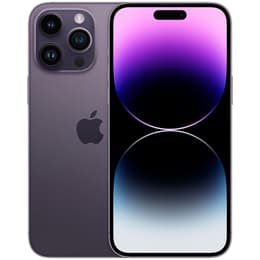
iPhone 14 Pro Max
iPhone 14 Pro Max
Starting at

Refurbished price:446.00

Versus €1,489.00 new

See options

Ratings

The Google Pixel 8 Pro, released in October 2023, and the iPhone 14 Pro Max, launched in September 2022, represent flagship smartphones from their respective manufacturers. While both devices offer premium experiences, they differentiate themselves through their operating systems, camera philosophies, and approaches to software longevity. The Pixel 8 Pro runs on Google's Android, emphasizing AI-driven features, while the iPhone 14 Pro Max operates on Apple's iOS, known for its integrated ecosystem and robust performance.

Scores

Durability

When considering the long-term usability of these devices, both the Google Pixel 8 Pro and the iPhone 14 Pro Max offer substantial software support, though with differing timelines. The Pixel 8 Pro was released in October 2023, and Google has committed to providing seven years of OS upgrades, security updates, and Feature Drops, extending support until 2030. The iPhone 14 Pro Max, released in September 2022, typically receives iOS updates for approximately 5-6 years from its launch.

  • Software Longevity: The Pixel 8 Pro offers an extended software support period of seven years, including OS and security updates, which is a notable commitment in the smartphone market. The iPhone 14 Pro Max, while still providing several years of updates, has a shorter official support window compared to the Pixel.
  • Repairability: The Pixel 8 Pro has received repairability scores around 4.0 to 7 out of 10, with some sources noting that while the screen is relatively easy to remove, battery replacement can be difficult due to adhesives. The iPhone 14 Pro Max received a repairability score of 6 out of 10 from iFixit initially, though this was later downgraded to 4 out of 10 due to software locks and the difficulty of using third-party parts.
  • Expected Lifespan: Both devices are built with durable materials and are rated IP68 for dust and water resistance. The Pixel 8 Pro's extended software support suggests a longer practical lifespan for users who prioritize up-to-date software and security.

Year of Release

2023

2022

Compatible with latest Update

Yes

Yes

Foldable

No

No

Performance

Both the Google Pixel 8 Pro and the iPhone 14 Pro Max are equipped with powerful processors designed to handle demanding applications and multitasking. Their performance characteristics cater to different user priorities, with both offering smooth and responsive experiences.

  • System Responsiveness: The iPhone 14 Pro Max, powered by its A16 Bionic chip, delivers consistently fluid performance across applications and during intensive tasks like gaming and video editing. The Pixel 8 Pro, featuring Google's Tensor G3 chip, is optimized for AI and machine learning tasks, contributing to a responsive user experience, particularly with its integrated smart features.
  • Multitasking and Storage: The Pixel 8 Pro typically comes with 12GB of RAM, facilitating seamless multitasking and app switching. It offers storage options up to 256GB, with a 1TB option available in some regions. The iPhone 14 Pro Max features 6GB of RAM and provides a wider range of storage configurations, from 128GB up to 1TB, catering to users with extensive storage needs.
  • Battery Behavior: The iPhone 14 Pro Max is recognized for its strong battery performance, often lasting through a full day of heavy use and offering extended screen-on time. The Pixel 8 Pro, with a 5050 mAh battery, generally provides all-day power for typical usage, though some users report that heavy use might require more frequent charging. Both devices support fast charging and wireless charging.

Memory (GB)

12 GB

6 GB

Screen quality

The display is a central feature for both the Google Pixel 8 Pro and the iPhone 14 Pro Max, offering vibrant visuals and smooth interactions. While both utilize advanced OLED technology, there are distinctions in their brightness levels and adaptive refresh rate implementations.

  • Display Technology and Clarity: Both devices feature large 6.7-inch OLED displays, providing deep blacks and rich colors. The iPhone 14 Pro Max has a Super Retina XDR display with a resolution of 2796 x 1290 pixels at 460 ppi. The Pixel 8 Pro features an Actua display with a resolution of 2992 x 1344 pixels.
  • Brightness and Refresh Rate: The iPhone 14 Pro Max offers a typical maximum brightness of 1000 nits, peaking at 1600 nits for HDR content and up to 2000 nits outdoors. It features ProMotion technology with an adaptive refresh rate from 1Hz to 120Hz. The Pixel 8 Pro's display can reach a peak brightness of 2400 nits, with 1600 nits for HDR content, and also features an adaptive refresh rate that can scale from 1Hz to 120Hz.
  • Viewing Experience: Both phones provide excellent clarity and smooth scrolling due to their high refresh rates. The iPhone 14 Pro Max includes the Dynamic Island, an interactive area around the front camera cutout. The Pixel 8 Pro's display is noted for its flat design, which some users may prefer for an unobstructed viewing experience.

Resolution

1344 x 2992

1290 x 2796

Screen type

LTPO OLED

LTPO Super Retina XDR OLED

Audiovisual

Both the Google Pixel 8 Pro and the iPhone 14 Pro Max are equipped with advanced camera systems, each with its own strengths in photography and videography. They aim to deliver high-quality images and videos across various conditions.

  • Camera System Capabilities: The iPhone 14 Pro Max features a triple camera system with a 48MP main sensor, a 12MP ultra-wide, and a 12MP telephoto lens with 3x optical zoom. The Pixel 8 Pro also has a triple camera setup, including a 50MP main sensor, a 48MP ultrawide, and a 48MP telephoto lens with 5x optical zoom.
  • Photography Performance: The Pixel 8 Pro is known for its computational photography, excelling in detail and color accuracy, particularly with features like Night Sight for low-light conditions. The iPhone 14 Pro Max also delivers strong photographic results with its Photonic Engine and Deep Fusion, producing detailed and well-exposed images in various lighting.
  • Video Recording Quality: The iPhone 14 Pro Max offers high-quality video recording, including Cinematic mode and ProRes video, providing excellent stabilization and detail. The Pixel 8 Pro has made significant strides in video quality, particularly in low-light scenarios, with features like Night Sight video aiming to reduce noise and improve clarity.
  • Audio Experience: Both devices offer clear microphone quality for calls and recordings. Their stereo speakers provide a rich audio experience for media consumption.

Main camera

50 megapixels

48 megapixels

Front camera

10.5 megapixels

12 megapixels

Miscellaneous

Beyond their core functionalities, the Google Pixel 8 Pro and iPhone 14 Pro Max offer a range of practical features that enhance daily usability. These include connectivity options, physical ports, biometric security, and overall design considerations.

  • Connectivity and Ports: Both smartphones support 5G connectivity, as well as modern Wi-Fi standards and Bluetooth for wireless connections. The iPhone 14 Pro Max utilizes a Lightning port for charging and data transfer. The Pixel 8 Pro features a USB-C port.
  • Biometric Security: The iPhone 14 Pro Max relies on Face ID for secure facial recognition. The Pixel 8 Pro incorporates an under-display fingerprint scanner for biometric authentication.
  • Design and Handling: The iPhone 14 Pro Max measures 160.70 x 77.60 x 7.85mm and weighs 240 grams. It features a Ceramic Shield front cover for enhanced durability. The Pixel 8 Pro measures 162.6 x 76.5 x 8.8mm and weighs 213 grams. Both devices have an IP68 rating for dust and water resistance.

Weight

213 g

120 g

Screen size (in)

6.7

6.7

Network

5G

5G

SIM card

Physical SIM + eSIM

Physical SIM + eSIM

Carrier compatibility

Unlocked

Unlocked

User feedback on the iPhone 14 Pro Max often praises its exceptional battery life, robust performance, and the seamless integration within the Apple ecosystem. Common criticisms sometimes point to the proprietary Lightning port and the incremental nature of some upgrades. For the Google Pixel 8 Pro, users frequently highlight its advanced camera capabilities, AI-driven features, and the promise of extended software support. Some discussions around the Pixel 8 Pro mention that while battery life is generally good, it might not consistently match the endurance of some competitors under heavy loads, and some users have noted standby drain issues.

Users prioritizing long-term software support and a highly integrated ecosystem with strong video capabilities may find the iPhone 14 Pro Max well-suited to their needs. Those who value cutting-edge computational photography, AI-enhanced features, and an open Android experience with an industry-leading update policy might lean towards the Google Pixel 8 Pro. Both devices offer premium experiences, and choosing between them often comes down to personal preference for operating system, specific camera features, and overall ecosystem. For those seeking a quality-assured refurbished option, both models are available, providing an eco-friendly alternative to purchasing new.