

Google Pixel 7A Vs iPhone SE (2020)

Google Pixel 7A
Google Pixel 7A
Starting at

Refurbished price:172.00

Versus €649.99 new

See options
iPhone SE (2020)
iPhone SE (2020)
Starting at

Refurbished price:91.35

Versus €319.00 new

See options

Ratings

The Google Pixel 7a, released in May 2023, and the iPhone SE 2020, launched in April 2020, represent distinct approaches to smartphone design and user experience. While both offer capable performance within their respective ecosystems, they cater to different preferences. The Pixel 7a provides a modern Android experience with a focus on advanced computational photography and a contemporary display, whereas the iPhone SE 2020 delivers the familiar iOS environment in a compact form factor with a classic design.

Scores

Durability

The practical lifespan of a smartphone is influenced by its release timeline, software support, and physical resilience.

  • Release Timeline: The Google Pixel 7a was released in May 2023, making it a more recent device compared to the iPhone SE 2020, which launched in April 2020. This difference in release dates impacts their respective software support windows.
  • Software Longevity: The Pixel 7a is expected to receive five years of OS and security updates from its release, extending support until at least May 2028. The iPhone SE 2020, while older, has demonstrated a strong track record of iOS updates, having received updates up to iOS 26 as of 2025. Users prioritizing the longest guaranteed software support from the point of purchase may find the Pixel 7a's newer release date advantageous.
  • Physical Durability & Repairability: Both devices feature IP67 ratings for dust and water resistance, indicating protection against immersion in up to 1 meter of water for 30 minutes. The Pixel 7a uses Corning Gorilla Glass 3 for its display, while the iPhone SE 2020 features ion-strengthened glass. In terms of repairability, the iPhone SE 2020 received a score of 6 out of 10 from iFixit, noting that common repairs like screen and battery replacements are relatively straightforward. The Pixel 7a initially scored 4/10 but was later uprated to 5/10 after Google provided service manuals.

Year of Release

2023

2020

Compatible with latest Update

Yes

Yes

OS

Android

iOS

Foldable

No

No

Performance

Performance in both devices is driven by their respective internal components, influencing how smoothly applications run and how efficiently tasks are handled.

  • Processing Capabilities: The Google Pixel 7a is equipped with a current-generation processor designed by Google, paired with 8 GB of RAM. This configuration allows for smooth multitasking and efficient handling of demanding applications and games. The iPhone SE 2020 features a powerful processor from its release year, complemented by 3 GB of RAM. This enables the device to manage everyday tasks and more intensive applications with responsiveness.
  • System Responsiveness: Users of the Pixel 7a generally experience a fluid interface and quick app loading times. While capable, some users have noted that tasks like video export can be slightly slower compared to other devices. The iPhone SE 2020 provides a consistently responsive user experience, allowing for quick navigation and efficient app switching.
  • Storage Options: The Pixel 7a comes with 128 GB of internal storage. The iPhone SE 2020 offers more flexibility with storage options, available in 64 GB, 128 GB, and 256 GB configurations. Neither device supports expandable storage via a microSD card.

Memory (GB)

8 GB

3 GB

Screen quality

The visual experience on a smartphone is largely defined by its display technology, resolution, and overall brightness.

  • Display Technology and Size: The Google Pixel 7a features a 6.1-inch OLED display, which provides deep blacks and vibrant colors. In contrast, the iPhone SE 2020 has a smaller 4.7-inch IPS LCD Retina display. The OLED technology in the Pixel 7a generally offers better contrast and color accuracy compared to the LCD panel in the iPhone SE 2020.
  • Resolution and Refresh Rate: The Pixel 7a offers a higher resolution of 2400 x 1080 pixels, resulting in a sharper image, and supports a 90 Hz refresh rate for smoother scrolling and animations. The iPhone SE 2020 has a resolution of 1334 x 750 pixels and a standard 60 Hz refresh rate.
  • Brightness and Clarity: The Pixel 7a's display is capable of good brightness levels, contributing to visibility in various lighting conditions. The iPhone SE 2020's display has a peak brightness of 625 nits, offering adequate visibility for outdoor use.

Resolution

1080 x 2400

750 x 1334

Screen type

OLED

Retina IPS LCD

Audiovisual

Both devices offer distinct camera systems, each with strengths in capturing photos and videos.

  • Rear Camera System: The Google Pixel 7a features a dual-camera setup on the rear, including a 64 MP wide-angle main lens with optical image stabilization (OIS) and a 13 MP ultrawide lens. This provides versatility for different types of shots. The iPhone SE 2020 has a single 12 MP wide-angle rear camera with OIS. While it lacks an ultrawide option, its image processing capabilities enhance photo quality.
  • Photography Performance: The Pixel 7a is recognized for its strong computational photography, producing images with excellent detail, color, and dynamic range, particularly in everyday and low-light conditions. The iPhone SE 2020, despite its single lens, benefits significantly from its powerful processor, which enables features like Portrait Mode and Smart HDR for well-processed images.
  • Video Recording and Front Camera: Both phones are capable of recording 4K video at up to 60 frames per second. The Pixel 7a has a 13 MP ultrawide front camera, which is praised for its detail and color accuracy in selfies. The iPhone SE 2020 features a 7 MP front camera. The Pixel 7a also offers stereo speakers, while some users have noted the Pixel 7a's speakers can be weak.

Main camera

64 megapixels

12 megapixels

Front camera

13 megapixels

7 megapixels

Miscellaneous

Beyond core features, several practical elements contribute to the overall user experience of these smartphones.

  • Connectivity and Ports: The Google Pixel 7a supports 5G connectivity, offering faster mobile data speeds where available, and features Wi-Fi 6E and Bluetooth 5.3. It uses a USB-C 3.2 port for charging and data transfer. The iPhone SE 2020 supports LTE networks and includes Wi-Fi 6 and Bluetooth 5.0. It utilizes Apple's proprietary Lightning port.
  • Biometrics and Sensors: The Pixel 7a offers both an under-display fingerprint sensor and face unlock for secure authentication. The iPhone SE 2020 relies on its physical home button, which integrates Touch ID for fingerprint recognition. Both devices include a standard array of sensors such as accelerometers, gyroscopes, and compasses.
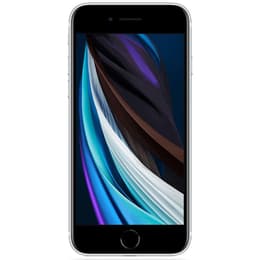
  • Design and Handling: The Pixel 7a weighs approximately 193.5 grams and features a plastic back with an aluminum frame. Its dimensions are 152 x 72.9 x 9 mm. The iPhone SE 2020 is lighter at 148 grams and has a glass front and back with an aluminum frame. It measures 138.4 x 67.3 x 7.3 mm, making it a more compact device.

Weight

193 g

148 g

Screen size (in)

6.1

4.7

Network

5G

4G

SIM card

Physical SIM + eSIM

Physical SIM + eSIM

Carrier compatibility

Unlocked

Unlocked

The Google Pixel 7a and iPhone SE 2020 cater to different user priorities, reflecting their distinct operating systems and design philosophies. Users frequently praise the Pixel 7a for its exceptional camera capabilities, smooth Android software experience, and vibrant OLED display. However, some users have noted inconsistent battery life, particularly with heavy usage, and occasional software bugs.

The iPhone SE 2020 is often commended for its powerful performance within a compact form factor, its classic design featuring a physical home button with reliable Touch ID, and the consistent iOS ecosystem. Common criticisms include its smaller, lower-resolution LCD display with noticeable bezels, and a less versatile single-camera system compared to multi-lens setups on newer devices.

Users prioritizing a modern Android experience, advanced computational photography, a larger and smoother display, and longer guaranteed software updates may find the Google Pixel 7a well-suited to their needs. Conversely, individuals who prefer a compact device, the familiarity and security of the iOS ecosystem, a physical home button, and a lighter build may lean towards the iPhone SE 2020. Both devices offer compelling features for different user profiles, and considering a quality-assured refurbished option can be an eco-friendly alternative for either model.


See all articles

Our recent comparisons