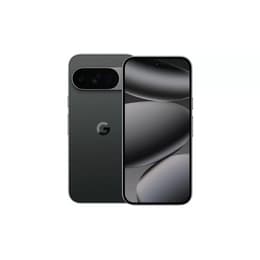



Compare models
Google Pixel 10 Pro Vs Google Pixel 9 Pro
- 1-year minimum warranty
- Free delivery on all orders
- Free 30-day returns
Differences at a glance
The Google Pixel 10 Pro and Google Pixel 9 Pro represent consecutive generations of advanced smartphones from Google, released in 2025 and 2024 respectively. While both devices share a commitment to sophisticated machine-learning capabilities and refined hardware design, the Pixel 10 Pro introduces subtle refinements in processing efficiency and camera processing software. Both devices operate on the Android platform, offering a clean software environment and direct update schedules from the manufacturer. Choosing between them involves weighing incremental generational improvements against established user-proven reliability.
Available Models
Colour
Storage
Scores
Durability
When examining longevity, both smartphones are engineered to remain relevant for years, though their exact support windows differ slightly based on release timing.
- Software update schedules: The Pixel 10 Pro benefits from an extended software support window ending one year later than the Pixel 9 Pro, ensuring prolonged security patches and system upgrades. Both devices utilize efficient operating system optimization to maintain consistent speed over time.
- Build and structural longevity: Each model features robust aluminum framing and reinforced glass protection designed to withstand daily wear. Repairability metrics remain comparable across both generations, with modular internal components facilitating straightforward hardware servicing when needed.
Year of Release
2025
2024
Compatible with latest Update
Yes
Yes
OS
Android
Android
Foldable
No
No
Performance
Under everyday conditions, both smartphones handle multitasking, demanding navigation tools, and resource-intensive applications with high reliability.
- Multitasking and memory management: Generous memory configurations on both devices allow seamless switching between numerous active applications without noticeable slowdowns or forced reloads.
- Processor efficiency: The Pixel 10 Pro utilizes a newer internal processor that manages heavy workloads and thermal output with slightly higher efficiency than the Pixel 9 Pro, resulting in cooler operation during extended tasks.
- Storage and battery behavior: Both models offer varied storage tiers to accommodate extensive media libraries. Battery endurance typically spans a full day of mixed usage, with the newer Pixel 10 Pro demonstrating minor improvements in standby power management.
Screen quality
Visual output across both generations relies on advanced display technology designed for clarity under diverse lighting conditions.
- Display panels and resolution: Both devices employ vibrant OLED panels with high pixel densities, delivering deep black levels and accurate color reproduction for media consumption and text reading.
- Outdoor visibility: High peak brightness capabilities on each model ensure comfortable viewing under direct sunlight, reducing glare significantly.
- Refresh rate smoothness: Adaptive refresh rates scaling up to high thresholds ensure fluid scrolling through web pages and smooth animations during daily navigation.
Resolution
1280x2856
1280 x 2856
Screen type
OLED
LTPO OLED
Audiovisual
Photography and video capabilities remain central to the identity of both smartphones, featuring versatile multi-lens configurations.
- Lens versatility: Both models incorporate high-resolution main sensors, ultra-wide lenses, and dedicated telephoto options that capture sharp details across various focal lengths.
- Low-light and video performance: Advanced computational photography algorithms on both devices reduce noise in dim environments and stabilize handheld video recording effectively. Users seeking a quality-assured refurbished option often find these camera systems retain their high fidelity over years of use.
- Audio recording: Integrated multi-microphone arrays isolate voices clearly during video capture and phone calls, while stereo speakers deliver balanced media playback.
Front camera
42 megapixels
42 megapixels
Miscellaneous
Practical daily usability is shaped by physical dimensions, connectivity standards, and biometric security features built into each device.
- Connectivity and ports: Both smartphones support modern 5G networks, rapid Wi-Fi standards, and Bluetooth pairing, utilizing reversible USB-C ports for charging and data transfer.
- Biometrics and sensors: Fast facial recognition and responsive under-display fingerprint sensors provide secure, immediate device unlocking.
- Physical handling: Weight distribution and ergonomic dimensions are nearly identical, offering comfortable one-handed use and secure pocket storage.
Weight
207 g
280 g
Screen size (in)
6.3
6.8
Network
5G
5G
SIM card
Physical SIM + eSIM
Physical SIM + eSIM
Carrier compatibility
Unlocked
Unlocked
Connector
USB-C
USB-C
What the community thinks
Community discussions and user feedback indicate high satisfaction with the display quality and camera consistency of both generations. Users frequently praise the clean software environment on the Pixel 9 Pro, while Pixel 10 Pro owners often highlight minor gains in processing speed and thermal management during intensive tasks. Frequent criticisms for both models center on the slippery nature of glass backs, which many owners resolve by using protective cases.
Users prioritizing maximum software longevity and the latest efficiency refinements may prefer the Pixel 10 Pro, whereas those content with established flagship performance at a sustainable price point often lean toward the Pixel 9 Pro as an eco-friendly, quality-assured alternative. Ultimately, both devices cater successfully to everyday productivity and media creation needs without creating a distinct performance divide.









