

Compare models
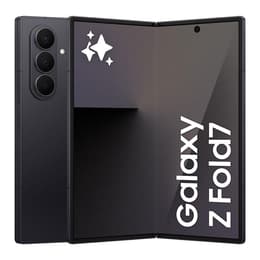
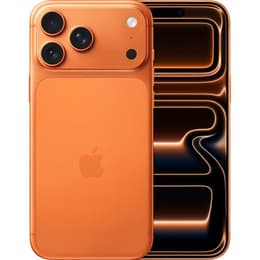
Galaxy Z Fold7 Vs iPhone 17 Pro Max
- 1-year minimum warranty
- Free delivery on all orders
- Free 30-day returns
Differences at a glance
The Samsung Galaxy Z Fold 7 (2025) and the Apple iPhone 17 Pro Max (2025) represent two distinct approaches to high-end mobile technology, contrasting a book-style foldable design with a traditional slab smartphone format. While the Galaxy Z Fold 7 focuses on expanding screen real estate through a flexible folding mechanism, the iPhone 17 Pro Max prioritizes a monolithic display structure and robust hardware integration. Operating on Android and iOS respectively, these devices serve very different form-factor preferences while offering top-tier processing power and advanced features.
Available Models
Colour
Storage (GB)
Scores
Durability
When examining longevity, both devices are built to remain relevant for years, though their structural mechanics and software support lifecycles differ.
- Software Support and Updates: The iPhone 17 Pro Max benefits from Apple's long-standing software update timeline, while the Galaxy Z Fold 7 provides extended multi-year Android OS upgrades to ensure security and feature additions.
- Physical Durability: The iPhone 17 Pro Max uses a rigid unibody frame and reinforced glass designed to resist drops, whereas the Galaxy Z Fold 7 features a complex folding hinge mechanism that requires careful handling despite modern engineering improvements.
- Expected Practical Lifespan: Traditional slab phones like the iPhone generally face fewer mechanical failure points over time, while foldables like the Z Fold 7 rely heavily on the long-term resilience of their flexible inner screen.
Year of Release
2025
2025
Compatible with latest Update
Yes
Yes
OS
Android
iOS
Foldable
Yes
No
Performance
Underneath the exterior, both models deliver exceptional performance capabilities to handle demanding workflows and intensive daily usage.
- Storage and Memory: Both devices offer high-capacity configurations starting at generous baseline tiers, paired with substantial random access memory to keep background applications active and responsive.
- System Responsiveness: Each model handles heavy multitasking, graphically complex gaming, and rapid app switching effortlessly, ensuring smooth navigation without stuttering or lag.
- Battery Behavior: The iPhone 17 Pro Max manages power efficiently for sustained single-screen use throughout a full day, whereas the dual-screen setup on the Galaxy Z Fold 7 draws more power when utilizing the larger inner display extensively.
Screen quality
The viewing experience represents the most profound operational difference between these two flagship products.
- Display Technology: The iPhone 17 Pro Max features a vibrant OLED panel with deep contrast levels on a single fixed glass surface, while the Galaxy Z Fold 7 opens up into a tablet-sized flexible AMOLED screen alongside a secondary cover display.
- Brightness and Outdoor Clarity: Both displays offer high peak brightness outputs that maintain clear legibility and color accuracy under direct sunlight.
- Refresh Rate and Smoothness: Each device utilizes adaptive high refresh rate technology, ensuring fluid scrolling animations and responsive touch tracking during navigation.
Resolution
1968x2184
2868x1320
Audiovisual
Photography and media consumption profiles vary significantly based on lens arrangements and acoustic outputs.
- Camera Systems: The iPhone 17 Pro Max employs a versatile multi-lens rear array paired with advanced computational photography, whereas the Galaxy Z Fold 7 utilizes a high-resolution primary sensor setup that allows for flexible framing angles using the folding form factor.
- Video and Low-Light Performance: Both devices capture crisp, stabilized video footage in challenging lighting conditions, though Apple maintains a strong reputation for smooth video transition handling.
- Media and Audio Output: Stereo speaker setups on both models deliver clear sound reproduction for calls and media, while the Z Fold 7 provides an immersive widescreen canvas for watching video content when unfolded.
Miscellaneous
Practical daily usability elements highlight further distinctions in connectivity, physical dimensions, and handling characteristics.
- Connectivity and Ports: Both models support rapid 5G cellular networks, modern Wi-Fi standards, and Bluetooth connectivity, utilizing reversible port standards for charging and data transfer.
- Security and Biometrics: The iPhone 17 Pro Max relies on secure facial recognition, while the Galaxy Z Fold 7 integrates a physical fingerprint sensor directly into its side power button.
- Handling and Dimensions: The iPhone 17 Pro Max maintains a wide slab profile, whereas the Galaxy Z Fold 7 offers a narrow outer screen for single-handed use that transforms into a wider device when opened. Choosing a quality-assured refurbished option through Back Market can also make these advanced models a more sustainable choice for eco-conscious consumers.
Weight
215 g
233 g
Screen size (in)
8.0
6.9
Network
5G
5G
SIM card
Dual Physical SIM + eSIM
eSIM
Carrier compatibility
Unlocked
Unlocked
Connector
USB-C (USB 3)
USB-C
What the community thinks
User community discussions and long-term feedback indicate that satisfaction with these devices heavily depends on hardware format preferences. Owners of the Galaxy Z Fold 7 frequently praise its expansive multitasking workspace and innovative folding versatility, though some note that the physical crease and battery consumption under heavy inner-screen use require getting used to. Conversely, users of the iPhone 17 Pro Max highlight its reliable battery longevity, dependable unibody build, and seamless ecosystem integration, while occasional criticisms focus on its large physical footprint in tighter pockets.
Users prioritizing a versatile multi-window workspace and tablet-like proportions will find the Galaxy Z Fold 7 well-suited to their daily routines, while users prioritizing straightforward one-handed operation, robust battery endurance, and a traditional camera setup may lean toward the iPhone 17 Pro Max. Evaluating these core ergonomic and functional differences clarifies which format matches an individual lifestyle. For those exploring sustainable tech upgrades, choosing a quality-assured refurbished model provides an eco-friendly alternative without compromising on modern performance capabilities.