

Galaxy Tab S9 Ultra (14.6", 2023) Vs iPad mini 7 (2024, A17 series)

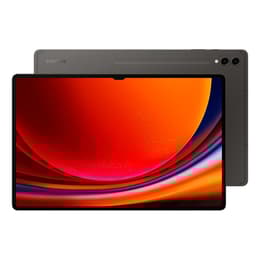
Galaxy Tab S9 Ultra (14.6", 2023)
Starting at

Refurbished price:754.00

Versus €1,800.00 new

See options
iPad mini 7 (2024, A17 series)
Starting at

Refurbished price:463.68

Versus €749.00 new

See options

Ratings

The Samsung Galaxy Tab S9 Ultra, released in August 2023, and the Apple iPad Mini 7th generation, launched in October 2024, represent distinct approaches to the tablet experience. While the Tab S9 Ultra offers a expansive display and a desktop-like Android environment, the iPad Mini 7 focuses on portability with a compact design and the optimized iPadOS. These devices cater to different user needs, with key differentiators lying in their screen sizes, operating systems, and overall form factors.

Scores

Durability

The longevity of a tablet is influenced by its release timeline, software support, and physical resilience. Both devices offer robust build quality, but their respective ecosystems dictate their software lifespan.

  • Release Timeline: The Galaxy Tab S9 Ultra was released in August 2023, while the iPad Mini 7th generation followed in October 2024. This difference in release year means the iPad Mini 7 benefits from a later starting point for software updates.
  • Software Longevity: Samsung typically provides several years of Android OS updates and security patches for its flagship tablets, with the Tab S9 Ultra expected to receive updates up to Android 17. Apple is known for extended software support, often providing five to six years of iPadOS updates, suggesting the iPad Mini 7 will receive support well into the future.
  • Durability Features: The Galaxy Tab S9 Ultra features an IP68 rating for dust and water resistance, a notable inclusion for a tablet of its size. The iPad Mini 7 maintains a durable aluminum design, consistent with Apple's build quality, though specific IP ratings are not typically highlighted for this model.

Year of Release

2023

2024

Compatible with latest Update

Yes

Yes

OS

Android

iPadOS

Performance

Performance is a critical aspect for tablets, impacting everything from app responsiveness to demanding creative tasks. Both devices are equipped with powerful internal components designed for smooth operation.

  • Processing Power: The Galaxy Tab S9 Ultra is powered by a current-generation processor, enabling it to handle demanding applications and multitasking with efficiency. The iPad Mini 7 features a powerful chip that offers a significant boost in CPU and GPU performance compared to its predecessor, ensuring smooth operation for a wide range of tasks, including those leveraging Apple Intelligence features.
  • Multitasking and Responsiveness: The Tab S9 Ultra, with its ample RAM configurations (up to 16GB), allows for fluid switching between numerous applications and efficient handling of productivity suites like Samsung DeX. The iPad Mini 7, while having less RAM, is optimized by iPadOS to deliver a highly responsive experience, making it capable for both casual use and more intensive applications.
  • Storage Options: The Tab S9 Ultra offers flexible storage options ranging from 256GB up to 1TB, with the added benefit of microSD card expansion for further storage. The iPad Mini 7 starts with 128GB of storage, doubling the base capacity of its predecessor, and is available up to 512GB, though it lacks expandable storage.

Memory (GB)

12 GB

8 GB

Screen quality

The display is a primary interface for tablets, and both devices offer distinct visual experiences tailored to their form factors.

  • Display Technology and Size: The Galaxy Tab S9 Ultra boasts a large 14.6-inch Dynamic AMOLED 2X display, providing deep blacks and vibrant colors, ideal for immersive media consumption and productivity. In contrast, the iPad Mini 7 features a more compact 8.3-inch Liquid Retina display, which is an LED panel, offering a clear and bright viewing experience in a highly portable form factor.
  • Resolution and Clarity: The Tab S9 Ultra's display has a resolution of 2960 x 1848 pixels, resulting in a sharp image across its large screen. The iPad Mini 7 offers a resolution of 2266 x 1488 pixels, providing a high pixel density for its smaller size, ensuring text and images appear crisp.
  • Brightness and Refresh Rate: The Tab S9 Ultra can reach a peak brightness of 930 nits and features a dynamic 120Hz refresh rate, contributing to smooth scrolling and a bright display even in well-lit environments. The iPad Mini 7 has a brightness of 500 nits and a standard 60Hz refresh rate, which is suitable for most tasks but does not offer the same fluidity as higher refresh rate displays.

Resolution

1848 x 2960

2266 x 1488

Screen type

Dynamic AMOLED 2X

Liquid Retina display

Pixel density

240ppp

326ppp

Audiovisual

While tablets are not typically primary photography devices, their cameras serve various practical functions, from video calls to document scanning.

  • Rear Camera Systems: The Galaxy Tab S9 Ultra features a dual rear camera setup, including a 13MP main sensor and an 8MP ultrawide lens, capable of capturing detailed photos and 4K video. The iPad Mini 7 is equipped with a 12MP Wide rear camera, which is suitable for scanning documents and casual photography, and can record 4K video.
  • Front Camera Capabilities: For video conferencing and selfies, the Tab S9 Ultra includes dual 12MP front cameras, one wide and one ultrawide, providing clear visuals for calls. The iPad Mini 7 features a 12MP Center Stage front camera, which automatically keeps the user in frame during video calls, enhancing the communication experience.
  • Audio Experience: The Tab S9 Ultra incorporates quad stereo speakers with Dolby Atmos support, delivering a rich audio experience for media consumption. The iPad Mini 7 also offers landscape stereo speakers, providing clear audio for videos and music.

Miscellaneous

Beyond core specifications, several practical elements contribute to the overall user experience and suitability for different lifestyles.

  • Portability and Design: The Galaxy Tab S9 Ultra is a large device, measuring 326.4 x 208.6 x 5.5 mm and weighing 732g, making it better suited for stationary use or as a laptop replacement. The iPad Mini 7, with dimensions of 195.4 x 134.8 x 6.3 mm and a weight of 293g, is designed for ultimate portability and comfortable one-handed use.
  • Connectivity and Ports: Both tablets support modern connectivity standards, including Wi-Fi 6E and Bluetooth 5.3. The Tab S9 Ultra features a USB-C 3.2 port, while the iPad Mini 7 also uses a USB-C port with faster data transfer speeds. Both offer optional 5G cellular connectivity.
  • Biometric Security and Accessories: The Tab S9 Ultra includes an in-display fingerprint sensor for secure unlocking and comes with an IP68-rated S Pen stylus in the box. The iPad Mini 7 utilizes Touch ID integrated into the top button and supports the Apple Pencil Pro, which offers advanced features like hover gestures and pressure sensitivity.

Weight

732 g

293 g

Screen size (in)

14.6

8.3

Network

Wi-Fi

Wi-Fi

Carrier compatibility

Without SIM Port

Without SIM Port

User feedback often highlights the distinct advantages of each tablet. The Galaxy Tab S9 Ultra is frequently praised for its expansive and vibrant display, making it a strong contender for media consumption and productivity tasks that benefit from a large screen. Users appreciate the included S Pen and the versatility offered by Samsung's DeX mode, which provides a desktop-like interface. Some common criticisms revolve around its sheer size, which can make it less portable and sometimes unwieldy for handheld use, and the fact that Android tablet app optimization can sometimes lag behind iPadOS.

The iPad Mini 7, on the other hand, receives acclaim for its exceptional portability and powerful performance in a compact form factor. Users value its ability to be easily carried anywhere, making it ideal for reading, light gaming, and quick tasks on the go. The support for Apple Pencil Pro is also a significant draw for those who enjoy sketching or note-taking. Criticisms sometimes point to the 60Hz display, which some users find less fluid compared to higher refresh rate screens, and the continued use of Touch ID instead of Face ID.

Users prioritizing a large, immersive display for entertainment and a more desktop-like Android experience, especially with the included stylus, may find the Galaxy Tab S9 Ultra well-suited to their needs. Conversely, users who value extreme portability, a highly optimized tablet operating system, and a powerful chip in a small package will likely lean towards the iPad Mini 7. Both devices offer compelling experiences, and choosing between them often comes down to the preferred ecosystem and the primary use case. For those considering an eco-friendly alternative, quality-assured refurbished options for both models can provide excellent value and extend the life cycle of these devices.


See all articles

Our recent comparisons