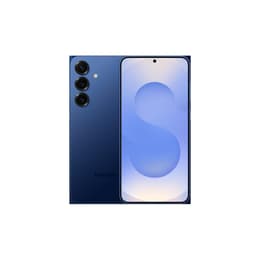



Galaxy S25+ Vs Google Pixel 9 Pro

Galaxy S25+
Galaxy S25+
Starting at

Refurbished price:595.00

Versus €1,156.53 new

See options
Google Pixel 9 Pro
Google Pixel 9 Pro
Starting at

Refurbished price:469.00

Versus €1,299.00 new

See options

Ratings

The Samsung Galaxy S25 Plus, released in February 2025, and the Google Pixel 9 Pro, launched in September 2024, represent two distinct approaches to the premium smartphone experience. While both devices operate on the Android platform, they offer different philosophies in terms of hardware integration and software features. The Galaxy S25 Plus emphasizes a larger display and a versatile camera system, whereas the Pixel 9 Pro focuses on advanced computational photography and a more compact form factor.

Scores

Durability

Both devices offer substantial software support, ensuring a prolonged usable lifespan for users.

  • Software Updates: The Samsung Galaxy S25 Plus is committed to providing seven years of operating system and security updates, extending its support until approximately 2032. Similarly, the Google Pixel 9 Pro also offers seven years of software support, including OS upgrades and security patches, ensuring longevity until Android 22.
  • Build Durability: Both smartphones feature robust construction with an IP68 rating for dust and water resistance, indicating protection against immersion in water. The Galaxy S25 Plus utilizes an Armor Aluminum frame and Gorilla Glass Victus 2 on both the front and back for screen and rear panel protection. The Pixel 9 Pro also incorporates a durable aluminum frame and Corning Gorilla Glass Victus 2 for its display and back, with recycled aluminum used in its housing.
  • Expected Lifespan: With extensive software support and durable materials, both devices are designed for a practical lifespan that extends well beyond typical usage cycles, making them suitable for long-term ownership.

Year of Release

2025

2024

OS

Android

Android

Foldable

No

No

Performance

Performance in both the Galaxy S25 Plus and Pixel 9 Pro is driven by their respective advanced processors, designed to handle demanding applications and multitasking efficiently.

  • Processing Power: The Galaxy S25 Plus is equipped with a current-generation processor, enabling smooth operation for everyday tasks, intensive gaming, and complex applications. The Pixel 9 Pro features Google's Tensor G4 processor, which is optimized for artificial intelligence tasks and provides responsive performance across the operating system and applications.
  • Multitasking and Storage: The Galaxy S25 Plus typically comes with 12GB of RAM, facilitating efficient multitasking and app management. Storage options for the S25 Plus include 256GB and 512GB. The Pixel 9 Pro offers a higher 16GB of RAM, which can benefit users who frequently switch between many applications or engage in memory-intensive tasks. It provides a wider range of storage configurations, from 128GB up to 1TB.
  • Battery Behavior: The Galaxy S25 Plus houses a 4900 mAh battery, providing ample power for a full day of typical use, with support for 45W fast charging. The Pixel 9 Pro has a 4700 mAh battery and supports 27W fast charging, offering reliable power for daily activities.

Memory (GB)

12 GB

16 GB

Screen quality

Both smartphones offer high-quality displays, though they differ in size and peak brightness capabilities.

  • Display Technology and Size: The Samsung Galaxy S25 Plus features a larger 6.7-inch Dynamic AMOLED 2X display, known for its vibrant colors and deep blacks. The Google Pixel 9 Pro comes with a more compact 6.3-inch LTPO OLED display.
  • Resolution and Brightness: The S25 Plus offers a QHD+ resolution of 1440x3120 pixels, resulting in a sharp viewing experience, with a peak brightness of 2600 nits for good visibility in various lighting conditions. The Pixel 9 Pro provides a resolution of 2856 x 1280 pixels and boasts a higher peak brightness of 3000 nits, enhancing outdoor readability and HDR content viewing.
  • Refresh Rate and Features: Both devices feature an adaptive refresh rate of 1-120Hz, allowing for smooth scrolling and animations while conserving battery life. The Galaxy S25 Plus includes ProScaler AI upscaling technology to enhance lower-resolution content. The Pixel 9 Pro introduces Adaptive Touch technology, which adjusts screen sensitivity based on environmental factors like wet fingers or screen protectors.

Resolution

1440x3120

1280 x 2856

Audiovisual

The camera systems on the Galaxy S25 Plus and Pixel 9 Pro are designed to deliver high-quality imaging, each with distinct strengths in hardware and computational processing.

  • Rear Camera System: The Galaxy S25 Plus is equipped with a triple rear camera setup: a 50 MP wide-angle main sensor, a 12 MP ultra-wide camera, and a 10 MP telephoto lens with 3x optical zoom. It supports 8K video recording at 30 frames per second. The Pixel 9 Pro also features a triple rear camera system, including a 50 MP main sensor, a 48 MP ultra-wide camera, and a 48 MP telephoto lens with a more powerful 5x optical zoom and up to 30x Super Res Zoom. It also offers 8K video recording.
  • Photography Performance: The S25 Plus delivers solid camera performance with good low-light capabilities from its main sensor and effective image processing through its ProVisual Engine. The Pixel 9 Pro is highly regarded for its computational photography, excelling in low-light conditions and offering advanced AI photography tools like 'Add Me' and 'Zoom Enhance'.
  • Front Camera and Audio: The Galaxy S25 Plus features a 12 MP front-facing camera with autofocus, capable of capturing clear selfies. The Pixel 9 Pro has a higher-resolution 42 MP ultrawide front camera, providing detailed self-portraits and a wider field of view. Both devices offer good speaker output for media consumption, with the S25 Plus featuring stereo speakers with Dolby Atmos support.

Miscellaneous

Beyond core specifications, both devices offer a range of practical features that enhance user experience and connectivity.

  • Connectivity and Ports: Both the Galaxy S25 Plus and Pixel 9 Pro support 5G connectivity for fast mobile data. The S25 Plus uses a USB Type-C port for charging and data transfer. The Pixel 9 Pro supports the latest Wi-Fi standards, including Wi-Fi 7/6E/6, and Bluetooth 5.3, along with NFC for mobile payments, all through a USB-C port.
  • Biometric Security: The Galaxy S25 Plus incorporates an ultrasonic in-screen fingerprint sensor for secure and convenient unlocking. The Pixel 9 Pro also features an in-display fingerprint sensor for biometric authentication.
  • Design and Handling: The Galaxy S25 Plus has dimensions that make it comfortable for users who prefer a larger screen without being overly bulky, with a slightly thinner and lighter design compared to its predecessor. The Pixel 9 Pro offers a more compact form factor, which can be appealing to users seeking a device that is easier to handle with one hand. Both phones feature flat metal edges and glass backs.

Weight

190 g

280 g

Screen size (in)

6.7

6.8

Network

5G

5G

SIM card

Physical SIM + eSIM

Physical SIM + eSIM

Carrier compatibility

Unlocked

Unlocked

The Samsung Galaxy S25 Plus and Google Pixel 9 Pro each present compelling options for users seeking a high-end Android smartphone, with their respective strengths catering to different priorities. User feedback often praises the Galaxy S25 Plus for its vibrant and expansive display, robust overall performance, and consistent battery life. Some criticisms have noted that its camera hardware, while capable, has not seen significant generational leaps, and its design aesthetic remains largely familiar.

Conversely, the Google Pixel 9 Pro is frequently lauded for its exceptional camera capabilities, particularly its computational photography prowess in challenging lighting and its advanced zoom features. Its stunning display and reliable daily performance also receive positive mentions. Some users might find its battery capacity slightly smaller compared to some competitors, though real-world usage generally holds up well.

Users prioritizing a larger, immersive display for media consumption and a slightly bigger battery might find the Galaxy S25 Plus well-suited to their needs. Its consistent performance and long-term software support make it a dependable choice. On the other hand, individuals who place a premium on cutting-edge camera technology, especially for low-light photography and advanced zoom, along with Google's unique AI-driven features in a more compact design, may lean towards the Pixel 9 Pro. Both devices offer extensive software support, making them viable for long-term use. For those considering an eco-friendly alternative, quality-assured refurbished options for both models provide a sustainable choice.