

Compare models

Galaxy S25 FE Vs iPhone 14 Plus

  • 1-year minimum warranty
  • Free delivery on all orders
  • Free 30-day returns
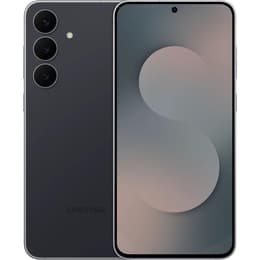
Galaxy S25 FE
Starting at

Refurbished price:€390.00

Versus €750.00 new

See options
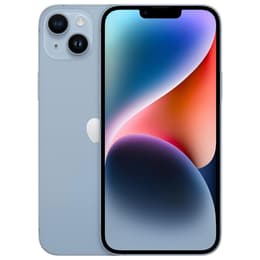
iPhone 14 Plus
Starting at

Refurbished price:€369.00

Versus €879.00 new

See options

Differences at a glance

The Samsung Galaxy S25 FE (2025) and the Apple iPhone 14 Plus (2022) are large-screen smartphones designed for users who want expansive viewing areas without moving into ultra-premium flagship tiers. While they operate on different software ecosystems—Android and iOS respectively—and launch across different years, both models target everyday productivity and media consumption. The primary differences lie in their multi-lens camera configurations, display refresh rates, and software environments.

Available Models

Colour

Storage

Scores

Durability

Both devices offer distinct software support timelines and hardware durability profiles that influence their long-term viability in daily use.

  • Release timeline and software support: The Galaxy S25 FE debuted in late 2025 running Android, while the iPhone 14 Plus launched in late 2022 running iOS. Apple provides extended software updates that generally span many years from launch, whereas Samsung supports recent devices with multi-year operating system upgrades.
  • Repairability and build durability: Both models feature dust and water resistance ratings alongside robust glass-and-aluminum construction. Professional repair networks can service components on both devices, helping extend their functional lifespan.
  • Expected practical lifespan: Users choosing either model can anticipate multiple years of reliable daily performance, though the newer hardware release date of the Galaxy S25 FE provides a longer baseline window for upcoming software upgrades.

Year of Release

2025

2022

Compatible with latest Update

Yes

Yes

OS

Android

iOS

Foldable

No

No

Performance

Everyday speed, multitasking capability, and battery endurance vary between the two models based on their internal hardware architecture and system optimization.

  • Storage and multitasking: The Galaxy S25 FE features 8 GB of RAM, while the iPhone 14 Plus is equipped with 6 GB of RAM. Both devices are offered in various internal storage capacities to accommodate apps, photos, and media files.
  • System responsiveness and app handling: Both smartphones handle standard multitasking, web browsing, and demanding applications smoothly. System animations remain fluid, and app switching happens without noticeable delays during regular daily routines.
  • Battery behavior: The Galaxy S25 FE includes a 4,900 mAh battery, whereas the iPhone 14 Plus relies on a 4,325 mAh capacity cell. Both power configurations comfortably sustain a full day of typical usage involving messaging, video streaming, and web navigation.

Screen quality

Display characteristics differ significantly in terms of smoothness and panel technology, though both offer large viewing spaces for media.

  • Display technology and clarity: The Galaxy S25 FE features a 6.7-inch flat display with a standard high definition resolution, while the iPhone 14 Plus utilizes a 6.7-inch OLED Super Retina XDR screen with a higher pixel resolution. Both panels deliver sharp text and deep contrast ratios for video playback.
  • Refresh rate and smoothness: The Galaxy S25 FE supports a 120 Hz refresh rate for fluid scrolling through menus and web pages, whereas the iPhone 14 Plus operates at a standard 60 Hz refresh rate.
  • Outdoor visibility: High peak brightness capabilities on both screens ensure that content remains legible under direct sunlight or bright ambient lighting conditions.

Audiovisual

Camera versatility and media output differ depending on the lens selection and processing approach of each manufacturer.

  • Camera system capabilities: The Galaxy S25 FE incorporates a triple-lens rear array featuring a main wide sensor, an ultra-wide lens, and a telephoto lens for optical zoom. The iPhone 14 Plus relies on a dual-lens rear system consisting of a main wide sensor and an ultra-wide lens, omitting a dedicated telephoto option.
  • Photo and video performance: Both devices capture detailed images in daylight and include dedicated low-light modes to manage dim environments. Video recording features stabilization options and clear audio capture for home videos or calls.
  • Media consumption and audio: Stereo speaker setups on both models deliver clear sound output for hands-free calls, podcasts, and casual video viewing without requiring external speakers.

Miscellaneous

Physical dimensions, connectivity standards, and daily handling practicalities help define how each phone fits into a user's routine.

  • Build materials and handling: The Galaxy S25 FE measures 7.4 mm in thickness and weighs 190 grams, while the iPhone 14 Plus measures 7.8 mm thick and weighs 203 grams. Both offer comfortable grips despite their large form factors.
  • Connectivity and ports: The Galaxy S25 FE utilizes a USB Type-C port alongside modern Wi-Fi and Bluetooth standards. The iPhone 14 Plus relies on Apple's proprietary Lightning port for wired charging and data transfers.
  • Security and authentication: Biometric security is handled via facial recognition on the iPhone 14 Plus, while the Galaxy S25 FE provides an under-display fingerprint sensor alongside facial unlock capabilities.

Weight

190 g

203 g

Screen size (in)

6.7

6.7

Network

5G

5G

SIM card

Physical SIM + eSIM

Physical SIM + eSIM

Carrier compatibility

Unlocked

Unlocked

Connector

USB-C

Lightning

What the community thinks

Deciding between the Samsung Galaxy S25 FE and the iPhone 14 Plus depends largely on individual preference for software ecosystems and specific hardware features. Users prioritizing a higher refresh rate display for smoother scrolling, a versatile triple-lens camera setup with optical zoom, and a USB-C port will find the Galaxy S25 FE well-suited to their needs. Conversely, users who prefer the iOS environment, a higher-resolution panel, and a streamlined dual-camera layout often lean toward the iPhone 14 Plus.

For those exploring more sustainable purchasing habits, opting for a quality-assured refurbished option provides an eco-friendly alternative that extends device lifecycles without compromising on everyday functionality. Reviewing individual daily habits—such as media consumption style, preferred operating system layout, and charging cable compatibility—serves as the most effective guide for making a final decision.