


Compare models

Galaxy S25 Edge Vs Google Pixel 9 Pro

  • 1-year minimum warranty
  • Free delivery on all orders
  • Free 30-day returns
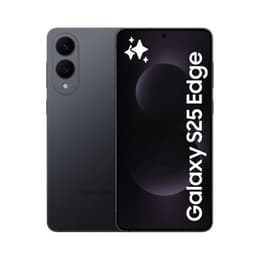
Galaxy S25 Edge
Starting at

Refurbished price:496.00

Versus €1,386.13 new

See options
Google Pixel 9 Pro
Starting at

Refurbished price:530.00

Versus €1,099.00 new

See options

Differences at a glance

The Samsung Galaxy S25 Edge (2025) and the Google Pixel 9 Pro (2024) are high-end smartphones designed to deliver polished daily experiences through distinct engineering philosophies. While both handsets target users looking for flagship performance, they differ primarily in their physical form factors, software ecosystems, and hardware configurations.

The Galaxy S25 Edge emphasizes an ultra-slim titanium build, whereas the Google Pixel 9 Pro focuses on integrated AI tooling and a compact, comfortable grip. Operating on different versions of Android with unique interface skins, these devices offer contrasting approaches to mobile productivity and everyday usability.

Available Models

Colour

Storage (GB)

Scores

Durability

When evaluating structural longevity and software support, both devices are built to remain relevant for years, though their update timelines and repair considerations vary.

  • Software support lifecycle: The Google Pixel 9 Pro benefits from an extended multi-year update commitment covering major operating system upgrades, while the Galaxy S25 Edge follows standard flagship support windows for current-generation devices.
  • Build durability: The Galaxy S25 Edge incorporates reinforced glass and a lightweight titanium frame, whereas the Pixel 9 Pro utilizes robust aluminum and textured glass designed to withstand daily wear.
  • Expected practical lifespan: Both models feature high-capacity internal storage configurations and substantial memory reserves that ensure long-term stability for multitasking and software updates.

Year of Release

2025

2024

OS

Android

Android

Foldable

No

No

Performance

Under everyday workloads, both smartphones handle demanding applications and multitasking efficiently, though they manage processing tasks through different hardware architectures.

  • Everyday responsiveness: App loading, web browsing, and switching between heavy programs happen smoothly without noticeable stutter on either model, supported by generous baseline memory allocations.
  • Battery behavior: The Galaxy S25 Edge manages power demands carefully within a remarkably thin chassis, while the Pixel 9 Pro utilizes a slightly larger cell size to sustain a full day of mixed usage.
  • Thermal management: Both phones incorporate modern cooling solutions to prevent excessive heating during extended gaming sessions or resource-intensive tasks.

Screen quality

Visual output on both handsets is sharp, vibrant, and well-suited for media consumption, reading, and outdoor visibility under bright sunlight.

  • Display technology: Each device features advanced OLED panel technology with deep black levels, high contrast ratios, and adaptive refresh rates scaling up to a smooth 120Hz.
  • Outdoor legibility: Peak brightness levels on both screens allow for clear legibility even when used directly under harsh daylight conditions.
  • Viewing experience: The Galaxy S25 Edge offers a slightly more expansive canvas, while the Pixel 9 Pro provides a compact form factor that remains easy to navigate with one hand.

Resolution

1440x3120

1280 x 2856

Audiovisual

Photography and media capture capabilities on these devices cater to both casual snapshot takers and users who enjoy detailed mobile image editing.

  • Lens configurations: The Galaxy S25 Edge relies on a high-resolution primary sensor alongside an ultra-wide option, whereas the Pixel 9 Pro features a versatile triple-lens array including a dedicated telephoto zoom.
  • Processing and low light: Both handsets excel at capturing clear details in challenging lighting conditions, utilizing distinct software algorithms to balance highlights and shadows.
  • Video and audio: Video recording remains stable and crisp on both models, complemented by clear microphone input for calls and media creation.

Miscellaneous

Practical daily usability elements, including connectivity standards and physical handling, highlight further distinctions between the two devices.

  • Handling and ergonomics: The Galaxy S25 Edge stands out for its exceptionally thin profile and light weight, while the Pixel 9 Pro offers a slightly thicker, contoured shape that rests securely in the palm.
  • Authentication sensors: Both phones include responsive biometric security features, combining facial recognition capabilities with reliable fingerprint sensors built directly into the display.
  • Connectivity: Comprehensive 5G network compatibility, modern Wi-Fi standards, and Bluetooth support ensure fast wireless connections on both models.

Weight

163 g

199 g

Screen size (in)

6.7

6.3

Network

5G

5G

SIM card

Dual Physical SIM + eSIM

Physical SIM + eSIM

Carrier compatibility

Unlocked

Unlocked

Connector

USB-C

USB-C

What the community thinks

User discussions across public tech forums often highlight the Google Pixel 9 Pro for its clean software interface, reliable shutter speed, and deep integration of helpful daily tools. At the same time, community members frequently praise the Samsung Galaxy S25 Edge for its striking thinness, lightweight titanium build, and vibrant display panel. Common criticisms for the Pixel occasionally center on its slightly heavier weight, while users sometimes note that the ultra-slim profile of the Samsung device leaves less room for extended battery capacities.

Users prioritizing physical sleekness, minimal pocket bulk, and a larger viewing area may prefer the design choices of the Samsung Galaxy S25 Edge. Conversely, users who value dedicated zoom photography and extensive software update longevity will find the Google Pixel 9 Pro well-suited to their needs. For shoppers seeking a sustainable choice, exploring a quality-assured refurbished option provides an eco-friendly alternative to purchasing brand-new hardware. Both models offer capable flagship experiences, and the ideal choice depends entirely on individual daily preferences.