

Compare models
Galaxy S25 Edge Vs Galaxy Z Flip6
- 1-year minimum warranty
- Free delivery on all orders
- Free 30-day returns
Differences at a glance
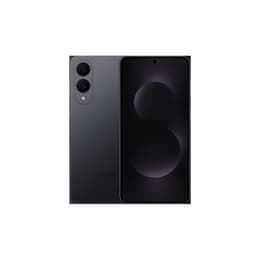
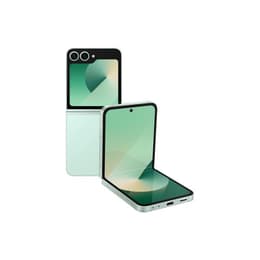
The Samsung Galaxy S25 Edge (2025) and the Samsung Galaxy Z Flip6 (2024) represent two distinct visions of modern smartphone design, contrasting a conventional slate form factor with a foldable clamshell build. While both run on the Android operating system with Samsung's customized interface, they cater to very different physical preferences and user lifestyles. The main differentiators lie in their structural design and display mechanics, dividing choice between ultra-thin rigidity and foldable pocket-friendly versatility.
Available Models
Colour
Storage
Scores
Durability
Evaluating structural endurance and software longevity reveals different design philosophies for physical wear and tear over time.
- Release timeline and update support: The Galaxy S25 Edge launched in 2025, while the Galaxy Z Flip6 debuted in 2024, though both benefit from multi-year commitments to operating system upgrades and security patches.
- Physical durability design: The Galaxy S25 Edge relies on a rigid, thin titanium-reinforced body with protective glass panels, whereas the Galaxy Z Flip6 utilizes an articulating hinge mechanism and a flexible inner screen that requires careful handling against particulate ingress.
- Expected lifespan: Traditional slate builds like the S25 Edge generally present fewer mechanical wear points over years of heavy daily use, while folding devices involve specialized hinge maintenance and screen protector upkeep.
Year of Release
2025
2024
Compatible with latest Update
Yes
Yes
OS
Android
Android
Foldable
No
Yes
Performance
Underneath their respective shells, both smartphones handle daily tasks, heavy applications, and extensive multitasking with high levels of capability.
- Everyday responsiveness and multitasking: Both devices manage rapid app launching, split-screen viewing, and demanding background processes smoothly thanks to high-capacity memory configurations and capable current-generation processors.
- Storage and memory options: Users can select between standard configurations starting at generous storage tiers, though neither model includes expandable card slots for physical media expansion.
- Battery behavior: The Galaxy S25 Edge features a physical footprint that houses a more modest battery capacity, whereas the Galaxy Z Flip6 accommodates a slightly larger cell, though practical daily endurance depends heavily on individual screen-on time and display configuration.
Screen quality
Visual output differs significantly due to the structural mechanics required for a foldable panel versus a standard fixed display.
- Display technology and viewing experience: The Galaxy S25 Edge features a traditional flat AMOLED screen with sharp resolution, whereas the Galaxy Z Flip6 utilizes a foldable main AMOLED panel accompanied by a smaller exterior cover display for notifications.
- Brightness and outdoor clarity: Both panels offer high peak brightness thresholds that maintain legibility under direct sunlight, along with adaptive refresh rates reaching up to 120Hz for fluid scrolling.
- Surface characteristics: The S25 Edge provides an entirely uniform glass surface, while the Z Flip6 features a subtle crease along the folding axis of the primary inner display.
Resolution
1440 x 3120
1080 x 2640
Audiovisual
Imaging hardware and media playback capabilities offer flexible tools for casual photography, video capture, and audio consumption.
- Camera system versatility: Both models incorporate high-resolution main sensors supported by ultra-wide lenses, delivering clear daylight images and capable low-light processing.
- Unique capture modes: The Galaxy Z Flip6 leverages its folding design to enable hands-free angles and stable tabletop positioning for media creation, while the Galaxy S25 Edge focuses on standard high-resolution sensor output.
- Audio and media output: Stereo speaker setups on both devices deliver balanced sound delivery for hands-free calls, video streaming, and casual music playback.
Miscellaneous
Connectivity standards, physical dimensions, and handling characteristics shape how each device integrates into everyday carry routines.
- Connectivity and ports: Both smartphones support widespread 5G networks, modern Wi-Fi protocols, and Bluetooth pairing, utilizing reversible USB-C ports for charging and data transfer.
- Physical dimensions and weight: The Galaxy S25 Edge emphasizes an exceptionally slim profile that slides easily into pockets, whereas the Galaxy Z Flip6 folds in half to occupy a smaller vertical footprint at the expense of increased thickness when closed.
- Security sensors: Biometric authentication on both models relies on responsive fingerprint recognition integrated into side-mounted power keys alongside facial recognition software.
Weight
163 g
187 g
Screen size (in)
6.7
6.7
Network
5G
5G
SIM card
Physical SIM + eSIM
Physical SIM + eSIM
Carrier compatibility
Unlocked
Unlocked
What the community thinks
When evaluating user sentiment from online communities, owners of the Galaxy S25 Edge frequently praise its remarkably thin profile, solid build materials, and traditional display clarity without folding constraints. Common discussions note that its slim proportions leave less room for extended battery reserves during heavy use. Conversely, users of the Galaxy Z Flip6 highlight the convenience of its compact folded size, pocketability, and versatile hands-free camera angles, while noting that the inner screen crease and hinge mechanism require mindful handling over long-term ownership.
Users prioritizing a traditional, ultra-slim form factor with a continuous rigid display may prefer the Galaxy S25 Edge, while users valuing maximum pocket portability and a folding multi-angle display layout will likely lean toward the Galaxy Z Flip6. Selecting between the two depends entirely on whether your daily routine benefits more from a conventional slate build or a flexible clamshell design. Exploring a quality-assured refurbished option through platforms like Back Market provides an eco-friendly way to acquire either model while supporting more sustainable consumption habits.









