

Compare models
Galaxy S22+ 5G Vs Xiaomi Redmi Note 13 4G
- 1-year minimum warranty
- Free delivery on all orders
- Free 30-day returns
Differences at a glance
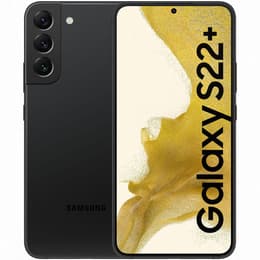
The Samsung Galaxy S22+ 5G (2022) and the Xiaomi Redmi Note 13 4G (2024) are distinct smartphones catering to different market segments and user priorities. While the Galaxy S22+ 5G positions itself as a premium flagship device with robust construction and advanced hardware capabilities, the Xiaomi Redmi Note 13 4G serves as a modern mid-range option focused on daily usability and essential features. Both run on the Android operating system, offering personalized interfaces through their respective manufacturer skins. Understanding how their core capabilities differ helps clarify which device aligns with specific user habits.
Available Models
Colour
Storage
Scores
Durability
Evaluating the durability and lifespan of these two smartphones reveals distinct approaches to software support, hardware build quality, and expected operational longevity.
- Release timeline and software support: The Galaxy S22+ 5G launched in early 2022 with a multi-year software commitment, whereas the Xiaomi Redmi Note 13 4G debuted in early 2024, entering the market with a more recent software baseline.
- Build materials and physical protection: The Galaxy S22+ 5G features aluminum framing and reinforced glass protection alongside high-level water and dust resistance, while the Xiaomi Redmi Note 13 4G utilizes plastic structural elements with splash protection ratings.
- Expected operational lifespan: Flagship internal components in the Galaxy S22+ 5G support sustained longevity for demanding workloads, whereas the Xiaomi Redmi Note 13 4G provides reliable hardware performance well-suited for routine daily operations over several years.
Year of Release
2022
2024
Compatible with latest Update
Yes
Yes
OS
Android
Android
Foldable
No
No
Performance
Performance profiles vary significantly between these two models, driven by differences in processing hardware, multitasking capabilities, and energy management.
- Processor capabilities and responsiveness: The Galaxy S22+ 5G handles demanding multi-app workflows, graphic-intensive gaming, and fast system navigation smoothly, while the Xiaomi Redmi Note 13 4G manages everyday tasks like web browsing, messaging, and media streaming reliably without targeting high-end gaming.
- Memory and storage configurations: Both devices offer standard configurations starting with ample baseline storage, though the Xiaomi Redmi Note 13 4G includes expandable storage support via a card slot, which is absent on the Samsung model.
- Battery behavior and charging: The Xiaomi Redmi Note 13 4G incorporates a larger capacity battery paired with moderate charging speeds, while the Galaxy S22+ 5G features a smaller battery capacity coupled with faster wired charging capabilities and wireless charging support.
Screen quality
Both smartphones deliver vibrant viewing experiences through advanced display panels, though they differ in peak brightness and fluidity metrics.
- Display technology and clarity: The Galaxy S22+ 5G utilizes high-tier dynamic panel technology with deep contrast and sharp resolution, and the Xiaomi Redmi Note 13 4G employs a bright panel configuration that maintains clear text and vivid image reproduction.
- Outdoor visibility: The Galaxy S22+ 5G achieves very high peak brightness levels for direct sunlight legibility, while the Xiaomi Redmi Note 13 4G offers sufficient luminance for comfortable outdoor viewing under typical daylight conditions.
- Refresh rate and motion smoothness: Both models support high refresh rates to ensure fluid scrolling through web pages, social media feeds, and system menus.
Resolution
1080 x 2340
1080 x 2400
Screen type
Dynamic AMOLED 2X
AMOLED
Audiovisual
Camera systems on these devices reflect their respective design categories, offering diverse tools for photography, video recording, and media consumption.
- Rear camera configurations: The Galaxy S22+ 5G relies on a dedicated triple-lens array featuring a telephoto lens for optical zoom clarity, whereas the Xiaomi Redmi Note 13 4G features a high-pixel primary sensor paired with an ultra-wide and macro lens.
- Low-light and video performance: The Galaxy S22+ 5G processes dark environments efficiently with advanced sensor light capture and high-resolution video modes, while the Xiaomi Redmi Note 13 4G captures balanced daylight photos but requires steady hands during evening shooting.
- Audio output and media consumption: Both devices include stereo loudspeaker setups for media playback, though the Xiaomi Redmi Note 13 4G retains a traditional headphone jack that requires wired adapters or wireless alternatives on the Samsung device.
Main camera
50 megapixels
108 megapixels
Front camera
10 megapixels
16 megapixels
Miscellaneous
Practical everyday features, connectivity standards, and physical handling characteristics define the day-to-day user experience of each model.
- Connectivity and ports: The Galaxy S22+ 5G supports advanced cellular networking speeds including 5G, whereas the Xiaomi Redmi Note 13 4G focuses on standard 4G connectivity alongside modern Wi-Fi and Bluetooth standards.
- Biometric security: Both models integrate secure authentication tools, utilizing an under-display fingerprint sensor alongside facial recognition options.
- Physical dimensions and handling: The Galaxy S22+ 5G offers a compact, solid in-hand feel with premium glass surfaces, while the Xiaomi Redmi Note 13 4G provides a slightly larger screen footprint within a lightweight frame.
Weight
195 g
189 g
Screen size (in)
6.6
6.67
Network
5G
4G
SIM card
Physical SIM + eSIM
Dual Physical SIM
Carrier compatibility
Unlocked
Unlocked
What the community thinks
Community discussions and user feedback highlight distinct patterns for both smartphones. Owners of the Galaxy S22+ 5G frequently praise its robust build quality, premium display clarity, and capable multi-lens camera system, though some users note that heavy processing tasks can lead to increased battery consumption. On the other hand, users of the Xiaomi Redmi Note 13 4G appreciate its reliable daily battery endurance, responsive high-refresh-rate screen, and the inclusion of expandable storage, while pointing out that processing speeds and low-light photography have clear mid-range limitations.
Users who prioritize premium build materials, advanced camera zoom capabilities, and rapid processing power will find the Galaxy S22+ 5G well-suited to their daily routines. Conversely, users who value long battery endurance, everyday reliability, and expandable storage options may lean toward the Xiaomi Redmi Note 13 4G. For buyers exploring sustainable alternatives, choosing a quality-assured refurbished option from Back Market provides an eco-friendly way to acquire either device while minimizing environmental impact.