

Compare models
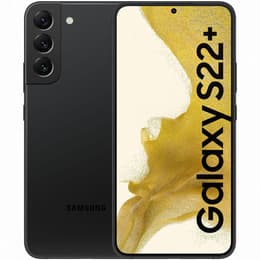
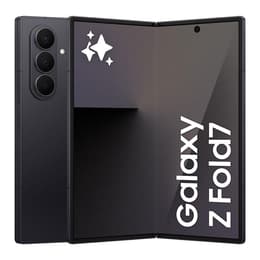
Galaxy S22+ 5G Vs Galaxy Z Fold7
- 1-year minimum warranty
- Free delivery on all orders
- Free 30-day returns
Differences at a glance
The Samsung Galaxy S22+ 5G (2022) and the Samsung Galaxy Z Fold7 (2025) represent two completely different approaches to modern mobile engineering, contrasting a traditional slate smartphone design with an advanced book-style foldable device. While both handsets deliver robust ecosystem capabilities within the Android operating system, they diverge significantly in physical form factor, release timeline, and everyday utility. This comparison highlights how their distinct designs cater to varying consumer lifestyles.
Available Models
Colour
Storage (GB)
Scores
Durability
The Galaxy Z Fold7 and Galaxy S22+ 5G span different release generations, resulting in contrasting software support lifespans and hardware age profiles.
- Software support timelines: The Galaxy Z Fold7 launched with a newer Android version, ensuring several more years of active security patches and operating system upgrades compared to the older Galaxy S22+ 5G.
- Hardware durability: The Galaxy S22+ utilizes a rigid glass-and-aluminum slate construction with high-level water resistance, whereas the foldable mechanism of the Galaxy Z Fold7 introduces moving parts that require careful handling despite modern hinge reinforcements.
- Expected practical lifespan: Users selecting quality-assured refurbished options from Back Market can extend the operational lifecycle of either device, though the newer model naturally retains longevity advantages for long-term software compatibility.
Year of Release
2022
2025
Compatible with latest Update
Yes
Yes
OS
Android
Android
Foldable
No
Yes
Performance
Internal computing capabilities and everyday responsiveness differ noticeably, driven by several generations of processor advancements between the two releases.
- Multitasking and memory: The Galaxy Z Fold7 features higher base RAM configurations paired with current-generation processing hardware, enabling seamless transitions across multiple split-screen applications.
- Everyday system speed: Both devices handle standard web browsing, messaging, and streaming smoothly, but demanding mobile applications and graphics-heavy games run with greater thermal efficiency and frame stability on the newer hardware.
- Battery behavior: The Galaxy S22+ manages daily energy use with a conventional cell size, while the dual-screen setup of the Galaxy Z Fold7 distributes power across a larger internal canvas, leading to comparable daily endurance under mixed usage patterns.
Screen quality
Display technology represents the most dramatic point of divergence between these two smartphones, shifting from a classic single panel to a dual-screen transforming layout.
- Display configuration: The Galaxy S22+ relies on a traditional flat panel with vibrant color reproduction, whereas the Galaxy Z Fold7 pairs an external cover screen with a massive internal folding screen for tablet-style viewing.
- Refresh rate and fluidity: Both handsets support adaptive high refresh rates up to 120Hz, ensuring fluid scrolling through menus, web pages, and supported media.
- Outdoor visibility: High peak brightness capabilities on both models allow contents to remain legible under direct sunlight, though large folding panels require careful angle adjustments to minimize reflections.
Resolution
1080 x 2340
1968x2184
Audiovisual
Media capture and consumption hardware reflect distinct eras of mobile photography and audio engineering.
- Camera resolution: The Galaxy Z Fold7 incorporates a high-resolution main sensor configuration designed to capture intricate details, while the Galaxy S22+ employs a reliable triple-lens setup suited for everyday snapshots.
- Low-light performance: Advanced image processing on the newer foldable helps manage challenging lighting conditions, though both models produce clear photos in standard daylight scenarios.
- Media consumption: Built-in stereo speakers on both devices deliver balanced audio for calls and video playback, with the larger unfolded display of the Fold7 providing an immersive visual companion to media audio.
Miscellaneous
Physical dimensions, connectivity standards, and daily handling characteristics establish distinct user experiences outside of core processing tasks.
- Form factor and handling: The Galaxy S22+ offers a slim, lightweight slate profile that slips easily into pockets, while the Galaxy Z Fold7 adopts a narrower cover display layout that opens into a broad workspace.
- Connectivity options: Both models support 5G network compatibility, modern Wi-Fi standards, and Bluetooth protocols for reliable accessory pairing.
- Biometric security: Fast fingerprint recognition is integrated conveniently into both devices, alongside facial recognition software for quick unlocking.
Weight
195 g
215 g
Screen size (in)
6.6
8.0
Network
5G
5G
SIM card
Dual Physical SIM + eSIM
Carrier compatibility
Unlocked
Unlocked
Connector
USB-C
USB-C (USB 3)
What the community thinks
Choosing between the Samsung Galaxy S22+ 5G and the Samsung Galaxy Z Fold7 depends entirely on personal workflow preferences and physical design priorities. Users prioritizing a classic, lightweight pocket profile with reliable everyday performance will find the Galaxy S22+ well-suited to their daily routines. Conversely, users who frequently multitask with multiple apps, consume media on a tablet-sized canvas, or desire an expansive workspace will lean toward the innovative layout of the Galaxy Z Fold7.
Review communities frequently praise the Galaxy S22+ for its dependable ergonomics and straightforward reliability, while noting that its battery demands more frequent top-ups over time. Meanwhile, discussions around the Galaxy Z Fold7 highlight appreciation for its remarkably thin folding chassis and versatile dual screens, alongside occasional notes regarding the visibility of the screen crease. For consumers exploring sustainable technology choices, opting for a quality-assured refurbished model via Back Market offers an eco-friendly alternative to purchasing newly manufactured hardware.