
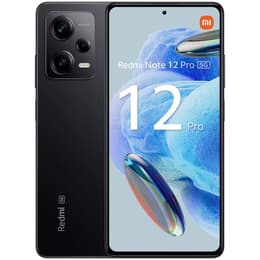


Galaxy S21 Ultra 5G Vs Xiaomi Redmi Note 12 Pro

Galaxy S21 Ultra 5G
Galaxy S21 Ultra 5G
Starting at

Refurbished price:229.00

Versus €1,297.00 new

See options
Xiaomi Redmi Note 12 Pro
Starting at

Refurbished price:112.00

Versus €399.00 new

See options

Ratings

The Samsung Galaxy S21 Ultra 5G, released in January 2021, and the Xiaomi Redmi Note 12 Pro 5G, launched in November 2022, are smartphones designed for different user expectations. While the Galaxy S21 Ultra 5G positioned itself as a premium device with advanced camera capabilities and a high-resolution display, the Redmi Note 12 Pro 5G offers a balanced experience with a focus on a vibrant screen and efficient performance. Both devices operate on the Android platform, offering a wide ecosystem of applications and services.

Scores

Durability

The practical lifespan of a smartphone is influenced by its initial release, software support, and physical resilience. These two devices present different profiles in terms of longevity and repairability.

  • Release Timeline: The Galaxy S21 Ultra 5G was released in January 2021, making it an older model compared to the Redmi Note 12 Pro 5G, which launched in November 2022. This age difference impacts their remaining software support window.
  • Software Longevity: The Galaxy S21 Ultra 5G received its final major Android update (Android 15) in May 2025, with software updates officially terminated as of February 2026. The Redmi Note 12 Pro 5G, launched with Android 12, is expected to receive its final major update (HyperOS 2, based on Android 15) by the end of 2025, with its software warranty concluding around that time.
  • Physical Durability & Repairability: The Galaxy S21 Ultra 5G features IP68 dust and water resistance and Gorilla Glass Victus on both the front and back, offering robust protection. However, it received a low repairability score of 3/10 from iFixit due to extensive use of adhesive and a non-modular display cable. The Redmi Note 12 Pro 5G has an IP53 rating for dust and splash resistance and is protected by Corning Gorilla Glass 5. While a specific iFixit score for the Redmi Note 12 Pro 5G was not found, the Redmi Note 12 Pro+ 5G received a 6.5/10, suggesting a more repair-friendly design than the S21 Ultra.

Year of Release

2021

2022

Compatible with latest Update

Yes

No

OS

Android

Android

Foldable

No

No

Performance

Performance in smartphones is crucial for daily operations, from app usage to multitasking and gaming. Both devices offer capable performance for their respective segments.

  • Processing Power: The Galaxy S21 Ultra 5G, with its flagship-tier processor from 2021, handles demanding applications and intensive multitasking with fluidity. Users can expect smooth navigation and efficient execution of complex tasks. The Redmi Note 12 Pro 5G, equipped with a mid-range processor, provides a responsive experience for everyday tasks like social media, browsing, and streaming, along with decent performance for mobile gaming.
  • Multitasking and Responsiveness: The Galaxy S21 Ultra 5G typically comes with 12GB or 16GB of RAM, allowing for extensive multitasking without significant slowdowns. The Redmi Note 12 Pro 5G offers 6GB, 8GB, or 12GB RAM configurations, which are sufficient for managing multiple applications simultaneously, though the higher RAM options provide a smoother experience for heavier usage.
  • Battery Behavior: Both phones feature a 5000 mAh battery. The Galaxy S21 Ultra 5G generally provides good battery life, often lasting a full workday, though some heavy users might find it requires charging before the day ends. The Redmi Note 12 Pro 5G is noted for its impressive battery longevity, with many users reporting it easily lasts through a full day of heavy use.

Memory (GB)

12 GB

8 GB

Screen quality

The display is a primary interface for smartphone interaction, and both devices offer distinct visual experiences.

  • Display Technology and Resolution: The Galaxy S21 Ultra 5G features a 6.8-inch Dynamic AMOLED 2X display with a high resolution of 3200 x 1440 pixels, resulting in a sharp 515 PPI. This provides exceptional clarity and detail. The Redmi Note 12 Pro 5G has a 6.67-inch Flow AMOLED display with a resolution of 1080 x 2400 pixels, offering a clear viewing experience at 395 PPI.
  • Brightness and Color: The Galaxy S21 Ultra 5G boasts a peak brightness of 1500 nits, making it highly visible even in bright outdoor conditions, and supports HDR10+ for vibrant color reproduction. The Redmi Note 12 Pro 5G reaches a peak brightness of 900 nits (HBM) and supports Dolby Vision and HDR10+, delivering rich colors and good contrast.
  • Refresh Rate and Smoothness: Both devices offer a 120Hz refresh rate for smooth scrolling and animations. The Galaxy S21 Ultra 5G features an adaptive refresh rate that can scale down to conserve battery. The Redmi Note 12 Pro 5G also provides a smooth 120Hz experience, enhancing the overall user interface fluidity.

Resolution

1440 x 3200

1080 x 2400

Screen type

Dynamic AMOLED 2X

AMOLED

Audiovisual

Camera capabilities are a significant factor for many users, and these phones offer different strengths in their imaging systems.

  • Rear Camera Systems: The Galaxy S21 Ultra 5G features a versatile quad-camera setup, including a 108MP main sensor with optical image stabilization (OIS), a 12MP ultrawide, a 10MP 3x telephoto, and a 10MP 10x telephoto lens. This configuration is praised for its flexibility and impressive zoom capabilities. The Redmi Note 12 Pro 5G comes with a triple-camera system, highlighted by a 50MP main sensor (Sony IMX766) with OIS, an 8MP ultrawide, and a 2MP macro lens.
  • Photography Performance: The Galaxy S21 Ultra 5G is known for capturing highly detailed images with excellent dynamic range across its various lenses, performing well in diverse lighting conditions, including low light. The Redmi Note 12 Pro 5G's main 50MP camera delivers good image quality with sharpness and accurate colors, especially in well-lit environments. Its ultrawide and macro cameras are considered less capable compared to the main sensor.
  • Video Recording and Audio: The Galaxy S21 Ultra 5G supports video recording up to 8K at 24fps and 4K at 60fps, offering advanced video features. The Redmi Note 12 Pro 5G records video at up to 4K at 30fps. Both devices feature stereo speakers, providing an immersive audio experience for media consumption. The Redmi Note 12 Pro 5G also includes a 3.5mm headphone jack.

Main camera

108 megapixels

50 megapixels

Front camera

40 megapixels

16 megapixels

Miscellaneous

Beyond core specifications, several practical features contribute to the overall user experience of these smartphones.

  • Connectivity and Ports: Both devices support 5G connectivity. The Galaxy S21 Ultra 5G includes Wi-Fi 6E and Bluetooth 5.2, along with NFC and a USB-C 3.2 port. The Redmi Note 12 Pro 5G supports Wi-Fi 6, Bluetooth 5.2, NFC, and features a USB Type-C port. A notable difference is the inclusion of a 3.5mm headphone jack on the Redmi Note 12 Pro 5G, which is absent on the Galaxy S21 Ultra 5G.
  • Biometric Security and Other Sensors: The Galaxy S21 Ultra 5G utilizes an ultrasonic under-display fingerprint sensor for secure unlocking. The Redmi Note 12 Pro 5G features a side-mounted fingerprint sensor. The Redmi Note 12 Pro 5G also includes an IR blaster, a feature not found on the Galaxy S21 Ultra 5G.
  • Design and Handling: The Galaxy S21 Ultra 5G has a premium build with Gorilla Glass Victus on both the front and back, and an aluminum frame. It weighs 227g. The Redmi Note 12 Pro 5G features a glass front and back with a plastic frame, weighing 187g, making it lighter. The Galaxy S21 Ultra 5G also supports the S-Pen stylus, expanding its functionality for productivity and creative tasks.

Weight

227 g

187 g

Screen size (in)

6.8

6.67

Network

5G

5G

SIM card

Physical SIM + eSIM

Dual Physical SIM

Carrier compatibility

Unlocked

Unlocked

Connector

USB-C

USB-C

Choosing between the Samsung Galaxy S21 Ultra 5G and the Xiaomi Redmi Note 12 Pro 5G involves weighing their distinct strengths and target audiences. Users frequently praise the Galaxy S21 Ultra 5G for its exceptional camera system, particularly its versatile zoom capabilities, and its vibrant, high-resolution display. Some common criticisms include its relatively lower repairability score and, for some, battery life that might not consistently last a full day with heavy usage.

The Redmi Note 12 Pro 5G is often lauded by users for its impressive battery life, fast charging, and its bright, smooth AMOLED display. Its main camera is also generally well-regarded for everyday photography. A frequent point of discussion among users is its software update longevity, which is shorter compared to some competitors.

Users prioritizing a top-tier camera experience with advanced zoom, a very high-resolution display, and S-Pen functionality may find the Galaxy S21 Ultra 5G well-suited to their needs. Conversely, users who value extended battery life, rapid charging, a 3.5mm headphone jack, and a generally solid performance for daily tasks might lean toward the Redmi Note 12 Pro 5G. Both devices offer compelling features, and considering a quality-assured refurbished option for either model can be an eco-friendly alternative to extend their lifecycle.


See all articles

Our recent comparisons