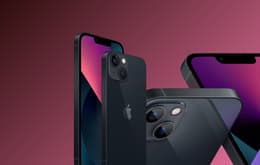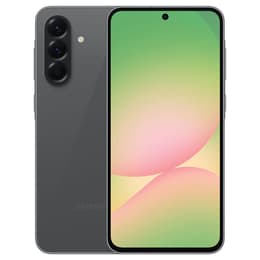


Compare models

Galaxy A56 Vs Xiaomi Redmi Note 13 4G

  • 1-year minimum warranty
  • Free delivery on all orders
  • Free 30-day returns
Galaxy A56
Starting at

Refurbished price:€335.00

Versus €502.00 new

See options
Xiaomi Redmi Note 13 4G
Starting at

Refurbished price:€174.00

Versus €340.00 new

See options

Differences at a glance

The Samsung Galaxy A56 (2025) and the Xiaomi Redmi Note 13 4G (2024) are popular mid-range smartphones designed to deliver reliable everyday performance without leaning into flagship territory. While both devices cater to budget-conscious users looking for dependable features, they differ significantly in their generation, software support, and connectivity options. The Galaxy A56 runs on Android with extensive multi-year software backing, whereas the Xiaomi Redmi Note 13 4G offers a more traditional feature set tailored to standard 4G networks. Choosing between them depends on how long you intend to keep your phone and whether 5G capability matters to your daily routine.

Available Models

Colour

Storage

Scores

Durability

When evaluating structural longevity and software support, the Galaxy A56 and the Xiaomi Redmi Note 13 4G provide different timelines for long-term usability.

  • Software Support: The Galaxy A56 benefits from a modern release year and extended OS upgrade commitments, ensuring it stays current with security patches longer. The Xiaomi Redmi Note 13 4G, arriving slightly earlier, covers several Android generational updates but carries a shorter remaining window for major software refreshments.
  • Build Durability: The Galaxy A56 features a robust IP67 dust and water-resistance rating, contrasting with the IP54 splash-resistant build of the Xiaomi model, making the Samsung device better equipped to handle accidental liquid exposure over time.
  • Expected Lifespan: Users seeking an eco-friendly, quality-assured refurbished option that will endure multiple years of heavy daily routines often favor devices with higher ingress protection ratings and extended software lifecycles.

Year of Release

2025

2024

Compatible with latest Update

Yes

Yes

OS

Android

Android

Foldable

No

No

Performance

Underneath the exterior, both smartphones handle daily tasks differently based on their internal hardware configurations and multitasking capabilities.

  • App Loading and Multitasking: The Galaxy A56 handles demanding mobile games and rapid app switching smoothly, keeping background tasks active without noticeable slowdowns. The Xiaomi Redmi Note 13 4G manages web browsing, messaging, and media streaming comfortably, though heavy gaming may trigger occasional stuttering during extended sessions.
  • Storage and Memory: Available in various configurations featuring generous RAM pairings, both devices prevent lag during normal operation, though neither supports physical storage expansion via microSD in the case of the Samsung model.
  • Battery Behavior: Both models pack a 5000 mAh battery capacity designed to last through a full day of mixed use, but the Galaxy A56 supports faster wired charging speeds compared to the more moderate charging rate found on the Xiaomi counterpart.

Screen quality

Display characteristics are a major focus for both manufacturers, delivering vibrant viewing experiences for media consumption and web navigation.

  • Panel Technology: Both devices utilize Super AMOLED or AMOLED display panels that produce deep contrast levels, rich colors, and wide viewing angles.
  • Refresh Rate and Smoothness: Each smartphone supports a 120 Hz refresh rate, ensuring that scrolling through social media feeds and navigating user interface menus feels fluid and responsive.
  • Outdoor Visibility: The Galaxy A56 reaches higher peak brightness levels during bright daylight conditions, making outdoor text legibility slightly easier than the Xiaomi Redmi Note 13 4G, which performs adequately under moderate ambient light.

Resolution

1080 x 2340

1080 x 2400

Screen type

Super AMOLED

AMOLED

Audiovisual

Photography and media output vary across these two devices, reflecting different sensor configurations and processing capabilities.

  • Main Photography: The Galaxy A56 utilizes a high-resolution primary sensor paired with optical image stabilization to capture crisp daylight shots and stable low-light images. The Xiaomi Redmi Note 13 4G relies on a high megapixel count main sensor that performs well in bright environments but shows reduced detail in dim settings.
  • Video and Audio: The Samsung model supports stable video recording and clearer audio capture during calls, whereas the Xiaomi device handles standard 1080p recording adequately without advanced stabilization features.
  • Media Consumption: Speaker output on both smartphones provides sufficient volume for casual video watching, though external headphones or speakers improve clarity for music listening.

Main camera

4K@30fps

108 megapixels

Front camera

13 megapixels

16 megapixels

Miscellaneous

Practical daily usability elements, including connectivity standards and physical handling, highlight distinct design philosophies.

  • Connectivity: The Galaxy A56 includes modern 5G cellular connectivity, whereas the Xiaomi Redmi Note 13 4G is restricted to 4G networks, making the Samsung alternative more future-proof for cellular data speeds.
  • Physical Dimensions: The Galaxy A56 features a slightly slimmer profile, while the Xiaomi model retains a traditional headphone jack that appeals to users attached to wired audio accessories.
  • Security Sensors: Both devices incorporate reliable in-display fingerprint scanners for fast biometric unlocking alongside standard facial recognition options.

Weight

197 g

189 g

Screen size (in)

6.5

6.67

Network

5G

4G

SIM card

Dual Physical SIM + eSIM

Dual Physical SIM

Carrier compatibility

Unlocked

Unlocked

Connector

USB-C

USB-C

What the community thinks

User feedback from online communities indicates that owners appreciate the Galaxy A56 for its reliable build quality, smooth daily responsiveness, and modern 5G connectivity, though some note its higher tier positioning within the mid-range market. Conversely, users frequently praise the Xiaomi Redmi Note 13 4G for providing an accessible, bright display and essential legacy features like a headphone jack, while pointing out limitations in demanding gaming scenarios and night photography.

Users prioritizing long-term software updates, faster charging speeds, and 5G network compatibility will find the Galaxy A56 well-suited to their needs. Meanwhile, users focusing on straightforward everyday messaging, media viewing, and traditional wired audio connections may lean toward the Xiaomi Redmi Note 13 4G. Exploring a quality-assured refurbished option for either model provides an eco-friendly alternative that aligns with sustainable technology choices.