

Compare models
Galaxy A34 Vs Galaxy Z Fold7
- 1-year minimum warranty
- Free delivery on all orders
- Free 30-day returns
Differences at a glance
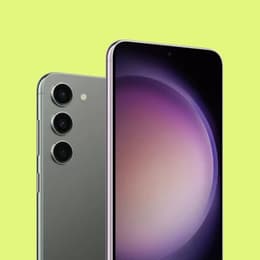
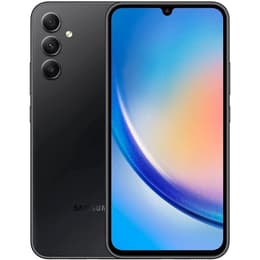
The Samsung Galaxy A34 (2023) and Samsung Galaxy Z Fold7 (2025) represent entirely different approaches to mobile technology, contrasting a traditional mid-range slate design with an advanced book-style foldable format. While both devices operate on the Android platform with Samsung's user interface, they cater to fundamentally distinct usage habits through separate form factors and release generations. The Galaxy A34 provides a reliable, conventional smartphone experience, whereas the Galaxy Z Fold7 introduces a transforming dual-screen layout aimed at expanded multitasking capabilities.
Available Models
Colour
Storage
Scores
Durability
These devices span different release years and hardware categories, influencing their respective software support timelines and overall physical longevity profiles.
- Release timeline and support: The Galaxy Z Fold7 benefits from a newer launch date and an extensive multi-year software update schedule, while the Galaxy A34 operates on an earlier release timeline with a more finite remaining support window.
- Build and repairability: The Galaxy A34 utilizes a sturdy monolithic slate body with straightforward component layouts, whereas the Galaxy Z Fold7 features complex folding hinge mechanics and dual display panels that require specialized handling during maintenance.
- Expected practical lifespan: Both models deliver durable daily operation, though users seeking extended software relevance will find longer-term support headroom in the newer foldable architecture.
Year of Release
2023
2025
Compatible with latest Update
Yes
Yes
OS
Android
Android
Foldable
No
Yes
Performance
Processing capabilities and memory configurations differ substantially, shaping how each device handles daily apps, demanding workflows, and heavy multitasking.
- System responsiveness: The Galaxy A34 handles standard messaging, web browsing, and casual applications smoothly, while the Galaxy Z Fold7 manages intensive gaming, demanding creative apps, and split-screen multitasking with immediate responsiveness.
- Memory and storage: The Galaxy Z Fold7 offers larger baseline memory capacities suited for running multiple large applications simultaneously, compared to the more standard storage and memory tiers found on the Galaxy A34.
- Battery behavior: The Galaxy A34 features a slightly larger traditional battery capacity that efficiently powers a single screen, whereas the Galaxy Z Fold7 distributes power across two displays, resulting in different energy consumption patterns during intensive multi-window use.
Screen quality
Display architecture is one of the most prominent points of divergence between these two devices, affecting everything from media consumption to workspace size.
- Display technology: The Galaxy A34 is equipped with a single vibrant flat display featuring high refresh rates for smooth scrolling, while the Galaxy Z Fold7 utilizes a flexible inner screen alongside an external cover display for versatile viewing modes.
- Brightness and outdoor visibility: Both models incorporate high-brightness capabilities to maintain screen clarity under direct sunlight, though flagship foldable panels often achieve higher peak luminance levels.
- Viewing experience: The Galaxy A34 delivers a traditional widescreen media format, whereas the Galaxy Z Fold7 opens into a tablet-sized canvas well-suited for document editing and dual-app viewing.
Resolution
1080 x 2340
1968 x 2184
Audiovisual
Photography and multimedia systems are tailored to distinct user expectations, ranging from straightforward everyday point-and-shoot optics to advanced multi-lens setups.
- Camera hardware: The Galaxy A34 includes a reliable multi-lens rear configuration for standard landscape and macro shots, while the Galaxy Z Fold7 incorporates high-resolution primary sensors and versatile framing options enabled by its foldable design.
- Video and low-light: Both devices support crisp video recording and steady low-light performance, with the newer processing architecture in the Galaxy Z Fold7 offering enhanced detail recovery in challenging lighting conditions.
- Media and audio output: Stereo speakers are integrated into both models to provide balanced sound delivery during video playback and hands-free calls.
Miscellaneous
Physical dimensions, connectivity standards, and daily handling characteristics vary widely due to the contrasting form factors of each smartphone.
- Handling and dimensions: The Galaxy A34 presents a standard, lightweight slate profile that rests comfortably in one hand, while the Galaxy Z Fold7 features a slimmer folded profile that expands into a wider device when opened.
- Connectivity and ports: Both smartphones support modern fifth-generation cellular networks, high-speed Wi-Fi standards, and secure biometric authentication methods including facial recognition and fingerprint sensors.
- Eco-conscious choices: Choosing a quality-assured refurbished option for models like the Galaxy A34 provides a sustainable path for users looking to reduce environmental impact without compromising on everyday utility.
Weight
199 g
187 g
Screen size (in)
6.6
8
Network
5G
5G
SIM card
Dual Physical SIM
Dual Physical SIM + eSIM
Carrier compatibility
Unlocked
Unlocked
Connector
USB-C
USB-C
What the community thinks
Users prioritizing a straightforward, durable device for standard daily communication and media consumption will find the Galaxy A34 well-suited to their needs. Conversely, users requiring expansive screen space for productivity, document management, and advanced multitasking may lean toward the Galaxy Z Fold7. Both options serve distinct preferences without one being universally superior to the other.
When evaluating these models, considering a quality-assured refurbished option through platforms like Back Market offers an eco-friendly alternative that supports more sustainable technology consumption habits. Ultimately, the right choice depends entirely on individual workflow requirements and comfort with traditional slate versus folding screen formats.