

Galaxy A25 Vs Galaxy S25+

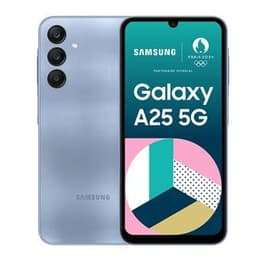
Galaxy A25
Galaxy A25
Starting at

Refurbished price:134.00

Versus €319.11 new

See options
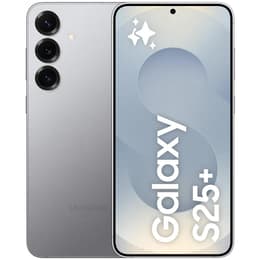
Galaxy S25+
Galaxy S25+
Starting at

Refurbished price:624.00

Versus €1,401.57 new

See options

Ratings

The Samsung Galaxy A25, released in December 2023, and the Samsung Galaxy S25 Plus, launched in February 2025, represent distinct segments within Samsung's smartphone lineup. While both devices operate on the Android platform with Samsung's One UI, they cater to different user expectations regarding performance, display quality, and overall feature set. The Galaxy S25 Plus offers a more advanced and premium experience, whereas the Galaxy A25 focuses on delivering essential smartphone capabilities.

Scores

Durability

The practical lifespan of a smartphone is significantly influenced by its release timeline and the manufacturer's commitment to software updates. These factors determine how long a device remains secure, compatible with new applications, and performs optimally.

  • Release Timeline: The Galaxy A25 was released in December 2023, making it a relatively recent device. The Galaxy S25 Plus, launched in February 2025, benefits from a newer release, positioning it further ahead in its lifecycle.
  • Software Support: Samsung has committed to providing the Galaxy A25 with four years of operating system updates and five years of security updates. In contrast, the Galaxy S25 Plus is set to receive an extended seven years of both OS and security updates, ensuring a significantly longer period of official support.
  • Repairability and Build: The Galaxy A25 features a plastic back and frame with a glass front, which may be more susceptible to cosmetic wear over time. The Galaxy S25 Plus incorporates more robust materials, including Gorilla Glass Victus 2 on the front and a metal frame, contributing to enhanced durability.

Year of Release

2023

2025

Compatible with latest Update

Yes

Yes

OS

Android

Android

Foldable

No

No

Performance

The responsiveness and capability of a smartphone are largely determined by its internal processing power and memory configuration, impacting how smoothly applications run and how effectively the device handles multitasking.

  • Processor Capabilities: The Galaxy A25 is equipped with a processor that handles everyday tasks and moderate applications competently. Users can expect smooth navigation and satisfactory performance for common activities, including some demanding games. The Galaxy S25 Plus features a current-generation, high-performance processor designed for demanding applications, intensive multitasking, and advanced features like on-device artificial intelligence. This results in notably faster processing speeds and a more agile user experience.
  • Multitasking and Storage: The Galaxy A25 typically comes with 6GB or 8GB of RAM and offers storage options of 128GB or 256GB, with the flexibility to expand storage using a microSD card. The Galaxy S25 Plus comes with 12GB of RAM and faster internal storage options of 256GB or 512GB, utilizing UFS 4.0 technology for quicker data transfer and app loading. It does not offer expandable storage.
  • Overall Responsiveness: The Galaxy S25 Plus provides a consistently fluid and responsive experience, even with numerous applications open or during graphically intensive tasks. The Galaxy A25 offers a good experience for its segment, though it may exhibit occasional delays with very heavy workloads compared to more powerful devices.

Memory (GB)

6 GB

12 GB

Screen quality

The display is a primary interface for smartphone interaction, and differences in technology, resolution, and brightness significantly affect the visual experience, especially in varying lighting conditions.

  • Display Technology and Clarity: Both devices feature AMOLED display technology, known for deep blacks and vibrant colors. The Galaxy A25 has a 6.5-inch Super AMOLED display with a Full HD+ resolution (2340x1080 pixels). The Galaxy S25 Plus boasts a larger 6.7-inch Dynamic AMOLED 2X display with a Quad HD+ resolution (3120x1440 pixels), offering a sharper and more detailed visual experience.
  • Brightness and Outdoor Visibility: The Galaxy A25 can reach a peak brightness of 1,000 nits in High Brightness Mode, aided by Vision Booster for improved outdoor viewing. The Galaxy S25 Plus offers a significantly higher peak brightness of 2,600 nits, ensuring excellent visibility even in bright sunlight.
  • Refresh Rate and Smoothness: Both models feature a 120Hz refresh rate, contributing to smoother scrolling and more fluid animations. The Galaxy S25 Plus's adaptive refresh rate can dynamically adjust to content, potentially optimizing power consumption.

Resolution

1080x2340

1440 x 3120 pixels

Audiovisual

The camera system is a crucial component for many users, with capabilities varying across devices in terms of sensor quality, lens versatility, and software processing for different shooting conditions.

  • Rear Camera System: The Galaxy A25 features a triple rear camera setup with a 50-megapixel main sensor with optical image stabilization (OIS), an 8-megapixel ultrawide lens, and a 2-megapixel macro lens. The Galaxy S25 Plus also has a triple rear camera system, including a 50-megapixel main sensor with OIS, a 12-megapixel ultrawide lens, and a 10-megapixel telephoto lens capable of 3x optical zoom.
  • Photography Performance: The Galaxy A25's main camera performs well in good lighting conditions, capturing detailed images. However, its performance in low-light environments is less consistent, often showing reduced detail and increased noise. The Galaxy S25 Plus delivers strong photographic results across various conditions, including low light, producing bright and clear images with good detail and color accuracy.
  • Video Recording and Front Camera: The Galaxy A25 supports video recording up to 4K at 30 frames per second (fps) with its main camera, and features a 13-megapixel front camera. The Galaxy S25 Plus offers more advanced video capabilities, including 8K recording at 30fps, 10-bit HDR video capture, and features like Galaxy Log for flexible color grading. Its front-facing camera is 12-megapixel, producing sharp and well-colored selfies.

Front camera

13 megapixels

12MP

Miscellaneous

Beyond core performance and display, several practical features and design elements contribute to the overall user experience, affecting daily usability and device interaction.

  • Connectivity and Ports: Both devices support 5G connectivity. The Galaxy A25 includes a 3.5mm headphone jack and a USB-C port, along with Wi-Fi and Bluetooth. The Galaxy S25 Plus features a USB-C port, advanced Wi-Fi standards (likely Wi-Fi 6E/7), and Bluetooth, but omits the traditional headphone jack.
  • Design and Handling: The Galaxy A25 has dimensions of 161 x 76.5 x 8.3mm and weighs 197g, featuring a design with a plastic back and frame. The Galaxy S25 Plus is slightly larger but thinner and lighter at 158.4 x 75.7 x 7.4 mm and 218g, with a more premium build of metal and glass, offering a refined in-hand feel.
  • Security and Other Features: The Galaxy A25 incorporates a side-mounted fingerprint sensor for security. The Galaxy S25 Plus utilizes an ultrasonic in-screen fingerprint sensor and includes advanced features like Galaxy AI, offering a suite of artificial intelligence capabilities.

Weight

197 g

190 g

Screen size (in)

6.5

6.7

Network

5G

5G

SIM card

Physical SIM

Physical SIM + eSIM

Carrier compatibility

Unlocked

Unlocked

Connector

USB-C

USB-C

The Samsung Galaxy A25 and Galaxy S25 Plus cater to different user needs and priorities. The Galaxy A25 is often praised by users for its vibrant AMOLED display, reliable battery life that typically lasts a full day, and capable main camera performance in well-lit conditions. Users appreciate its inclusion of a headphone jack and expandable storage, which are practical for everyday use. Criticisms sometimes point to its less impressive low-light camera performance and a processor that, while adequate, may not satisfy users seeking top-tier speed for very demanding applications.

The Galaxy S25 Plus receives high marks for its exceptionally fast performance, stunning high-resolution display with superior brightness, and a versatile camera system that excels in various scenarios, including advanced video recording. Its extended software support and premium build materials are also frequently highlighted as significant advantages. Some user feedback suggests that while its battery life is good, it might not always show substantial improvements over its direct predecessor in all usage patterns, and its design, while refined, may feel familiar to long-time Samsung users.

Users prioritizing a long-lasting device with extensive software support, top-tier performance for gaming and demanding applications, and a highly capable camera system for both photos and advanced video will find the Galaxy S25 Plus well-suited to their needs. Conversely, individuals seeking a dependable smartphone for daily tasks, good battery life, and practical features like a headphone jack and expandable storage, without requiring the absolute latest in processing power or camera technology, may lean toward the Galaxy A25. Both models are available as quality-assured refurbished options, providing an eco-friendly alternative for consumers.


See all articles

Our recent comparisons