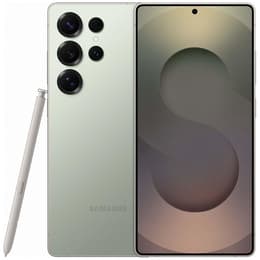


Galaxy A16 Vs Galaxy S25 Ultra

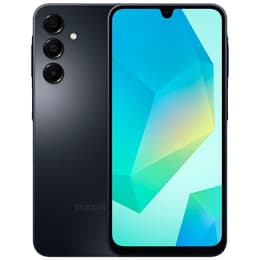
Galaxy A16
Galaxy A16
Starting at

Refurbished price:134.00

Versus €250.00 new

See options
Galaxy S25 Ultra
Galaxy S25 Ultra
Starting at

Refurbished price:735.00

Versus €1,408.78 new

See options

Ratings

The Samsung Galaxy A16, released in late 2024 and early 2025, and the Samsung Galaxy S25 Ultra, launched in early 2025, represent distinct segments within Samsung's smartphone lineup. While both devices operate on the Android platform with Samsung's One UI, the S25 Ultra is designed as a premium flagship, offering advanced features and performance, whereas the A16 serves as a mid-range option focusing on essential functionality and extended software support.

Scores

Durability

The longevity of a smartphone is influenced by its physical durability and the duration of software support it receives. Both the Galaxy A16 and the Galaxy S25 Ultra offer substantial software commitments from Samsung, contributing to their practical lifespans.

  • Software Updates: The Galaxy A16 is notable for being the first A1x series device to receive six years of OS and security updates, with support extending until October 2030. The Galaxy S25 Ultra, as a flagship, surpasses this with a promise of seven years of OS and security updates, ensuring its software remains current for an even longer period, potentially until 2032.
  • Physical Durability: The Galaxy A16 features a plastic back and frame with a glass front, offering IP54 water and dust resistance, which provides protection against splashes and limited dust ingress. In contrast, the Galaxy S25 Ultra boasts a more robust construction with a glass front and back protected by Corning Gorilla Armor 2, and a titanium frame, alongside an IP68 rating for more comprehensive dust and water immersion protection.
  • Repairability: The Galaxy A16 has been noted for its relatively good repairability, with some sources giving it an 8.0 out of 10, highlighting easily accessible batteries with pull tabs. The Galaxy S25 Ultra also shows improved repairability compared to previous flagships, earning a provisional 5 out of 10 from iFixit, with accessible battery and screen components, though screen removal can be challenging.

Performance

Performance is a key differentiator between these two Samsung smartphones, reflecting their respective market positions and intended user experiences.

  • Processing Power: The Galaxy A16 is equipped with a MediaTek Helio G99 (4G variant) or an Exynos 1330/MediaTek Dimensity 6300 (5G variant) processor. This hardware capably handles everyday tasks such as social media, web browsing, and streaming, but users may experience stuttering or lag with demanding applications or extensive multitasking, particularly with the 4GB RAM configuration. The Galaxy S25 Ultra, powered by the Snapdragon 8 Elite for Galaxy, delivers top-tier performance, ensuring smooth operation for all applications, responsive animations, and robust gaming capabilities without significant slowdowns.
  • Multitasking and Responsiveness: The Galaxy A16, especially models with lower RAM, may struggle with keeping multiple applications open simultaneously, leading to app refreshes. The Galaxy S25 Ultra, with its substantial RAM options (12GB or 16GB) and powerful processor, offers seamless multitasking, allowing users to switch between numerous demanding applications without interruption.
  • Storage Capabilities: Both devices offer various storage configurations, with the Galaxy A16 providing 128GB or 256GB of UFS 2.2 storage. The Galaxy S25 Ultra features faster UFS 4.0 storage, available in 256GB, 512GB, or 1TB options, contributing to quicker app loading and data transfer speeds.

Memory (GB)

4 GB

12 GB

Screen quality

The visual experience on a smartphone is largely defined by its display, and the Galaxy A16 and S25 Ultra offer different levels of screen technology and quality.

  • Display Technology and Clarity: The Galaxy A16 features a 6.7-inch Super AMOLED display with a Full HD+ resolution (1080x2340 pixels). This panel provides vibrant colors, deep blacks, and good contrast, suitable for general media consumption. The Galaxy S25 Ultra sports a larger 6.9-inch Dynamic LTPO AMOLED 2X display with a Quad HD+ resolution (1440x3120 pixels), offering superior sharpness and detail, making it ideal for high-resolution content.
  • Brightness and Refresh Rate: The A16's display has a 90Hz refresh rate for smoother scrolling and a peak brightness of around 800 nits, which allows for decent outdoor visibility. The S25 Ultra elevates this with a 120Hz adaptive refresh rate, providing exceptionally fluid visuals and improved power efficiency. Its peak brightness of 2600 nits, combined with an anti-glare coating, ensures excellent readability even in direct sunlight.
  • Design Elements: The Galaxy A16 incorporates a waterdrop notch for its front camera and features a noticeable chin bezel, which can make the front of the device appear somewhat dated. The Galaxy S25 Ultra, on the other hand, offers a more expansive viewing experience with minimal bezels and a punch-hole cutout for the front camera, contributing to a modern aesthetic.

Audiovisual

The camera systems on the Galaxy A16 and Galaxy S25 Ultra cater to different photography needs and expectations, with the Ultra model offering a significantly more advanced setup.

  • Rear Camera Capabilities: The Galaxy A16 includes a triple-camera setup with a 50MP main sensor, a 5MP ultrawide, and a 2MP macro lens. The main camera performs well in good lighting conditions, producing crisp images with vibrant colors. However, its low-light performance is limited, and the ultrawide and macro lenses are considered to be of lower quality. It lacks optical image stabilization (OIS). The Galaxy S25 Ultra features a versatile quad-camera system, including a 200MP main sensor with OIS, a 50MP ultrawide, a 10MP telephoto with 3x optical zoom and OIS, and a 50MP periscope telephoto with 5x optical zoom and OIS. This setup delivers sharp, detailed, and vibrant photos across various lighting conditions, with strong zoom capabilities.
  • Video Recording: The Galaxy A16 supports video recording up to 1080p, but it lacks OIS, which can result in shaky footage, and does not offer 4K recording. The Galaxy S25 Ultra is capable of recording high-quality video, including 8K at 24/30fps and 4K at various frame rates, benefiting from OIS across multiple lenses for stable and clear footage.
  • Front Camera and User Experience: The A16 has a 13MP front camera, which is suitable for basic selfies and video calls. The S25 Ultra features a 12MP front camera with advanced features like dual-pixel PDAF, providing detailed and well-exposed selfies. User reviews for the S25 Ultra indicate that while its camera system is powerful, real-life photography, especially with moving subjects like pets or children, can sometimes be inconsistent.

Miscellaneous

Beyond core performance and display, several practical elements contribute to the overall user experience of these smartphones.

  • Connectivity and Ports: The Galaxy A16 offers 4G and 5G variants, supporting modern cellular networks. It typically includes a USB-C port for charging and data transfer. The Galaxy S25 Ultra provides advanced connectivity options, including 5G, Wi-Fi 7, and Bluetooth v5.x, ensuring fast and reliable wireless communication. It also features a USB-C port.
  • Biometric Security and Stylus: Both devices incorporate biometric security features. The Galaxy A16 likely uses a side-mounted fingerprint sensor, while the S25 Ultra features an in-display fingerprint sensor and advanced facial recognition. A significant distinguishing feature of the S25 Ultra is its integrated S Pen, offering enhanced productivity for note-taking, drawing, and navigation.
  • Design and Handling: The Galaxy A16 has dimensions of 164.4 mm x 77.9 mm x 7.9 mm and weighs 200g, making it a moderately sized device with a plastic build. The Galaxy S25 Ultra is slightly larger and heavier at 162.8 x 77.6 x 8.2 mm and 218g, featuring a premium glass and titanium construction that contributes to a more substantial in-hand feel.

Screen size (in)

6.7

6.9

Network

4G

5G

SIM card

Physical SIM

Physical SIM + eSIM

Carrier compatibility

Unlocked

Unlocked

The Samsung Galaxy A16 and Galaxy S25 Ultra cater to different user needs and expectations, reflecting their positions as a mid-range and a flagship device, respectively. User feedback for the Galaxy A16 often praises its long battery life and the quality of its Super AMOLED display for its category. However, common criticisms point to performance issues, particularly with the 4GB RAM variant, where users report lag and app refreshing, and the limited utility of its secondary cameras.

The Galaxy S25 Ultra is widely lauded for its exceptional display, powerful performance, and versatile camera system with impressive zoom capabilities. While generally considered a top-tier Android device, some users express disappointment over incremental upgrades compared to its predecessor and occasional inconsistencies in camera performance, especially with moving subjects.

Users prioritizing a device for everyday communication, media consumption, and extended software support without needing top-tier performance or advanced camera features may find the Galaxy A16 well-suited to their needs. Its robust battery life and commitment to updates make it a practical choice for those seeking a reliable and long-lasting smartphone. For individuals who demand the highest levels of performance, a superior display, advanced photography and videography capabilities, and the productivity features of the S Pen, the Galaxy S25 Ultra stands out. It is designed for power users, content creators, and those who value a premium smartphone experience.

Both models offer a pathway to owning a Samsung device, with refurbished options providing an eco-friendly, quality-assured alternative for consumers looking to make a sustainable choice.


See all articles

Our recent comparisons