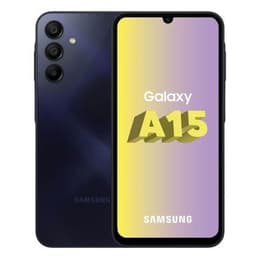
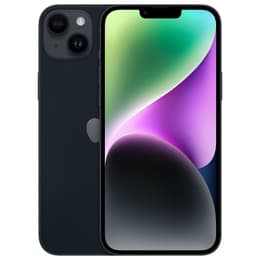


Galaxy A15 Vs iPhone 14 Plus

Galaxy A15
Galaxy A15
Starting at

Refurbished price:124.00

Versus €189.00 new

See options
iPhone 14 Plus
iPhone 14 Plus
Starting at

Refurbished price:317.00

Versus €879.00 new

See options

Ratings

The Samsung Galaxy A15 5G, released in late 2023 and early 2024, and the iPhone 14 Plus, launched in October 2022, are both large-screen smartphones designed to cater to different user preferences. While the Galaxy A15 5G operates on the Android platform, the iPhone 14 Plus runs on iOS, offering distinct user experiences. Key differentiators between these two devices include their display refresh rates, camera capabilities, and overall performance profiles.

Scores

Durability

When considering the long-term usability of these devices, their release timelines and software support policies are important factors.

  • Release Timeline: The Samsung Galaxy A15 5G was introduced in late 2023, with broader availability in early 2024, making it a more recent device. The iPhone 14 Plus was released earlier, in October 2022.
  • Software Longevity: Samsung typically provides a commitment of four years of operating system updates and five years of security updates for its A series devices, including the Galaxy A15 5G. Apple generally offers a longer period of iOS updates, often extending to five or six years, suggesting the iPhone 14 Plus may receive software support for a longer duration.
  • Build and Protection: The iPhone 14 Plus features a Ceramic Shield front cover and an IP68 rating for water and dust resistance, contributing to its robust build. The Galaxy A15 5G utilizes a plastic frame and back, with AGC Dragontrail Protection for its display.

Year of Release

2023

2022

Compatible with latest Update

Yes

Yes

OS

Android

iOS

Foldable

No

No

Performance

The performance of a smartphone impacts daily usage, from app responsiveness to handling demanding tasks and battery endurance.

  • Storage and Expandability: Both devices offer internal storage options starting at 128GB and 256GB. The iPhone 14 Plus also provides a 512GB option. The Galaxy A15 5G distinguishes itself with expandable storage, supporting microSD cards up to 1TB, offering flexibility for users who require additional space.
  • Battery Endurance: The Galaxy A15 5G is equipped with a 5000 mAh battery, which often translates to extended usage, with many users experiencing up to two days of moderate use on a single charge. The iPhone 14 Plus has a 4325 mAh battery, also delivering excellent battery life, capable of up to 26 hours of video playback.
  • Processing Power: The iPhone 14 Plus offers smooth and responsive performance for demanding applications, multitasking, and graphics-intensive gaming, leveraging a powerful internal processor. The Galaxy A15 5G handles everyday tasks like social media and web browsing efficiently, and can manage casual games, though more graphically intensive titles may require adjusting settings for optimal play.

Memory (GB)

4 GB

6 GB

Screen quality

The display is a primary interface for smartphone interaction, and both devices offer distinct visual experiences.

  • Display Technology and Clarity: Both the Galaxy A15 5G and the iPhone 14 Plus feature OLED display technology, providing deep blacks and vibrant colors. The Galaxy A15 5G uses a Super AMOLED panel, while the iPhone 14 Plus features a Super Retina XDR OLED display. The iPhone 14 Plus offers a higher pixel density, resulting in slightly sharper text and images.
  • Brightness and Refresh Rate: The Galaxy A15 5G's display can reach up to 800 nits in high brightness mode, providing good visibility in various lighting conditions. The iPhone 14 Plus offers a typical maximum brightness of 800 nits and can reach a peak of 1200 nits for HDR content, enhancing the viewing experience for compatible media. The Galaxy A15 5G features a 90Hz refresh rate, contributing to smoother scrolling and more fluid animations. The iPhone 14 Plus has a standard 60Hz refresh rate.
  • Screen Size: The iPhone 14 Plus has a slightly larger 6.7-inch display, offering a more expansive viewing area compared to the Galaxy A15 5G's 6.5-inch screen.

Resolution

1080 x 2340

1284 x 2778

Screen type

Super AMOLED

Super Retina XDR OLED

Audiovisual

The camera systems on both smartphones cater to different photography and videography needs.

  • Camera Configuration: The Galaxy A15 5G features a triple rear camera setup, including a 50-megapixel main sensor, a 5-megapixel ultrawide lens, and a 2-megapixel macro lens, alongside a 13-megapixel front camera. The iPhone 14 Plus is equipped with a dual 12-megapixel rear camera system, comprising a main and an ultrawide lens, and a 12-megapixel front camera.
  • Photography Features: The iPhone 14 Plus incorporates advanced computational photography features such as Photonic Engine, Deep Fusion, Smart HDR 4, and a dedicated Night mode, which enhance image quality across various lighting conditions. The Galaxy A15 5G's 50-megapixel main camera is capable of capturing detailed photos, and its outdoor shots are noted for their vividness.
  • Video Capabilities: The iPhone 14 Plus offers more advanced video recording, supporting up to 4K Dolby Vision HDR at 60 frames per second for its rear cameras and 4K HDR at 60 frames per second for the front camera. It also includes Cinematic mode, which records in 4K HDR at 30 frames per second, and Action mode for stabilized video capture at up to 2.8K at 60 frames per second. The Galaxy A15 5G records video at up to 1080p at 30 frames per second for both its front and rear cameras.

Main camera

50 megapixels

12 megapixels

Front camera

13 megapixels

12 megapixels

Miscellaneous

Beyond core features, several practical elements contribute to the overall user experience and device utility.

  • Connectivity Standards: Both smartphones support 5G connectivity. The iPhone 14 Plus features Wi-Fi 6, offering faster and more efficient wireless connections, while the Galaxy A15 5G supports Wi-Fi 5. Both devices include Bluetooth 5.3.
  • Ports and Biometrics: The Galaxy A15 5G includes a USB-C port for charging and data transfer, and retains a 3.5mm headphone jack, providing compatibility with traditional wired audio accessories. The iPhone 14 Plus uses Apple's proprietary Lightning port. For security, the Galaxy A15 5G features a side-mounted fingerprint sensor, whereas the iPhone 14 Plus relies on Face ID for biometric authentication.
  • Design and Build: The iPhone 14 Plus has a more premium construction with a Ceramic Shield front, glass back, and an aluminum frame. The Galaxy A15 5G features a plastic frame and back. In terms of physical dimensions, both are large devices; the Galaxy A15 5G measures approximately 160.1 x 76.8 x 8.4 mm and weighs around 200g, while the iPhone 14 Plus is slightly thinner at about 160.8 x 78.1 x 7.8 mm and weighs around 203g.

Weight

200 g

150 g

Screen size (in)

6.5

6.7

Network

4G

5G

SIM card

Dual Physical SIM

eSIM

Carrier compatibility

Unlocked

Unlocked

The Samsung Galaxy A15 5G and the iPhone 14 Plus cater to different priorities, each excelling in specific areas based on user feedback and specifications.

Users often praise the Galaxy A15 5G for its exceptional battery life, frequently lasting up to two days on a single charge, making it a reliable companion for extended use. Its vibrant Super AMOLED display with a 90Hz refresh rate is also a common highlight, providing a smoother visual experience for scrolling and navigation. The inclusion of expandable storage and a 3.5mm headphone jack are also frequently cited as practical advantages. However, some users note its noticeable display bezels and that its performance, while capable for everyday tasks, may not satisfy those seeking a device for demanding gaming or heavy multitasking. Its video recording capabilities are also more basic compared to some alternatives.

Conversely, the iPhone 14 Plus receives commendation for its powerful performance, enabling seamless operation of demanding applications and games. Its advanced camera system, particularly its sophisticated video recording features like Cinematic mode and Action mode, are highly regarded for capturing high-quality footage. The device's robust build quality, featuring a Ceramic Shield front, and Apple's commitment to long-term software updates are also significant advantages. Criticisms sometimes point to its 60Hz display, which offers less fluidity than higher refresh rate screens, and the continued use of the Lightning port instead of the more universal USB-C. The absence of expandable storage and a headphone jack are also noted by some users.

Users prioritizing extended battery life, a smoother scrolling experience, the flexibility of expandable storage, and traditional audio connectivity may find the Samsung Galaxy A15 5G well-suited to their needs. On the other hand, individuals who value powerful processing, advanced video capabilities, a more premium build, and a longer period of software support will likely lean towards the iPhone 14 Plus. Both devices offer compelling features, and considering a quality-assured refurbished option can be an eco-friendly alternative for either model.

See all articles

Our recent comparisons






