

Galaxy A14 5G Vs Xiaomi Redmi Note 11

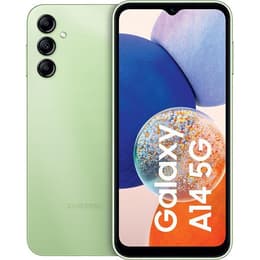
Galaxy A14 5G
Galaxy A14 5G
Starting at

Refurbished price:102.00

Versus €289.00 new

See options
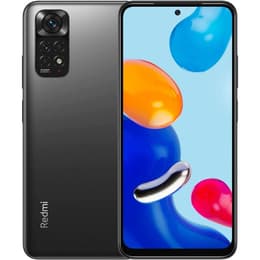
Xiaomi Redmi Note 11
Starting at

Refurbished price:108.00

Versus €249.99 new

See options

Ratings

The Samsung Galaxy A14 5G, released in January 2023, and the Xiaomi Redmi Note 11, launched in January 2022, are both smartphones designed for everyday use. While both devices offer a large display and a focus on battery life, the Galaxy A14 5G distinguishes itself with its 5G connectivity and a slightly newer Android version out of the box, whereas the Redmi Note 11 features an AMOLED display for more vibrant visuals.

Scores

Durability

When considering the longevity of these devices, several factors come into play, including their release timelines, software support, and ease of repair.

  • Release Timeline: The Xiaomi Redmi Note 11 was released in January 2022, making it a year older than the Samsung Galaxy A14 5G, which launched in January 2023. This difference in release date impacts the expected duration of software support.
  • Software Support: The Samsung Galaxy A14 5G launched with Android 13 and is expected to receive two major Android version updates and four years of security upgrades. The Redmi Note 11 initially ran on Android 11 with MIUI 13 and later updated to HyperOS based on Android 13, but its long-term update commitment is less explicitly defined compared to the A14 5G.
  • Repairability: The Samsung Galaxy A14 5G has a repairability score of 8 out of 10, partly due to its relatively easy disassembly and a battery held in place with an adhesive pull pouch, simplifying replacement. The Xiaomi Redmi Note 11 (4G variant) has a repairability index of 6.5 out of 10, indicating a good level of repairability, with considerations for component accessibility and spare parts availability.

Year of Release

2023

2022

Compatible with latest Update

Yes

No

OS

Android

Android

Foldable

No

No

Performance

The performance of a smartphone is crucial for daily tasks, from app usage to multitasking and gaming. Both devices offer capabilities suitable for general use, with some distinctions in their underlying hardware and real-world responsiveness.

  • Processor Capabilities: The Samsung Galaxy A14 5G is powered by an octa-core processor (either MediaTek Dimensity 700 or Exynos 1330 depending on the region) that handles everyday tasks like browsing, streaming, and social media smoothly. The Xiaomi Redmi Note 11 features an octa-core processor that provides smooth navigation through menus and good performance for normal usage, though it may show limitations in demanding applications or intensive gaming.
  • Multitasking and Storage: Both phones offer various RAM configurations, typically starting from 4GB, which allows for bearable multitasking. Both also provide expandable storage options, allowing users to increase space for apps and media.
  • Battery Behavior: Both devices are equipped with a 5000mAh battery. The Galaxy A14 5G can comfortably last a full day, and with lighter use, it's possible to achieve two days of battery life. The Redmi Note 11 also offers strong battery performance, with users reporting it can last through a full day of mixed usage, including gaming and social media.

Memory (GB)

4 GB

4 GB

Screen quality

The display is a primary interface for any smartphone, and these two models offer different visual experiences.

  • Display Technology: The Xiaomi Redmi Note 11 features a 6.43-inch AMOLED display, known for its deep blacks, vibrant colors, and excellent contrast. In contrast, the Samsung Galaxy A14 5G utilizes a 6.6-inch PLS LCD panel, which provides decent sharpness and clarity for its category, though it cannot produce the same deep blacks and color vibrancy as an AMOLED screen.
  • Resolution and Refresh Rate: Both phones offer a Full HD+ resolution (1080x2400 pixels for Redmi Note 11, 1080x2408 pixels for A14 5G) for clear visuals. Both also feature a 90Hz refresh rate, contributing to smoother scrolling and more fluid animations compared to standard 60Hz displays.
  • Brightness Levels: The Redmi Note 11's AMOLED display can reach a peak brightness of up to 1000 nits, making content legible even in bright outdoor conditions. The Galaxy A14 5G's LCD panel offers good brightness indoors but may be less visible under harsh sunlight.

Resolution

1080 x 2408

1080 x 2400

Screen type

PLS LCD

AMOLED

Audiovisual

Both smartphones come equipped with multi-camera setups designed to capture everyday moments, alongside features for audio input and output.

  • Rear Camera System: The Samsung Galaxy A14 5G features a triple rear camera setup, including a 50-megapixel main camera, a 2-megapixel macro camera, and a 2-megapixel depth camera. It provides good detail in ample light for everyday photography. The Xiaomi Redmi Note 11 also has a quad-camera setup, with a 50-megapixel main sensor, an 8-megapixel ultra-wide camera, and two 2-megapixel sensors for macro and depth. Its ultra-wide lens quality is considered above average for its segment.
  • Video Recording: The Redmi Note 11 is limited to Full HD video recording at 30 frames per second, a limitation of its processor. The Galaxy A14 5G also supports Full HD video recording at 30 frames per second.
  • Front Camera: Both devices include a 13-megapixel front-facing camera for selfies and video calls.
  • Audio Experience: The Redmi Note 11 features dual stereo speakers, providing a richer and more immersive sound experience for media consumption, along with a 3.5mm headphone jack. The Galaxy A14 5G has a single speaker for audio, but it does include a 3.5mm headphone jack for stereo sound.

Main camera

50 megapixels

50 megapixels

Front camera

13 megapixels

13 megapixels

Miscellaneous

Beyond core features, several practical elements contribute to the overall user experience and daily usability of these smartphones.

  • Connectivity: A key differentiator is 5G support; the Samsung Galaxy A14 5G offers lightning-fast download and upload speeds and enhanced connectivity. The Xiaomi Redmi Note 11 is a 4G-only device, meaning it does not support 5G networks. Both support Wi-Fi (802.11 a/b/g/n/ac) and Bluetooth (v5.0 for Redmi Note 11).
  • Ports and Sensors: Both phones include a USB-C port for charging and data transfer, and a 3.5mm headphone jack. For security, both feature a side-mounted fingerprint sensor.
  • Design and Dimensions: The Galaxy A14 5G has a plastic polycarbonate back and frame, with a textured back that can feel grippy. It measures around 167.7 x 78 x 9.1 mm and weighs approximately 204 grams. The Redmi Note 11 has a trendy flat-edge body design, measuring 159.87 x 73.87 x 8.09mm and weighing 179 grams, making it slightly lighter and thinner.

Weight

201 g

179 g

Screen size (in)

6.6

6.43

Network

5G

4G

SIM card

Dual Physical SIM

Dual Physical SIM

Carrier compatibility

Unlocked

Unlocked

User feedback for the Samsung Galaxy A14 5G often highlights its reliable battery life, capable of lasting a full day or more for many users, and its commitment to software updates, offering a longer support period than many devices in its category. Some users note that while its processor handles daily tasks, it might not be the fastest for demanding applications, and the LCD screen, while clear, lacks the vibrancy of AMOLED displays.

The Xiaomi Redmi Note 11 receives praise for its vibrant AMOLED display and dual stereo speakers, which enhance the media consumption experience. Its battery life is also consistently well-regarded. However, common criticisms point to its 4G-only connectivity and a processor that, while efficient, may not offer the most robust performance for intensive gaming or heavy multitasking.

Users prioritizing a device with 5G connectivity and a longer software update commitment may find the Samsung Galaxy A14 5G well-suited to their needs. Its robust repairability score also suggests a practical choice for those considering long-term use. Conversely, individuals who value a superior visual experience with deep colors and excellent contrast, along with an immersive audio experience from stereo speakers, might lean towards the Xiaomi Redmi Note 11. Both devices offer a solid foundation for daily smartphone use, and choosing a quality-assured refurbished option for either model can provide an eco-friendly alternative for consumers.


See all articles

Our recent comparisons






