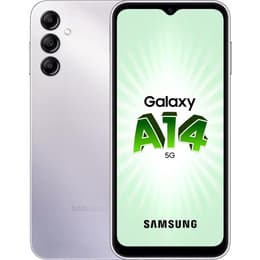



Galaxy A14 5G Vs Google Pixel 8 Pro

Galaxy A14 5G
Galaxy A14 5G
Starting at

Refurbished price:102.00

Versus €289.00 new

See options
Google Pixel 8 Pro
Google Pixel 8 Pro
Starting at

Refurbished price:293.00

Versus €1,099.00 new

See options

Ratings

The Samsung Galaxy A14 5G, released in January 2023, and the Google Pixel 8 Pro, launched in October 2023, are smartphones designed for different user needs and expectations. While both operate on the Android platform, they diverge significantly in their core capabilities and intended user experience. The Galaxy A14 5G focuses on delivering essential smartphone functions with 5G connectivity, whereas the Pixel 8 Pro emphasizes advanced camera technology, a premium display, and extended software support.

Scores

Durability

When considering the long-term usability of these devices, their release timelines and software support policies present a notable contrast.

  • Software Longevity: The Google Pixel 8 Pro offers an extensive commitment of seven years of operating system updates and security patches from its release. This means users can expect the device to receive new Android versions and critical security fixes for a significantly longer period. In contrast, the Samsung Galaxy A14 5G is expected to receive two major Android OS upgrades, with Android 15 being its final major update, and security patches extending until 2027.
  • Repairability: The Galaxy A14 5G demonstrates a higher degree of repairability, earning a score of 8 out of 10. Its design allows for relatively easy disassembly, and the battery is secured with pull tabs, simplifying replacement. The Pixel 8 Pro, however, has a moderately low repairability score of 4 out of 10, largely due to glued screens, soldered components, and the use of strong adhesives for the battery, making self-repairs more challenging.
  • Practical Lifespan: Users prioritizing the longest possible software support and access to the latest Android features will find the Pixel 8 Pro better suited for extended use. Those who value easier and potentially less costly component repairs, particularly for battery replacements, might find the Galaxy A14 5G a more practical choice for maintaining the device over several years.

Year of Release

2023

2023

Compatible with latest Update

Yes

Yes

Foldable

No

No

Performance

The performance capabilities of the Galaxy A14 5G and the Pixel 8 Pro cater to distinct usage patterns, primarily influenced by their internal hardware.

  • Everyday Responsiveness: The Pixel 8 Pro delivers consistently smooth and responsive performance, handling demanding applications, multitasking, and graphic-intensive games with ease. Its advanced processing unit is designed for efficient execution of complex tasks and AI-driven features. The Galaxy A14 5G provides solid performance for daily tasks and general smartphone use, though some users have reported occasional lags and stutters when running multiple applications simultaneously or engaging in more intensive activities.
  • Battery Behavior: Both devices feature large battery capacities, with the Galaxy A14 5G housing a 5000mAh battery and the Pixel 8 Pro a 5050mAh battery. The Galaxy A14 5G generally offers strong battery life, often lasting a full day or even two with lighter usage. The Pixel 8 Pro also provides all-day battery life, though heavy usage can push its limits. The Pixel 8 Pro supports faster wired charging at 30W and includes wireless charging capabilities, features not present on the Galaxy A14 5G, which charges at 15W.
  • Storage and Multitasking: The Pixel 8 Pro comes with 12GB of RAM and offers storage options up to 1TB, providing ample space and memory for extensive multitasking and large files. The Galaxy A14 5G is available with 4GB, 6GB, or 8GB of RAM and up to 128GB of internal storage, which is expandable via a microSD card, offering flexibility for users who need more storage for media and documents.

Memory (GB)

4 GB

12 GB

Screen quality

The visual experience offered by these two smartphones differs significantly due to their display technologies and specifications.

  • Display Technology and Clarity: The Google Pixel 8 Pro features a 6.7-inch LTPO OLED display, referred to as an Actua display, which provides deep blacks, vibrant colors, and excellent contrast. Its resolution of 1344 x 2992 pixels results in a very sharp and detailed image. The Samsung Galaxy A14 5G comes with a 6.6-inch PLS LCD display with a resolution of 1080x2408 pixels, offering clear visuals suitable for everyday content consumption.
  • Brightness and Refresh Rate: The Pixel 8 Pro's display can reach a peak brightness of up to 2400 nits, ensuring excellent visibility even in bright outdoor conditions. It also boasts an adaptive refresh rate that can dynamically adjust from 1Hz to 120Hz, contributing to smooth scrolling and power efficiency. The Galaxy A14 5G has a 90Hz refresh rate, which provides a smoother experience than standard 60Hz displays, but its brightness levels can make it challenging to view comfortably in direct sunlight.
  • Viewing Experience: Users who prioritize a highly immersive and fluid visual experience with superior color accuracy and outdoor visibility will find the Pixel 8 Pro's display more appealing. The Galaxy A14 5G offers a competent display for general use, web browsing, and video streaming, especially for those who do not require flagship-level screen performance.

Resolution

1080 x 2408

1344 x 2992

Screen type

PLS LCD

LTPO OLED

Audiovisual

The camera systems on the Galaxy A14 5G and the Pixel 8 Pro are designed with different photographic priorities in mind, leading to distinct results.

  • Rear Camera Capabilities: The Google Pixel 8 Pro features a versatile triple-camera setup, including a 50MP main sensor, a 48MP ultra-wide lens with autofocus, and a 48MP telephoto lens offering 5x optical zoom. This system excels in capturing detailed images across various lighting conditions, including impressive low-light performance, and offers advanced computational photography features. The Samsung Galaxy A14 5G includes a 50MP main camera, a 2MP macro lens, and a 2MP depth sensor. It performs well in bright lighting conditions, producing clear and vibrant photos, but its capabilities are more limited in challenging low-light environments and it lacks an ultra-wide lens.
  • Video Recording and Front Camera: The Pixel 8 Pro supports video recording up to 4K at 60 frames per second (fps) from both its rear and 10.5MP front camera, along with features like Audio Eraser for improved sound quality in videos. The Galaxy A14 5G records video at 1080p at 30fps from both its rear and 13MP front camera, without advanced video stabilization or higher resolution options.
  • Photography Experience: For users who demand high-quality photography, advanced zoom capabilities, excellent low-light performance, and sophisticated video features, the Pixel 8 Pro offers a comprehensive and powerful camera experience. The Galaxy A14 5G provides a capable camera for casual photography and social media sharing, particularly in well-lit settings.

Main camera

50 megapixels

50 megapixels

Front camera

13 megapixels

10.5 megapixels

Miscellaneous

Beyond the core features, several practical elements differentiate the user experience of these two devices.

  • Connectivity and Ports: Both phones support 5G connectivity. The Pixel 8 Pro is equipped with newer Wi-Fi 7 and Bluetooth standards, offering potentially faster and more stable wireless connections. The Galaxy A14 5G supports Wi-Fi 5 and Bluetooth 5.2. The Galaxy A14 5G retains a 3.5mm headphone jack and a microSD card slot for expandable storage, features absent on the Pixel 8 Pro. Both devices utilize a USB-C port for charging and data transfer.
  • Biometrics and Sensors: The Pixel 8 Pro features an under-display fingerprint scanner and face unlock for secure authentication. The Galaxy A14 5G uses a side-mounted fingerprint sensor and also offers face unlock. The Pixel 8 Pro also includes advanced sensors that support its AI capabilities.
  • Build and Handling: The Pixel 8 Pro features a more premium construction with an aluminum frame and glass back, protected by Corning Gorilla Glass Victus 2, contributing to a more robust feel. It weighs 213g and measures 162.6 x 76.5 x 8.8mm. The Galaxy A14 5G has a plastic build and a unibody design, weighing between 202g and 205g with dimensions of 167.7 x 78 x 9.1mm. It does not have an official IP rating for water and dust resistance.

Weight

201 g

213 g

Screen size (in)

6.6

6.7

Network

5G

5G

SIM card

Dual Physical SIM

Physical SIM + eSIM

Carrier compatibility

Unlocked

Unlocked

User feedback for the Google Pixel 8 Pro frequently praises its exceptional camera system, often highlighting its computational photography and AI-driven editing features as significant advantages. Many users also appreciate the long-term software support and the vibrant, bright display. Criticisms sometimes point to battery life, which, while improved, may not always meet the demands of very heavy users, and its repairability is noted as challenging.

For the Samsung Galaxy A14 5G, common praise revolves around its reliable battery life, the inclusion of a headphone jack and expandable storage, and its overall value for essential smartphone functions. Users often find its display to be clear and its performance adequate for everyday tasks. Frequent criticisms include its limited camera performance in low light, the absence of an ultra-wide camera, and slower charging speeds.

Users prioritizing a cutting-edge camera, a premium display, and the longest possible software support will find the Google Pixel 8 Pro well-suited to their needs. This device is ideal for those who want to stay updated with the latest Android features and appreciate advanced photography tools. Conversely, users who prioritize practical features like a headphone jack, expandable storage, and a device that is easier to repair, alongside solid battery life for general use, may lean toward the Samsung Galaxy A14 5G. Both devices offer distinct advantages, and choosing between them depends on individual priorities for features, longevity, and repair considerations.

For those seeking a more sustainable choice, considering a quality-assured refurbished option for either model can provide an eco-friendly alternative to purchasing new.


See all articles

Our recent comparisons