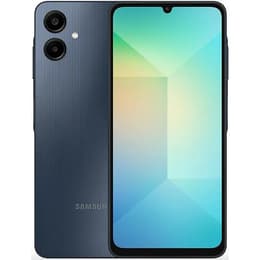
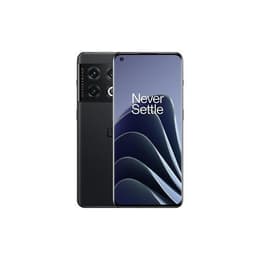


Galaxy A06 Vs OnePlus 10 Pro

Galaxy A06
Galaxy A06
Starting at

Refurbished price:108.00

Versus €186.96 new

See options
OnePlus 10 Pro
OnePlus 10 Pro
Starting at

Refurbished price:236.00

Versus €999.00 new

See options

Ratings

The Samsung Galaxy A06 (released in August 2024) and the OnePlus 10 Pro (launched globally in March 2022) represent distinct segments of the smartphone market. While both devices operate on the Android platform, they cater to different user expectations, with the Galaxy A06 focusing on essential functionality and the OnePlus 10 Pro offering a more advanced, performance-oriented experience.

Scores

Durability

The practical lifespan of a smartphone is influenced by its release timeline, software support, and physical resilience. These two devices offer different expectations in terms of longevity.

  • Release Timeline: The OnePlus 10 Pro was released in early 2022, making it an older device compared to the Galaxy A06, which launched in late 2024. This difference in release dates impacts their remaining software support cycles.
  • Software Longevity: The Galaxy A06 is expected to receive two major Android OS updates and four years of security updates from its release, ensuring it stays current for a reasonable period [10]. The OnePlus 10 Pro, being a flagship from its era, typically received three major Android OS updates and four years of security updates from its launch, meaning its update cycle is nearing its end [20].
  • Physical Durability: The OnePlus 10 Pro features Gorilla Glass Victus for screen protection, offering enhanced resistance against drops and scratches [4]. The Galaxy A06 typically uses more standard glass protection and a plastic build, which can be durable in everyday use but may not withstand impacts as readily as the more premium materials of the OnePlus 10 Pro [17, 24].

Year of Release

2024

2022

OS

Android

Android

Foldable

No

No

Performance

Performance varies significantly between these two smartphones, reflecting their different design philosophies and target audiences.

  • Everyday Responsiveness: The Galaxy A06 is equipped with an octa-core processor designed for smooth handling of daily tasks like browsing, social media, and light applications [24, 26]. The OnePlus 10 Pro, featuring a more powerful current-generation processor from its release period, delivers a highly responsive experience, excelling in demanding applications, intensive multitasking, and graphic-heavy gaming [2, 22].
  • Multitasking and Storage: The Galaxy A06 typically comes with 4GB or 6GB of RAM and 64GB or 128GB of internal storage, which is expandable via a microSD card [5, 10, 17]. The OnePlus 10 Pro offers higher RAM configurations, usually 8GB or 12GB, paired with faster UFS 3.1 storage options of 128GB or 256GB, contributing to quicker app loading and smoother transitions between multiple open applications [4, 8, 33].
  • Gaming and Heavy Use: Users engaging in casual gaming and standard app usage will find the Galaxy A06 capable. For those who prioritize high-performance gaming, video editing, or running multiple resource-intensive applications simultaneously, the OnePlus 10 Pro provides a more robust and fluid experience due to its advanced processing capabilities [1, 22].

Memory (GB)

4 GB

8 GB

Screen quality

The display is a key differentiator, with each device offering a distinct visual experience tailored to its segment.

  • Display Technology and Resolution: The Galaxy A06 features a 6.7-inch PLS LCD display with an HD+ resolution of 720x1600 pixels [5, 24]. The OnePlus 10 Pro boasts a 6.7-inch Fluid AMOLED display with a significantly higher QHD+ resolution of 3216x1440 pixels, providing sharper details and richer colors [1, 7, 9].
  • Refresh Rate and Smoothness: The Galaxy A06 has a standard 60Hz refresh rate, suitable for typical content consumption [5, 10]. The OnePlus 10 Pro offers an adaptive 120Hz refresh rate with LTPO 2.0 technology, allowing it to dynamically adjust from 1Hz to 120Hz. This results in noticeably smoother scrolling and more fluid animations, while also optimizing power consumption [1, 4, 11].
  • Brightness and Viewing Experience: The AMOLED panel on the OnePlus 10 Pro can reach peak brightness levels of 1300 nits, ensuring excellent visibility even in bright outdoor conditions and supporting HDR content [4, 9]. The Galaxy A06's LCD panel offers adequate brightness for indoor use, but may struggle more under direct sunlight [3].

Resolution

720 x 1600

1440 x 3216

Screen type

PLS LCD

LTPO2 Fluid AMOLED

Audiovisual

The camera systems of these two phones are designed for different levels of photographic versatility and quality.

  • Rear Camera Setup: The Galaxy A06 features a dual rear camera system with a 50MP main sensor and a 2MP depth sensor, suitable for capturing everyday moments and portraits with background blur [5, 24]. The OnePlus 10 Pro offers a more comprehensive triple camera array, co-developed with Hasselblad, including a 48MP main sensor with optical image stabilization (OIS), a 50MP ultrawide lens with a wide 150-degree field of view, and an 8MP telephoto lens with 3.3x optical zoom and OIS [2, 4, 33].
  • Photography Performance: In good lighting, the Galaxy A06 can produce clear and vibrant photos [35]. The OnePlus 10 Pro generally delivers more detailed images with better dynamic range and color accuracy, especially benefiting from Hasselblad's color science [2, 28, 34]. For low-light conditions, the OnePlus 10 Pro's larger sensors and OIS provide a significant advantage, capturing brighter and clearer images compared to the Galaxy A06 [21, 28].
  • Video Recording and Features: The Galaxy A06 supports video recording up to 1080p at 60fps [3]. The OnePlus 10 Pro offers more advanced video capabilities, including 4K recording at up to 120fps and 8K at 24fps, along with specialized modes for creative videography [4, 21]. The OnePlus 10 Pro also includes a 32MP front-facing camera for detailed selfies and video calls, while the Galaxy A06 has an 8MP front camera [5, 33].

Miscellaneous

Beyond core features, several practical elements contribute to the overall user experience and connectivity.

  • Connectivity Standards: The Galaxy A06 supports 4G LTE connectivity, Wi-Fi, and Bluetooth 5.3, providing essential wireless communication [5, 24]. The OnePlus 10 Pro offers more advanced connectivity, including 5G support for faster mobile data speeds, Wi-Fi 6 for improved wireless performance, and Bluetooth 5.2 [1, 32].
  • Ports and Biometrics: Both devices include a USB Type-C port for charging and data transfer, and a 3.5mm headphone jack [17, 24, 30]. The Galaxy A06 features a side-mounted fingerprint sensor for secure unlocking [5, 17]. The OnePlus 10 Pro utilizes an in-display optical fingerprint sensor, which is often considered a more premium integration [13, 20].
  • Design and Handling: The Galaxy A06 has a plastic build, contributing to its lighter weight of around 189-196 grams [24, 35]. The OnePlus 10 Pro, with its glass front and back and metallic frame, offers a more premium feel and weighs approximately 200.5 grams [20, 33]. Both devices have large 6.7-inch displays, which can impact one-handed usability.

Weight

189 g

201 g

Screen size (in)

6.7

6.7

Network

4G

5G

SIM card

Dual Physical SIM

Physical SIM

Carrier compatibility

Unlocked

Unlocked

Connector

USB-C + Jack 3.5mm

USB-C

The Samsung Galaxy A06 and OnePlus 10 Pro cater to different user needs and budgets. The Galaxy A06 is praised for its large display, substantial battery capacity, and adequate performance for everyday tasks, making it a practical choice for users seeking essential smartphone functionality without advanced features [24, 35]. Common criticisms often point to its lower-resolution display and more basic camera capabilities compared to higher-end devices [3, 27].

The OnePlus 10 Pro, on the other hand, is frequently lauded for its vibrant, high-resolution AMOLED display with an adaptive refresh rate, its powerful performance for demanding applications and gaming, and its fast charging capabilities [2, 4, 22]. User feedback often highlights its capable camera system, particularly its ultrawide lens and video features, though some note that its overall camera performance might not always match the absolute best in its flagship class [2, 28, 36].

Users prioritizing a modern, high-performance device with a superior display, advanced camera features, and faster connectivity for gaming, photography, or intensive multitasking will find the OnePlus 10 Pro well-suited to their needs. Conversely, individuals seeking a reliable smartphone for daily communication, media consumption, and light use, with a focus on battery life and essential features, may prefer the Galaxy A06. For those considering either device, exploring quality-assured refurbished options can provide an eco-friendly alternative to extend the life cycle of these products.


See all articles

Our recent comparisons






