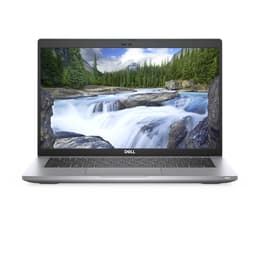
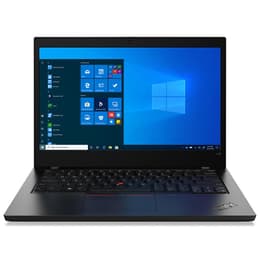


Dell Latitude 5420 14" Vs Lenovo ThinkPad L14 G1 14"

Dell Latitude 5420 14"
Starting at

Refurbished price:263.52

Versus €986.84 new

See options
Lenovo ThinkPad L14 G1 14"
Starting at

Refurbished price:350.00

Versus €465.80 new

See options

Ratings

The Dell Latitude 5420, released in 2021, and the Lenovo ThinkPad L14 Gen 1, launched in 2020, are both 14-inch business-oriented laptops designed for productivity and reliability. While sharing a similar form factor and targeting professional users, the Latitude 5420 generally offers a slightly newer generation of internal components, potentially translating to enhanced performance and updated connectivity options. Both devices run on the Windows operating system, providing a familiar software environment for most users.

Scores

Durability

When considering the long-term usability of these laptops, several factors contribute to their expected practical lifespan, including their release timelines, software support, and ease of maintenance.

  • Release Timeline: The Dell Latitude 5420, released in 2021, benefits from being a year newer than the Lenovo ThinkPad L14 Gen 1, which debuted in 2020. This difference means the Latitude 5420 will likely receive official operating system updates and security patches for a slightly longer duration, extending its software longevity.
  • Software Longevity: Both laptops run on Windows, and their support duration is largely tied to Microsoft's lifecycle for the operating system. However, the newer hardware in the Latitude 5420 may offer better compatibility with future Windows versions and software advancements.
  • Repairability: Both the Latitude 5420 and the ThinkPad L14 Gen 1 are designed with business use in mind, which often includes considerations for maintenance. The Latitude 5420 is noted for being relatively easy to repair, with accessible internal components like RAM, SSD, and battery. Similarly, the ThinkPad L14 Gen 1 allows for straightforward upgrades of RAM and storage by removing the bottom panel. A key difference is that the CPU in the Latitude 5420 is soldered to the motherboard, limiting CPU replacement options.

Year of Release

2020

2019

Last Os Compatibility

Yes

Yes

OS

Windows 11

Windows 11

Performance

The performance capabilities of these laptops are central to their utility for daily tasks, multitasking, and handling more demanding applications. The primary differences stem from their respective processor generations and architectural designs.

  • Processor Capabilities: The Dell Latitude 5420 typically features current-generation Intel processors from its release year, providing robust performance for common business applications and smooth multitasking. The Lenovo ThinkPad L14 Gen 1, depending on its configuration, comes with either slightly older generation Intel processors or AMD Ryzen processors. While the Intel configurations offer solid performance for everyday office work, the AMD Ryzen options in the L14 Gen 1 are often noted for their competitive processing power and potentially stronger integrated graphics performance.
  • System Responsiveness: Both laptops offer fast NVMe SSD storage options, ensuring quick boot times and rapid application loading. The Latitude 5420's newer processor generation generally contributes to a snappier overall user experience, especially when running multiple applications simultaneously or handling more intensive computational tasks.
  • RAM Implications: Both devices support substantial amounts of DDR4 RAM, with configurations available up to 64GB across two SO-DIMM slots. This ample memory capacity ensures efficient multitasking and smooth operation even with numerous browser tabs or complex software open.

Memory (GB)

16 GB

8 GB

Processor

Core i5-1135G7

Core i5 - Gen 10 (U)

Graphic card

Integrated Graphics

Integrated Graphics

Screen quality

The visual experience on a laptop is significantly influenced by its display, encompassing factors like technology, resolution, brightness, and refresh rate. Both the Latitude 5420 and ThinkPad L14 Gen 1 offer 14-inch displays, but with some variations.

  • Display Technology and Resolution: Both laptops commonly feature Full HD (1920x1080) IPS panels, which provide good viewing angles. However, some base configurations of both models might come with lower-resolution HD (1366x768) displays. The IPS technology generally offers better color reproduction and wider viewing angles compared to older TN panels, which may also be found in some L14 Gen 1 configurations.
  • Brightness and Clarity: Display brightness varies across configurations for both models. The Latitude 5420 can range from 250 nits to 400 nits, with higher-end options offering better visual clarity and outdoor usability. The ThinkPad L14 Gen 1 typically offers brightness levels between 220 and 300 nits. Users have sometimes described the L14's screen as "dull" or "not vibrant" and noted that 250 nits can be dim in well-lit environments.
  • Refresh Rate and Viewing Experience: Both laptops generally feature a standard 60Hz refresh rate, suitable for everyday productivity tasks. While adequate for office work and media consumption, neither is designed for high-refresh-rate gaming. Color gamut coverage can be a point of distinction, with some Latitude 5420 panels covering around 53% of the sRGB spectrum, and the ThinkPad L14 Gen 1 often around 45-59.5% sRGB, which might be a consideration for tasks requiring color accuracy.

Resolution

1920 x 1080

1920 x 1080

Screen type

IPS

IPS

Camera

Audiovisual

For modern professional and student use, the quality of integrated cameras, microphones, and speakers is increasingly important for virtual meetings and media consumption.

  • Camera System Capabilities: Both the Dell Latitude 5420 and the Lenovo ThinkPad L14 Gen 1 are equipped with 720p HD webcams. The Latitude 5420 often includes an IR webcam for facial recognition, and both models typically feature a privacy shutter for the webcam, enhancing user security. User feedback for the Latitude 5420's camera suggests it captures adequate but not exceptional images, sometimes described as washed out.
  • Microphone Quality: Both laptops incorporate dual-array microphones, designed to capture clear audio for video calls and voice commands. This setup helps in reducing background noise and focusing on the user's voice.
  • Speaker Output and Media Experience: The Latitude 5420's speakers are described as offering clear audio with a hint of bass, performing comparably to quality external Bluetooth speakers. The ThinkPad L14 Gen 1 features dual 2W stereo speakers enhanced with Dolby Audio, aiming to provide an immersive experience for media consumption.

Miscellaneous

Beyond core performance and display, practical elements like connectivity, physical design, and security features contribute significantly to the overall user experience of these business laptops.

  • Connectivity Options: The Dell Latitude 5420 offers a comprehensive set of ports, including two Thunderbolt 4 USB-C ports, two USB-A 3.2 Gen 1 ports, HDMI 2.0, RJ-45 Ethernet, and a microSD card reader. It supports Wi-Fi 6 and Bluetooth 5.1/5.2, with optional LTE. The Lenovo ThinkPad L14 Gen 1 also provides a strong selection, featuring USB 3.2 Gen 1 and Gen 2 Type-C ports (with Power Delivery and DisplayPort), USB-A ports, HDMI 1.4b, RJ-45 Ethernet, a microSD card reader, Wi-Fi 6, Bluetooth 5.1, and optional 4G WWAN. The inclusion of Thunderbolt 4 on the Latitude 5420 offers higher bandwidth for external displays and peripherals.
  • Security Features: Both laptops prioritize security. The Latitude 5420 includes an optional fingerprint reader integrated into the power button, IR facial recognition, and a webcam privacy shutter. The ThinkPad L14 Gen 1 also offers an optional fingerprint reader, an optional IR camera with ThinkShutter, and MIL-STD-810G testing for durability.
  • Weight, Dimensions, and Build: The Latitude 5420 starts at approximately 1.37 kg (3.03 lbs) and features a carbon fiber and magnesium reinforced chassis, described as solid and robust, though not particularly thin or lightweight. The ThinkPad L14 Gen 1 starts at 1.61 kg (3.56 lbs) and uses PC-ABS materials for its chassis, known for its durability and tested against military-grade standards. Some users perceive the Latitude 5420's build as less premium or "plasticy" compared to some competitors, while the L14's all-plastic build is noted as feeling less premium than higher-end ThinkPads.

Weight

1400 g

1800 g

Screen size

14

14

Both the Dell Latitude 5420 and the Lenovo ThinkPad L14 Gen 1 are capable 14-inch business laptops, each with distinct strengths that cater to different user priorities. User feedback often praises the Latitude 5420 for its solid build quality, effective cooling, and comprehensive port selection, particularly the inclusion of Thunderbolt 4. However, some users have expressed disappointment with the touchpad and the display quality on base models, noting it can be dim or have limited color accuracy.

The ThinkPad L14 Gen 1 is frequently lauded for its robust and durable construction, excellent keyboard, and a good array of input/output options. Criticisms often revolve around the display, which some users find to be dull or lacking in vibrancy and color accuracy, and the all-plastic chassis which might not feel as premium as other ThinkPad lines.

Users prioritizing the latest connectivity standards, potentially better raw processing performance from a slightly newer generation, and a generally robust, albeit not always aesthetically premium, build might lean towards the Dell Latitude 5420. Its Thunderbolt 4 ports offer significant versatility for external devices and displays. Conversely, individuals who value a highly durable, spill-resistant design, a renowned keyboard for extensive typing, and a strong legacy of reliability may find the Lenovo ThinkPad L14 Gen 1 to be a more suitable choice. The AMD configurations of the L14 Gen 1 can also offer a compelling balance of processing and integrated graphics performance.

For those seeking a dependable and eco-friendly alternative, considering a quality-assured refurbished option for either of these models can provide excellent value while supporting sustainable consumption practices.

See all articles

Our recent comparisons