

iPhone 14 Pro Max Vs Xiaomi Redmi Note 13

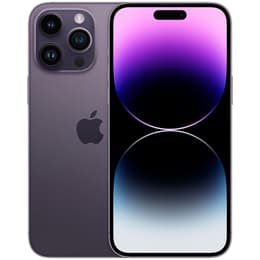
iPhone 14 Pro Max
iPhone 14 Pro Max
Starting at

Refurbished price:446.00

Versus €1,489.00 new

See options
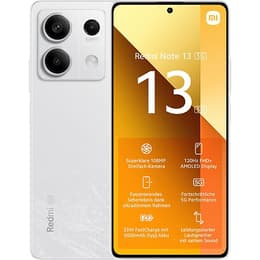
Xiaomi Redmi Note 13
Starting at

Refurbished price:137.00

Versus €340.00 new

See options

Ratings

The iPhone 14 Pro Max, released in September 2022, and the Xiaomi Redmi Note 13, launched in January 2024, represent distinct approaches to smartphone design and functionality. While the iPhone 14 Pro Max is positioned as a high-end device with advanced features and a premium operating system, the Redmi Note 13 offers a balanced set of capabilities for everyday use, running on Android. These devices cater to different user priorities, with key differentiators found in their display technology, camera systems, and overall performance.

Scores

Durability

When considering the long-term usability of these devices, their release timelines and software support policies are important factors. The iPhone 14 Pro Max, released in September 2022, typically receives iOS updates for approximately 5-6 years from its launch, with its current operating system being iOS 26.3.1(a). The Xiaomi Redmi Note 13, launched in January 2024, is promised three years of Android OS updates, extending up to Android 16, and four years of security updates.

  • Software Longevity: The iPhone 14 Pro Max generally benefits from Apple's extended software support, offering a longer period of major OS updates compared to many Android devices. The Redmi Note 13, while offering a commendable three years of Android updates, may see its software support conclude sooner than the iPhone.
  • Repairability: The Redmi Note 13 5G has an excellent repairability score of 8.2 out of 10, indicating a design that facilitates easier repairs and part replacement. In contrast, the iPhone 14 Pro Max received an initial repairability score of 6 out of 10, which was later downgraded to 4 out of 10 for the iPhone 14 series due to challenges with parts pairing and Apple's repair authorization processes.
  • Expected Practical Lifespan: Both devices are built to last, but the iPhone 14 Pro Max's longer software update cycle and robust build materials may contribute to a slightly longer practical lifespan for users who prioritize the latest software features. The Redmi Note 13's strong repairability score, however, suggests that physical repairs could be more straightforward, potentially extending its hardware lifespan.

Year of Release

2022

2024

Compatible with latest Update

Yes

Yes

OS

iOS

Android

Foldable

No

No

Performance

The performance of a smartphone is crucial for daily tasks, from browsing to demanding applications. These two devices offer different levels of processing power and battery endurance to meet varied user needs.

  • Processing Capabilities: The iPhone 14 Pro Max is equipped with a powerful current-generation processor that handles demanding applications, intensive multitasking, and graphic-heavy gaming with smooth and responsive performance. The Redmi Note 13, depending on the variant, uses either a Snapdragon 685 or MediaTek Dimensity 6080 processor, which provides smooth and stable performance for everyday use and general multitasking.
  • Battery Behavior: The iPhone 14 Pro Max features a 4323 mAh battery, capable of providing extensive usage, with some tests showing over 13 hours of continuous web surfing. Users have reported achieving over 10 hours of screen-on time in real-world usage. The Redmi Note 13 comes with a larger 5000mAh battery, which typically offers about 1.5 days or 39 hours of use on a single charge for the 5G model. Both support fast charging, with the iPhone supporting 20W wired charging and the Redmi Note 13 supporting 33W fast charging.
  • Storage and Responsiveness: The iPhone 14 Pro Max offers a wide range of storage options, from 128GB up to 1TB, catering to users with extensive storage needs. The Redmi Note 13 provides storage options up to 512GB, with some variants offering dynamic RAM expansion to enhance multitasking capabilities.

Memory (GB)

6 GB

8 GB

Screen quality

The visual experience is a primary interaction point for smartphones, and both devices offer displays designed for clarity and vibrant visuals, though with differing specifications.

  • Display Technology and Clarity: The iPhone 14 Pro Max features a 6.7-inch Super Retina XDR OLED display with a high resolution of 2796x1290 pixels, resulting in a sharp 460 pixels per inch (ppi). The Redmi Note 13 utilizes a 6.67-inch AMOLED display with a resolution of 1080x2400 pixels (FHD+), providing clear visuals at 395 ppi.
  • Brightness and Outdoor Visibility: The iPhone 14 Pro Max offers a typical maximum brightness of 1000 nits, with peak brightness reaching 1600 nits for HDR content and an impressive 2000 nits for outdoor visibility. The Redmi Note 13 5G has a peak brightness of 1000 nits, while the 4G variant can reach up to 1800 nits peak brightness.
  • Refresh Rate and Smoothness: Both devices feature a 120Hz refresh rate for smooth scrolling and fluid animations. The iPhone 14 Pro Max's ProMotion technology allows its refresh rate to adapt dynamically from 1Hz to 120Hz, optimizing for both smoothness and battery efficiency. The Redmi Note 13 also offers a high touch sampling rate, particularly beneficial for gaming.

Resolution

1290 x 2796

1080 x 2400

Screen type

LTPO Super Retina XDR OLED

AMOLED

Audiovisual

Camera capabilities are a significant consideration for many users, and both smartphones offer versatile systems for capturing photos and videos.

  • Rear Camera Systems: The iPhone 14 Pro Max features a sophisticated triple-camera system, including a 48MP main sensor with optical image stabilization, a 12MP ultra-wide lens, and two 12MP telephoto lenses (2x and 3x optical zoom). This setup provides a 6x optical zoom range and up to 15x digital zoom. The Redmi Note 13 (4G variant) comes with a 108MP main camera, an 8MP ultra-wide camera, and a 2MP macro camera.
  • Photography Performance: The iPhone 14 Pro Max excels in various lighting conditions, utilizing features like Photonic Engine, Deep Fusion, and Night mode to enhance image quality. Its main camera performs well in low light, though the telephoto lens can show some noise in very dim environments. The Redmi Note 13's 108MP main sensor is designed to capture detailed photos.
  • Video Recording and Audio: The iPhone 14 Pro Max offers advanced video recording capabilities, including 4K video at various frame rates and Cinematic mode. Its microphone quality is generally considered high for calls and recordings. The Redmi Note 13 supports video recording, with its performance suitable for everyday capture.

Main camera

48 megapixels

108 megapixels

Front camera

12 megapixels

16 megapixels

Miscellaneous

Beyond core features, several practical elements contribute to the overall user experience and differentiate these two devices.

  • Connectivity and Ports: The iPhone 14 Pro Max supports 5G connectivity and uses a Lightning port for charging and data transfer. It also includes advanced safety features like Emergency SOS via satellite and Crash Detection. The Redmi Note 13 (5G variant) also supports 5G and typically features a USB-C port, which is a common standard across many modern Android devices.
  • Biometric Security: The iPhone 14 Pro Max relies on Face ID for secure facial recognition. The Redmi Note 13 incorporates an in-display fingerprint sensor for convenient unlocking and security.
  • Build and Handling: The iPhone 14 Pro Max features a stainless steel frame and an IP68 rating for dust and water resistance, contributing to its robust build. It weighs 240g. The Redmi Note 13 has a flat-frame design and a lighter build, weighing 188.5g. The 5G variant also has an IP68 rating for durability.

Weight

120 g

175 g

Screen size (in)

6.7

6.67

Network

5G

5G

SIM card

Physical SIM + eSIM

Dual Physical SIM

Carrier compatibility

Unlocked

Unlocked

Connector

Lightning

USB-C

The iPhone 14 Pro Max and the Xiaomi Redmi Note 13 cater to different segments of the smartphone market, each with its own strengths. Users frequently praise the iPhone 14 Pro Max for its exceptional display, powerful performance, and advanced camera system, particularly its video capabilities and long battery life. Common criticisms sometimes point to its weight and the proprietary nature of its ecosystem.

The Xiaomi Redmi Note 13 is often lauded for its large, vibrant AMOLED display, impressive battery life, and a capable 108MP main camera for its category. Users appreciate its smooth performance for daily tasks and its strong repairability score. Some discussions indicate that the software update policy, while improved, can still be a point of confusion for some users.

Users prioritizing a device with a highly refined operating system, top-tier processing power for demanding applications, and advanced photographic and video capabilities, especially in varied lighting, may find the iPhone 14 Pro Max well-suited to their needs. Conversely, users who value a large, smooth display, extended battery life for general use, and a more repairable device with a strong focus on core smartphone functions will likely lean towards the Xiaomi Redmi Note 13. Both devices are available as quality-assured refurbished options, offering an eco-friendly alternative for consumers.

See all articles

Our recent comparisons