

iPhone 14 Pro Max Vs Xiaomi 14

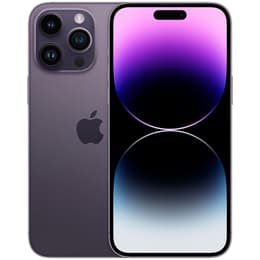
iPhone 14 Pro Max
iPhone 14 Pro Max
Starting at

Refurbished price:446.00

Versus €1,489.00 new

See options
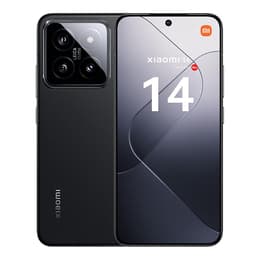
Xiaomi 14
Xiaomi 14
Starting at

Refurbished price:384.00

Versus €1,099.00 new

See options

Ratings

The iPhone 14 Pro Max (released September 2022) and the Xiaomi 14 (globally released February 2024) represent distinct approaches to high-end smartphone design and functionality. While both offer premium experiences, they differ significantly in their operating systems, physical dimensions, and specific hardware focuses. The iPhone operates on Apple's iOS ecosystem, known for its integrated services, while the Xiaomi 14 runs on HyperOS, based on Android, offering greater customization.

Scores

Durability

The expected practical lifespan of a smartphone is influenced by its release timeline, software support, and physical durability.

  • Release Timeline: The iPhone 14 Pro Max was released in September 2022, making it an older model compared to the Xiaomi 14, which saw its global release in February 2024. This difference in launch dates means the Xiaomi 14 benefits from a more recent hardware generation.
  • Software Longevity: Apple typically provides iOS updates for 5-6 years from a device's release. The iPhone 14 Pro Max, launching with iOS 16, is expected to receive updates for several more years, potentially up to iOS 26.3.1 or later. The Xiaomi 14, running HyperOS based on Android 14, is anticipated to receive 4 years of OS updates and 5 years of security updates, with an upgrade path to HyperOS 2 based on Android 15 already available.
  • Physical Durability: Both devices feature robust build materials. The iPhone 14 Pro Max includes a Ceramic Shield front cover and a stainless steel frame, contributing to its durability. The Xiaomi 14 utilizes Gorilla Glass Victus 2 for its display and an aluminum alloy frame, with some variants offering a leather back. Both devices carry an IP68 rating for water and dust resistance, indicating a high level of protection against environmental elements.

Year of Release

2022

2023

Compatible with latest Update

Yes

Yes

OS

iOS

Android

Foldable

No

No

Performance

Performance in daily use is a critical factor, encompassing how smoothly applications run, how efficiently the battery manages power, and the overall responsiveness of the system.

  • System Responsiveness: The iPhone 14 Pro Max is powered by a capable processor that handles demanding applications and multitasking with fluidity. Users can expect smooth transitions and quick app launches, even with graphically intensive games or complex productivity tools. The Xiaomi 14 features a newer generation processor, which ensures a highly responsive experience across various tasks, from everyday browsing to intensive gaming and video editing.
  • Storage and Multitasking: Both devices offer a range of storage options, from 128GB up to 1TB, providing ample space for apps, media, and documents. The iPhone 14 Pro Max comes with 6GB of RAM, which supports efficient multitasking. The Xiaomi 14 offers more varied RAM configurations, including 8GB, 12GB, and 16GB options, which can provide additional headroom for heavy multitasking and future-proofing.
  • Battery Behavior: The iPhone 14 Pro Max is equipped with a 4323 mAh battery, providing strong endurance for a full day of typical use, with up to 29 hours of video playback. The Xiaomi 14 has a 4610 mAh battery, and user experiences suggest it can comfortably last through a full day, with some reports indicating up to 43 hours of continuous use in specific tests. The Xiaomi 14 also features significantly faster wired charging at 90W and wireless charging at 50W, allowing for quicker power replenishment compared to the iPhone's 15W MagSafe and 7.5W Qi wireless charging.

Memory (GB)

6 GB

16 GB

Screen quality

The display is a primary interface for user interaction, and its quality significantly impacts the viewing experience.

  • Display Technology and Clarity: The iPhone 14 Pro Max features a 6.7-inch Super Retina XDR OLED display, offering deep blacks, vibrant colors, and a resolution of 2796 x 1290 pixels at 460 pixels per inch (ppi). The Xiaomi 14 comes with a slightly smaller 6.36-inch LTPO AMOLED display, providing a resolution of 2670 x 1200 pixels at 460 ppi, also ensuring sharp and clear visuals.
  • Brightness and Refresh Rate: Both devices offer adaptive refresh rates up to 120Hz, enabling smooth scrolling and responsive interactions. The iPhone 14 Pro Max's ProMotion technology can scale down to 1Hz for power efficiency and reaches a peak outdoor brightness of 2000 nits. The Xiaomi 14 also features an adaptive 1-120Hz refresh rate and boasts an even higher peak brightness of 3000 nits, which can be beneficial for visibility in bright outdoor conditions.
  • Unique Display Features: The iPhone 14 Pro Max introduced the Dynamic Island, an interactive area around the front camera cutout that displays alerts and background activities. It also includes an Always-On display feature. The Xiaomi 14 focuses on a high screen-to-body ratio with a punch-hole camera cutout and an under-display optical fingerprint sensor.

Resolution

1290 x 2796

1200 x 2670

Screen type

LTPO Super Retina XDR OLED

LTPO OLED

Audiovisual

The camera systems on both smartphones are designed to capture high-quality images and videos, though they approach this with different hardware configurations and software enhancements.

  • Rear Camera System: The iPhone 14 Pro Max features a versatile triple-camera setup, including a 48MP main sensor with sensor-shift optical image stabilization (OIS), a 12MP ultra-wide lens, and a 12MP telephoto lens with 3x optical zoom and OIS. It also offers a 2x telephoto option enabled by its quad-pixel sensor. The Xiaomi 14 boasts a triple 50MP camera system, co-engineered with Leica, featuring a 50MP main sensor with OIS, a 50MP ultra-wide lens, and a 50MP telephoto lens with 3.2x optical zoom and a floating lens design for improved close-up focus.
  • Photography Performance: Both devices excel in everyday photography, producing detailed images with accurate colors. The iPhone 14 Pro Max benefits from Apple's computational photography, including Photonic Engine for improved low-light performance. The Xiaomi 14, with its Leica Summilux optics and Light Fusion 900 sensor, is noted for capturing dynamic images with excellent detail in various lighting conditions.
  • Video Recording and Front Camera: The iPhone 14 Pro Max supports 4K video recording up to 60fps, Cinematic mode up to 4K HDR at 30fps, and Action mode for stabilized video. Its front camera is a 12MP sensor with autofocus and 4K video capabilities. The Xiaomi 14 can record video at up to 8K at 24fps and 4K at 60fps. Its 32MP front camera also supports 4K video recording, a notable improvement over previous Xiaomi models.

Main camera

48 megapixels

50 megapixels

Front camera

12 megapixels

32 megapixels

Miscellaneous

Beyond core performance and display, several practical features contribute to the overall user experience and device utility.

  • Connectivity and Ports: Both smartphones support 5G cellular networks for fast data speeds. The iPhone 14 Pro Max features Wi-Fi 6 and Bluetooth 5.3, along with a Lightning port for charging and data transfer. It also includes Emergency SOS via Satellite for critical situations. The Xiaomi 14 offers more advanced Wi-Fi 7 connectivity and Bluetooth 5.4, utilizing a USB 3.2 Type-C port, which provides faster data transfer speeds and broader compatibility.
  • Biometric Security and Sensors: The iPhone 14 Pro Max relies on Face ID for secure facial recognition and authentication. It also includes a LiDAR scanner for enhanced augmented reality experiences and improved low-light focusing. The Xiaomi 14 features an under-display optical fingerprint sensor for biometric security. It also incorporates an IR blaster, allowing it to function as a universal remote control.
  • Design and Handling: The iPhone 14 Pro Max is a larger device, measuring 160.7 x 77.6 x 7.85 mm and weighing 240g. The Xiaomi 14 is more compact and lighter at 152.8 x 71.5 x 8.2 mm and 193g, making it potentially easier to handle for users preferring smaller phones. Both devices offer a premium feel with glass and metal constructions.

Weight

120 g

188 g

Screen size (in)

6.7

6.36

Network

5G

5G

SIM card

Physical SIM + eSIM

Dual Physical SIM

Carrier compatibility

Unlocked

Unlocked

User feedback for the iPhone 14 Pro Max often highlights its exceptional battery life, robust build quality, and the seamless integration of the iOS ecosystem. Many users praise its consistent camera performance, especially for video recording, and the innovative Dynamic Island feature. Common criticisms sometimes point to the continued use of the Lightning port over USB-C and the incremental nature of some upgrades compared to its predecessor.

For the Xiaomi 14, users frequently commend its powerful performance, the high-quality Leica-tuned camera system, and its vibrant, bright display. The fast charging capabilities are also a significant positive, allowing for quick power-ups. Some user discussions indicate varying experiences with battery life, though many find it sufficient for daily use, and the HyperOS software experience is generally well-received for its smoothness.

Users prioritizing a larger display, extended video recording capabilities, and the deeply integrated Apple ecosystem with features like Emergency SOS via Satellite may find the iPhone 14 Pro Max well-suited to their needs. Conversely, users who prefer a more compact device, faster charging speeds, a higher peak brightness display, and the versatility of the Android ecosystem with advanced camera hardware from Leica might lean toward the Xiaomi 14. Both devices offer a quality-assured refurbished option, providing an eco-friendly alternative for consumers.

See all articles

Our recent comparisons







