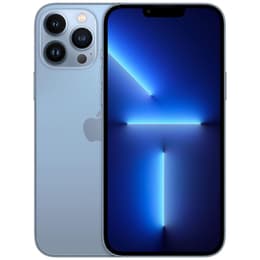
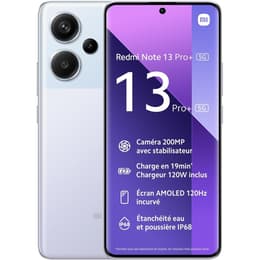


iPhone 13 Pro Max Vs Xiaomi Redmi Note 13 Pro+

iPhone 13 Pro Max
iPhone 13 Pro Max
Starting at

Refurbished price:369.00

Versus €1,249.00 new

See options
Xiaomi Redmi Note 13 Pro+
Starting at

Refurbished price:198.00

Versus €449.00 new

See options

Ratings

The iPhone 13 Pro Max, released in September 2021, and the Xiaomi Redmi Note 13 Pro+, launched globally in January 2024, represent distinct approaches to smartphone design and functionality. While both devices offer robust performance and advanced camera capabilities, they cater to different user preferences through their respective operating systems and hardware philosophies. The iPhone operates on Apple's iOS, known for its integrated ecosystem, while the Redmi Note 13 Pro+ runs on Android, offering greater customization.

Scores

Durability

The practical lifespan of a smartphone is heavily influenced by its release timeline and the duration of software support it receives.

  • Release Timeline: The iPhone 13 Pro Max, launched in September 2021, is an older device compared to the Xiaomi Redmi Note 13 Pro+, which had its global release in January 2024. This difference in age directly impacts their remaining software support cycles.
  • OS Support: The iPhone 13 Pro Max is expected to receive major iOS updates until at least 2028, with security updates potentially extending beyond that. The Redmi Note 13 Pro+ is promised three major Android OS updates, taking it up to Android 16, and four years of security updates, concluding around January 2028.
  • Repairability: The iPhone 13 Pro Max received an iFixit repairability score of 5 out of 10, indicating that while display and battery replacements are prioritized, other repairs, particularly the rear glass, can be challenging. The Redmi Note 13 Pro+ has an average repairability score of 6.5 out of 10, with adhesive making some components difficult to access, though battery pull tabs are a positive aspect.

Year of Release

2021

2023

Compatible with latest Update

Yes

Yes

OS

iOS

Android

Foldable

No

No

Performance

Both devices are engineered to deliver smooth user experiences, though they achieve this with different underlying hardware and software optimizations.

  • System Responsiveness: The iPhone 13 Pro Max, powered by its advanced internal processor, handles demanding applications and multitasking with consistent fluidity. Users report a highly responsive interface and smooth operation even with intensive use. The Redmi Note 13 Pro+ features a current-generation processor that provides good performance for daily tasks and is capable of handling more advanced applications and gaming smoothly.
  • Battery Behavior: The iPhone 13 Pro Max is recognized for its extended battery life, often providing power for up to two days with moderate usage. The Redmi Note 13 Pro+ typically offers all-day battery life, with some users experiencing up to 1.5 days. Its rapid charging capability allows for quick power top-ups.
  • Storage and RAM: The iPhone 13 Pro Max offers storage options up to 1TB, paired with 6GB of RAM, which contributes to its efficient multitasking. The Redmi Note 13 Pro+ comes with up to 512GB of storage and up to 12GB of RAM, providing ample space and memory for numerous applications and files.

Memory (GB)

6 GB

12 GB

Screen quality

The visual experience on both smartphones is a key aspect, with each offering a high-quality display tailored to different preferences.

  • Display Technology and Clarity: The iPhone 13 Pro Max features a 6.7-inch Super Retina XDR OLED display, known for its deep blacks, vibrant colors, and excellent contrast. The Redmi Note 13 Pro+ sports a 6.67-inch AMOLED display with a 1.5K resolution, delivering sharp and clear visuals.
  • Brightness and Refresh Rate: The iPhone 13 Pro Max offers a typical brightness of 1000 nits and a peak brightness of 1200 nits for HDR content, along with an adaptive 120Hz ProMotion refresh rate for smooth scrolling and responsiveness. The Redmi Note 13 Pro+ boasts a peak brightness of 1800 nits and a 120Hz refresh rate, contributing to a bright and fluid viewing experience, especially outdoors.
  • Viewing Experience: Both devices provide immersive viewing experiences suitable for media consumption and general use. The iPhone's ProMotion technology dynamically adjusts the refresh rate, optimizing for both smoothness and power efficiency. The Redmi Note 13 Pro+'s curved display and high peak brightness enhance its visual appeal and usability in various lighting conditions.

Resolution

1284 x 2778

1220 x 2712

Screen type

Super Retina XDR OLED

AMOLED

Audiovisual

Photography and videography capabilities are significant considerations, and both devices offer advanced camera systems with distinct strengths.

  • Camera System Configuration: The iPhone 13 Pro Max is equipped with a versatile triple 12MP camera system, including wide, ultrawide, and a 3x telephoto lens, complemented by a LiDAR scanner. The Redmi Note 13 Pro+ features a 200MP main camera with optical image stabilization (OIS), an 8MP ultrawide, and a 2MP macro lens, alongside a 16MP front camera.
  • Photography Performance: The iPhone 13 Pro Max is highly regarded for its consistent image quality across all lenses, excellent low-light performance, and advanced computational photography features like Cinematic mode and ProRes video recording. The Redmi Note 13 Pro+'s 200MP main sensor captures highly detailed photos, performs well in good lighting, and offers decent low-light results. However, its ultrawide and macro cameras are noted to be less capable.
  • Video and Audio: The iPhone 13 Pro Max delivers high-quality video recording with strong stabilization and features like Cinematic mode for depth-of-field effects. The Redmi Note 13 Pro+ supports 4K video recording with its main camera, offering good detail and stabilization. Both devices provide clear microphone quality for calls and recording, and offer capable speaker output for media.

Main camera

12 megapixels

200 megapixels

Front camera

12 megapixels

16 megapixels

Miscellaneous

Beyond core performance, several practical elements contribute to the overall user experience of these smartphones.

  • Connectivity and Ports: Both devices support modern connectivity standards, including 5G and advanced Wi-Fi. The iPhone 13 Pro Max utilizes a Lightning port for charging and data transfer. The Redmi Note 13 Pro+ features a USB-C port, offering broader compatibility with accessories, but lacks a traditional headphone jack.
  • Biometric Security: The iPhone 13 Pro Max relies on Face ID for secure facial recognition. The Redmi Note 13 Pro+ incorporates an under-display fingerprint sensor for biometric authentication.
  • Build and Handling: The iPhone 13 Pro Max features a stainless steel frame, Ceramic Shield front, and textured matte glass back, contributing to a premium and robust feel, though it is a larger and heavier device. The Redmi Note 13 Pro+ uses a glass front (Gorilla Glass Victus) and a plastic or eco-leather back, offering an IP68 rating for water and dust resistance and a comfortable feel in hand.

Weight

238 g

204 g

Width

7,81 cm

7,42 cm

Height

16,08 cm

16,14 cm

Depth

0,76 cm

0,89 cm

Screen size (in)

6.7

6.67

Network

5G

5G

SIM card

Physical SIM + eSIM

Dual Physical SIM

Carrier compatibility

Unlocked

Unlocked

User feedback often highlights the iPhone 13 Pro Max's exceptional battery life and its highly refined camera system as significant advantages. Users appreciate its consistent performance and the long-term software support provided by Apple. Some criticisms occasionally point to its size and weight, making it less ideal for one-handed use. For the Xiaomi Redmi Note 13 Pro+, common praise centers on its vibrant display, very fast charging capabilities, and the high-resolution main camera. Concerns sometimes arise regarding the performance of its secondary cameras (ultrawide and macro) and the presence of pre-installed software.

Users prioritizing a device with a long-standing reputation for software longevity, a consistently excellent camera for both photos and videos, and a highly integrated ecosystem may find the iPhone 13 Pro Max well-suited to their needs. Conversely, individuals seeking a newer device with a bright, high-refresh-rate display, rapid charging, and the flexibility of the Android operating system might lean towards the Redmi Note 13 Pro+. Both devices offer compelling features for different user profiles. For those considering a more sustainable choice, exploring quality-assured refurbished options for either model can provide an eco-friendly alternative.


See all articles

Our recent comparisons