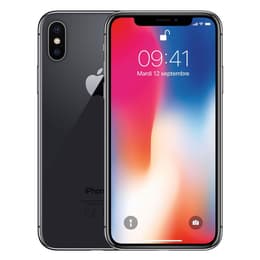


iPhone 12 Pro Max Vs iPhone X

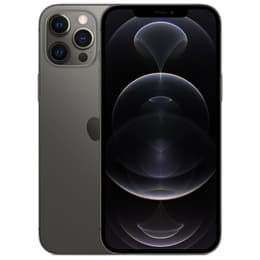
iPhone 12 Pro Max
iPhone 12 Pro Max
Starting at

Refurbished price:266.00

Versus €1,139.00 new

See options
iPhone X
iPhone X
Starting at

Refurbished price:142.00

Versus €439.00 new

See options

Ratings

The iPhone 12 Pro Max, released in November 2020, and the iPhone X, launched in November 2017, represent different eras in Apple's smartphone evolution. While both devices operate on Apple's iOS platform, the iPhone 12 Pro Max introduces a larger display, a more advanced camera system, and a newer internal architecture compared to the iPhone X. These differences cater to varying user needs and expectations from a modern smartphone.

Scores

Durability

The practical lifespan of a smartphone is influenced by its release timeline, software support, and physical durability. The iPhone 12 Pro Max and iPhone X, separated by three years, offer distinct longevity prospects.

  • Software Longevity: The iPhone 12 Pro Max, released in late 2020, launched with iOS 14 and is currently running iOS 26.4 as of March 2026, with expected major OS updates likely extending until approximately 2028-2030. In contrast, the iPhone X, released in 2017, launched with iOS 11 and received its last major OS update with iOS 16.7.15, meaning it no longer receives new feature updates, though security patches may continue for a period.
  • Physical Durability: The iPhone 12 Pro Max features a Ceramic Shield front cover, designed to offer improved drop performance, and boasts an IP68 rating for water and dust resistance, allowing submersion up to 6 meters for 30 minutes. The iPhone X has an IP67 rating, providing resistance to dust and water up to 1 meter for 30 minutes, and features a glass front and back.
  • Repairability: Both devices received a repairability score of 6 out of 10 from iFixit, indicating a moderate ease of repair for professionals, with display and battery replacements generally being straightforward. Some sources also rate the iPhone X at 7.5/10 for repairability, noting the use of screws over glue for certain components.

Year of Release

2020

2017

Compatible with latest Update

Yes

No

OS

iOS

iOS

Foldable

No

No

Performance

Performance is a key differentiator, with the iPhone 12 Pro Max benefiting from a newer generation of internal components compared to the iPhone X.

  • Processing Power: The iPhone 12 Pro Max is equipped with a more advanced processor, which translates to smoother operation for demanding applications, faster app loading times, and more fluid multitasking. This allows for a more responsive experience, especially with graphically intensive games and complex productivity tasks. The iPhone X, while capable for its time, may exhibit slower performance with newer, more resource-intensive applications due to its older processor.
  • Multitasking and Responsiveness: The iPhone 12 Pro Max includes 6GB of RAM, providing ample capacity for running multiple applications simultaneously without significant slowdowns or app reloads. The iPhone X has 3GB of RAM, which can lead to more frequent app refreshes when switching between many open applications.
  • Battery Behavior: The iPhone 12 Pro Max houses a larger battery (3687 mAh) and generally offers extended usage times, with users reporting it can last a full day even with heavy use, including over 14 hours of web browsing or more than 8 hours of YouTube streaming. The iPhone X, with its 2716 mAh battery, typically provides sufficient power for a full day of moderate use, though heavy usage may require more frequent charging.

Memory

6 GB

3 GB

Screen quality

Both devices feature OLED displays, but the iPhone 12 Pro Max offers a larger and brighter viewing experience with enhanced technology.

  • Display Technology and Size: The iPhone 12 Pro Max features a 6.7-inch Super Retina XDR OLED display, providing a significantly larger viewing area compared to the iPhone X's 5.8-inch Super Retina OLED display. Both displays offer deep blacks and vibrant colors characteristic of OLED technology.
  • Resolution and Brightness: The iPhone 12 Pro Max has a resolution of 2778x1284 pixels at 458 pixels per inch (ppi), while the iPhone X has a resolution of 2436x1125 pixels at 458 ppi. The iPhone 12 Pro Max achieves a typical maximum brightness of 800 nits and a peak HDR brightness of 1200 nits, making it highly visible in bright outdoor conditions. The iPhone X offers a typical maximum brightness of 625 nits.
  • Refresh Rate and Features: Both the iPhone 12 Pro Max and iPhone X feature a standard 60Hz refresh rate, which is suitable for most daily tasks. Both displays also support HDR, True Tone for adaptive white balance, and a wide color gamut (P3) for accurate color reproduction. The iPhone X also includes 3D Touch, a feature not present on the 12 Pro Max.

Resolution

1284 x 2778

1125 x 2436

Screen type

Super Retina XDR OLED

Super Retina OLED

Audiovisual

The camera systems of the iPhone 12 Pro Max and iPhone X reflect advancements in mobile photography over several generations.

  • Rear Camera System: The iPhone 12 Pro Max boasts a triple 12MP camera system, including Ultra Wide, Wide, and Telephoto lenses, along with a LiDAR Scanner for improved depth sensing and Night mode portraits. It features Sensor-shift optical image stabilization on the Wide lens for enhanced stability. The iPhone X features a dual 12MP camera system with Wide and Telephoto lenses, both with optical image stabilization.
  • Photography Performance: The iPhone 12 Pro Max offers advanced computational photography features like Night mode on all lenses, Deep Fusion, and Smart HDR 3, contributing to superior image quality in various lighting conditions, including low light. It also supports Apple ProRAW for more editing flexibility. The iPhone X provides good everyday photography and can capture impressive low-light photos, especially with careful technique, but lacks the dedicated Night mode and advanced processing of the newer model.
  • Video Recording and Front Camera: Both devices are capable of recording 4K video at up to 60 frames per second. The iPhone 12 Pro Max offers a 12MP TrueDepth front camera, while the iPhone X has a 7MP TrueDepth front camera, both supporting Portrait mode and Animoji.

Main camera

12 megapixels

12 megapixels

Front camera

12 megapixels

7 megapixels

Miscellaneous

Beyond core features, several practical elements differentiate the user experience between these two iPhone models.

  • Connectivity and Ports: The iPhone 12 Pro Max supports 5G cellular connectivity, offering faster download and upload speeds in supported areas, alongside Wi-Fi 6. The iPhone X supports LTE and Wi-Fi (802.11 a/b/g/n/ac). Both devices utilize the Lightning port for charging and data transfer. The iPhone 12 Pro Max also introduces MagSafe, a magnetic system for attaching accessories and wireless chargers.
  • Biometric Security and Sensors: Both models rely on Face ID for secure facial recognition. The iPhone 12 Pro Max includes a LiDAR Scanner, which enhances augmented reality experiences and improves autofocus in low-light conditions.
  • Design and Handling: The iPhone 12 Pro Max is a larger and heavier device, measuring 160.8 x 78.1 x 7.4 mm and weighing 228 grams, featuring flat edges and a stainless steel frame. The iPhone X is more compact and lighter at 143.6 x 70.9 x 7.7 mm and 174 grams, with a curved stainless steel frame. The larger size of the 12 Pro Max provides a more expansive screen but may be less comfortable for one-handed use for some individuals.

Weight

226 g

174 g

Width

7,81 cm

7,09 cm

Height

16,08 cm

14,36 cm

Depth

0,74 cm

0,77 cm

Screen size (in)

6.7

5.8

Network

5G

4G

SIM card

Physical SIM + eSIM

Physical SIM

Carrier compatibility

Unlocked

Unlocked

Connector

Lightning

Lightning

The iPhone 12 Pro Max and iPhone X cater to different user priorities, reflecting the technological advancements over their respective release cycles. Users often praise the iPhone 12 Pro Max for its expansive and bright display, robust camera system with enhanced low-light capabilities, and extended battery life, making it suitable for content creators, heavy media consumers, and those who value cutting-edge performance. Common feedback highlights its larger size as both a benefit for viewing and a potential drawback for portability.

The iPhone X, while an older model, is frequently lauded for its groundbreaking design at the time of its release, including its edge-to-edge OLED display and the introduction of Face ID. Users appreciated its compact form factor and capable camera for everyday use. However, its older processor and limited software update longevity are noted as considerations for long-term use.

Users prioritizing a larger screen, superior camera performance, and longer software support will find the iPhone 12 Pro Max better suited to their needs. Conversely, those who prefer a more compact device and are comfortable with an older software ecosystem may still find the iPhone X to be a functional option. For consumers looking for a more sustainable choice, both models are available as quality-assured refurbished options, providing an eco-friendly alternative to purchasing new devices.

See all articles

Our recent comparisons