

Google Pixel 9 Vs iPhone 14 Pro Max

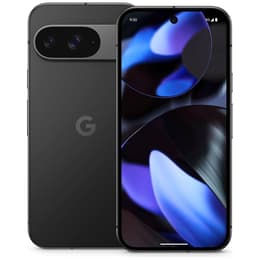
Google Pixel 9
Google Pixel 9
Starting at

Refurbished price:376.00

Versus €1,066.71 new

See options
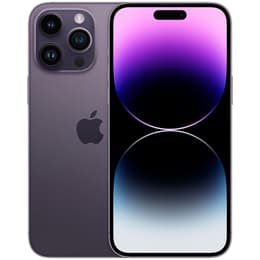
iPhone 14 Pro Max
iPhone 14 Pro Max
Starting at

Refurbished price:446.00

Versus €1,489.00 new

See options

Ratings

The Google Pixel 9, released in August 2024, and the Apple iPhone 14 Pro Max, launched in September 2022, represent distinct approaches to high-end smartphone design and functionality. While the Pixel 9 operates on Android and emphasizes AI-driven features, the iPhone 14 Pro Max runs on iOS, focusing on a robust ecosystem and powerful performance. This comparison will explore their core differences, helping users understand which device aligns best with their priorities.

Scores

Durability

When considering the long-term usability of a smartphone, factors like software support and physical resilience are key. The Pixel 9, being a newer device, benefits from a longer guaranteed software support period compared to the iPhone 14 Pro Max.

  • Software Longevity: The Google Pixel 9 is promised 7 years of OS and security updates from its August 2024 release, offering an extended period of current software features and security patches. The iPhone 14 Pro Max, released in September 2022, has already received several major iOS updates, and while Apple provides long-term support, its remaining update cycle is shorter than that of the Pixel 9.
  • Physical Durability: Both devices feature robust construction. The Pixel 9 incorporates Gorilla Glass Victus 2 on both its front and back, along with an IP68 rating for dust and water resistance. Google has indicated that the Pixel 9 series offers improved drop test performance compared to its predecessor. The iPhone 14 Pro Max features a Ceramic Shield front cover and an IP68 rating, providing strong resistance against everyday elements.
  • Expected Lifespan: Users can expect both phones to offer a practical lifespan of several years. The Pixel 9's extended software support means it will remain current with the latest Android features and security for a longer duration. The iPhone 14 Pro Max, while still a capable device, will see its software support window close sooner due to its earlier release.

Year of Release

2024

2022

Compatible with latest Update

Yes

Yes

OS

Android

iOS

Foldable

No

No

Performance

The performance of a smartphone is crucial for smooth daily operation, from launching applications to handling demanding tasks. Both the Pixel 9 and iPhone 14 Pro Max deliver high levels of responsiveness, though they achieve this through different hardware and software optimizations.

  • Application Responsiveness: The Pixel 9, powered by its custom-designed processor, handles demanding applications and multitasking smoothly, with a focus on efficient AI and machine learning capabilities. Users report that processes like photo processing are notably faster than previous Pixel generations. The iPhone 14 Pro Max, with its advanced chip, provides a highly fluid user experience, excelling in graphic-intensive tasks and maintaining consistent performance across various applications.
  • Multitasking and Storage: The Pixel 9 comes with 12GB of RAM, contributing to responsive multitasking and efficient handling of multiple open applications. It offers storage options of 128GB and 256GB. The iPhone 14 Pro Max features 6GB of RAM, which, combined with iOS's memory management, allows for seamless switching between apps. Storage configurations for the iPhone 14 Pro Max range from 128GB up to 1TB.
  • Battery Behavior: The Pixel 9 is equipped with a 4700mAh battery and features adaptive battery technology that learns user habits to optimize power consumption, often lasting a full day for typical usage. The iPhone 14 Pro Max, with a 4323mAh battery, is recognized for its excellent battery endurance, frequently providing over 13 hours of continuous web browsing in tests.

Memory (GB)

12 GB

6 GB

Screen quality

The visual experience on a smartphone is largely defined by its display, encompassing clarity, color reproduction, and brightness for various viewing conditions. Both devices offer high-quality OLED panels designed for immersive viewing.

  • Display Technology and Clarity: The Google Pixel 9 features a 6.3-inch Actua OLED display with a resolution of 1080x2424 pixels, resulting in a pixel density of 422 ppi. This provides clear and vibrant visuals with deep blacks. The iPhone 14 Pro Max boasts a larger 6.7-inch LTPO Super Retina XDR OLED display with a resolution of 2796x1290 pixels and a pixel density of 460 ppi, offering sharp and detailed imagery.
  • Brightness and Refresh Rate: The Pixel 9's display supports a refresh rate that dynamically adjusts between 60Hz and 120Hz, ensuring smooth scrolling and animations. It can reach up to 1800 nits for HDR content and a peak brightness of 2700 nits for outdoor visibility. The iPhone 14 Pro Max also features an adaptive ProMotion refresh rate, ranging from 1Hz to 120Hz, which aids in both smoothness and power efficiency. Its display offers a typical brightness of 1000 nits, up to 1600 nits for HDR, and a peak of 2000 nits in bright outdoor conditions.
  • Viewing Experience: The Pixel 9's display is noted for its color accuracy and natural-looking colors, making photos and videos appear true to life. The iPhone 14 Pro Max's display is praised for its excellent color accuracy, contrast, and high dynamic range, providing a visually stunning and immersive experience. It also introduced the Dynamic Island, an interactive area around the front camera cutout.

Resolution

1080 x 2424

1290 x 2796

Screen type

OLED

LTPO Super Retina XDR OLED

Audiovisual

Both the Google Pixel 9 and the iPhone 14 Pro Max are designed to deliver high-quality photographic and videographic results, each with its own strengths in camera hardware and computational processing.

  • Rear Camera Systems: The Pixel 9 features a dual-camera setup on the rear, including a 50MP wide-angle primary camera with optical and electronic image stabilization, capable of up to 8x digital zoom, and a 48MP ultrawide-angle camera with a 123-degree field of view. The iPhone 14 Pro Max comes with a triple-camera system, comprising a 48MP main camera that can capture detailed images, a 12MP ultrawide camera, and a 12MP telephoto lens offering 3x optical zoom and up to 15x digital zoom.
  • Photography Performance: The Pixel 9 is known for its computational photography, which enhances image quality, particularly in low-light conditions, and offers features like Magic Editor. Users often praise its ability to produce sharp and vibrant images. The iPhone 14 Pro Max's larger main sensor and advanced image processing contribute to improved quality across both primary and ultrawide cameras, with strong performance in various lighting scenarios. Its ProRAW format allows for greater editing flexibility.
  • Video and Audio Capabilities: Both devices are capable of recording high-quality video, with the iPhone 14 Pro Max supporting 4K at 60 frames per second across its rear cameras. The iPhone 14 Pro Max also features stereo speakers that deliver a clear and powerful audio experience for media consumption. The Pixel 9's microphone quality is designed for clear calls and recordings, and its speakers provide a good output for general use.

Main camera

50 megapixels

48 megapixels

Front camera

10.5 megapixels

12 megapixels

Miscellaneous

Beyond core performance and display, several practical elements contribute to the overall user experience, including connectivity, physical design, and additional features.

  • Connectivity and Ports: The Google Pixel 9 supports 5G connectivity, along with modern Wi-Fi standards and Bluetooth 5.3. As is standard for contemporary Android flagships, it is expected to feature a USB-C port for charging and data transfer. The iPhone 14 Pro Max also offers 5G and advanced Wi-Fi capabilities, but it utilizes Apple's proprietary Lightning port for charging and data.
  • Biometrics and Sensors: The Pixel 9 typically includes a fingerprint sensor for secure unlocking and authentication. It also integrates various sensors like an ambient light sensor, proximity sensor, and accelerometer. The iPhone 14 Pro Max relies on Face ID for secure facial recognition and authentication. It also incorporates a range of sensors, including a LiDAR scanner and a barometer.
  • Design and Handling: The Pixel 9 features a design with flat sides and a metal frame, offering a refined and premium feel. Its dimensions are 152.8 x 72.0 x 8.5mm, weighing 198g, making it a comfortable size for many users. The iPhone 14 Pro Max has a larger form factor, measuring 160.7 x 77.6 x 7.85mm and weighing 240g, with a stainless steel frame. Its larger size provides a more expansive screen but may require two-handed use for some.

Weight

198 g

120 g

Screen size (in)

6.3

6.7

Network

5G

5G

SIM card

Physical SIM + eSIM

Physical SIM + eSIM

Carrier compatibility

Unlocked

Unlocked

Connector

USB-C

Lightning

Choosing between the Google Pixel 9 and the iPhone 14 Pro Max involves weighing different priorities and ecosystem preferences. Both are capable smartphones, but their strengths cater to distinct user profiles.

The Google Pixel 9 is often praised for its advanced AI capabilities, which enhance everything from photography to daily interactions through features like the Gemini Assistant. Users appreciate its clean Android experience and the promise of extended software support, ensuring the device remains current for many years. Some common feedback points include its strong battery life for a full day of use and its improved display brightness. However, some users might note that its processor, while efficient for AI tasks, may not always match the raw benchmark performance of its competitors in certain intensive applications.

The iPhone 14 Pro Max is frequently lauded for its powerful performance, particularly in graphics-intensive tasks, and its seamless integration within the Apple ecosystem. Its display, featuring the Dynamic Island and high peak brightness, is a consistent highlight, as is its robust camera system, especially for video recording and ProRAW photography. Users often commend its exceptional battery life, making it a reliable device for heavy usage. Some criticisms have occasionally pointed to the Lightning port as a less universal option compared to USB-C, and its larger size and weight might not appeal to all users.

Users prioritizing the latest Android innovations, a longer software support window, and a more compact form factor with strong AI integration may find the Google Pixel 9 to be a compelling choice. Conversely, those deeply invested in the Apple ecosystem, seeking top-tier raw performance, a larger display, and a highly refined camera system with optical zoom, might lean towards the iPhone 14 Pro Max. Both devices offer a premium smartphone experience, and considering a quality-assured refurbished option for either model can provide an eco-friendly alternative for those looking to make a sustainable choice.

See all articles

Our recent comparisons