


Google Pixel 8a Vs Xiaomi Redmi Note 11 Pro 5G

Google Pixel 8a
Google Pixel 8a
Starting at

Refurbished price:232.00

Versus €549.00 new

See options
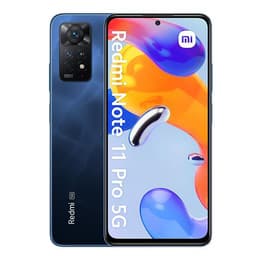
Xiaomi Redmi Note 11 Pro 5G
Starting at

Refurbished price:112.00

Versus €349.00 new

See options

Ratings

The Google Pixel 8A, released in May 2024, and the Xiaomi Redmi Note 11 Pro 5G, launched in January 2022, represent distinct approaches within the Android smartphone market. While both devices operate on the Android platform, they offer different user experiences, primarily due to their release timelines, software philosophies, and hardware focuses. The Pixel 8A emphasizes a streamlined software experience and advanced computational photography, whereas the Redmi Note 11 Pro 5G prioritizes a large display and rapid charging capabilities.

Scores

Durability

The practical lifespan of a smartphone is significantly influenced by its release date and the manufacturer's commitment to software updates.

  • Release Timeline: The Google Pixel 8A is a considerably newer device, having been released in May 2024. In contrast, the Xiaomi Redmi Note 11 Pro 5G was launched earlier, in January 2022. This age difference directly impacts the remaining period of official support.
  • Software Longevity: The Pixel 8A benefits from Google's policy of providing seven years of operating system updates, security patches, and Pixel Feature Drops from its release date, ensuring it remains current and secure until at least 2031. This extended support is a key factor for long-term usability. The Redmi Note 11 Pro 5G, having launched with Android 11, typically receives fewer major Android version updates and security patches compared to Google's Pixel line, meaning its software support window is more limited.
  • Durability Features: The Pixel 8A offers IP67 dust and water resistance, meaning it can withstand submersion in up to one meter of water for 30 minutes, and features Corning Gorilla Glass 3 for screen protection. The Redmi Note 11 Pro 5G provides IP53 dust and splash protection and uses Corning Gorilla Glass 5, offering a degree of protection against everyday elements.

Year of Release

2024

2022

Compatible with latest Update

Yes

No

OS

Android

Android

Foldable

No

No

Performance

Performance in daily use is shaped by a device's internal components, including its processor, RAM, and storage solutions.

  • Processing Power: The Pixel 8A is equipped with Google's Tensor G3 processor, which enables smooth handling of demanding applications, efficient multitasking, and advanced on-device AI features. The Redmi Note 11 Pro 5G features a Qualcomm Snapdragon 695 5G processor, which provides capable performance for general daily tasks and moderate usage, though it offers less headroom for intensive gaming or very heavy multitasking compared to the Pixel 8A's newer chip.
  • Storage and Multitasking: The Pixel 8A is available with 128GB or 256GB of internal storage and comes with 8GB of RAM, facilitating responsive app switching and efficient background processes. The Redmi Note 11 Pro 5G offers storage options of 64GB or 128GB, with either 6GB or 8GB of RAM, which is sufficient for typical smartphone usage and app management.
  • Battery Performance: The Pixel 8A houses a 4492 mAh battery, generally providing a full day of use for most users. The Redmi Note 11 Pro 5G features a larger 5000 mAh battery, often delivering extended usage, with some users reporting up to two days on a single charge, complemented by 67W fast charging capabilities.

Memory (GB)

8 GB

8 GB

Screen quality

The display is a primary interface for user interaction, and its quality impacts the overall viewing experience.

  • Display Technology and Size: Both devices feature OLED/AMOLED display technology, known for producing vibrant colors and deep blacks. The Pixel 8A has a 6.1-inch OLED display, offering a more compact viewing area. The Redmi Note 11 Pro 5G provides a larger 6.67-inch AMOLED display, which can enhance the immersive experience for media consumption.
  • Brightness and Clarity: The Pixel 8A's display boasts a peak brightness of 2000 nits, contributing to excellent visibility even in bright outdoor conditions. The Redmi Note 11 Pro 5G reaches a peak brightness of 1200 nits, which is also capable of providing good outdoor visibility. Both phones offer a Full HD+ resolution (1080x2400 pixels), ensuring sharp and clear visuals.
  • Refresh Rate: Both smartphones incorporate a 120Hz refresh rate, which results in smoother scrolling, more fluid animations, and a more responsive feel during general navigation and gaming.

Resolution

1080 x 2400

1080 x 2400

Screen type

OLED

Super AMOLED

Audiovisual

Camera capabilities are a significant consideration for many users, influencing how they capture and share moments.

  • Rear Camera Systems: The Pixel 8A features a dual-camera setup with a 64MP main sensor and a 13MP ultrawide sensor. The Redmi Note 11 Pro 5G comes with a triple-camera array, including a 108MP main sensor, an 8MP ultrawide, and a 2MP macro lens.
  • Photography Performance: The Pixel 8A is recognized for its computational photography, consistently producing detailed and color-accurate images across various lighting conditions, including strong low-light performance. The Redmi Note 11 Pro 5G's 108MP main camera captures pleasing daytime photos with good detail, though its ultrawide camera may exhibit softer results.
  • Video and Audio: The Pixel 8A supports 4K video recording, offering high-resolution video capture. The Redmi Note 11 Pro 5G's video recording is limited to 1080p, which may be a consideration for users who frequently record high-definition video. For audio, the Redmi Note 11 Pro 5G is noted for its loud and robust stereo speakers, enhancing the media consumption experience.

Main camera

64 megapixels

108 megapixels

Front camera

13 megapixels

16 megapixels

Miscellaneous

Beyond core features, several practical elements contribute to the overall user experience and device utility.

  • Connectivity Standards: The Pixel 8A supports modern connectivity options, including 5G, Wi-Fi 6E, and Bluetooth 5.3, offering faster wireless speeds and improved efficiency. The Redmi Note 11 Pro 5G also supports 5G, along with Wi-Fi 5 (802.11 a/b/g/n/ac) and Bluetooth 5.1.
  • Physical Ports and Sensors: The Pixel 8A features a USB-C port for charging and data transfer and relies on an under-display fingerprint sensor and face unlock for security. The Redmi Note 11 Pro 5G includes a USB-C port, a 3.5mm headphone jack, and a side-mounted fingerprint sensor. The presence of a headphone jack on the Redmi Note 11 Pro 5G offers direct compatibility with wired audio accessories.
  • Design and Handling: The Pixel 8A measures 152.1 x 72.7 x 8.9 mm and weighs 188g, presenting a more compact and lighter form factor. The Redmi Note 11 Pro 5G is a larger device at 164.2 x 76.1 x 8.1 mm and weighs 202g, which may appeal to users preferring a larger screen and a more substantial feel in hand.

Weight

188 g

202 g

Screen size (in)

6.1

6.67

Network

5G

5G

SIM card

Physical SIM + eSIM

Dual Physical SIM

Carrier compatibility

Unlocked

Unlocked

User feedback for the Google Pixel 8A frequently highlights its exceptional camera performance, the clean and intuitive Android experience, and the significant commitment to long-term software updates. Users also appreciate its powerful performance for a device in its category and its relatively compact size. Some common points of discussion include its charging speed, which is not as fast as some competitors, and the use of an older generation of protective glass on the display.

For the Xiaomi Redmi Note 11 Pro 5G, users often praise its large and vibrant AMOLED display, the extended battery life, and the convenience of rapid charging. The inclusion of a 3.5mm headphone jack and robust stereo speakers are also frequently mentioned as positive attributes. Conversely, some users note that its processor, while capable for everyday tasks, may not offer the same level of performance for demanding applications as newer devices. The limitation to 1080p video recording and the older Android version at launch are also points of consideration.

Users prioritizing a top-tier camera experience, a pure Android interface with extensive software support, and a more compact device may find the Google Pixel 8A well-suited to their needs. Its focus on computational photography and long-term updates makes it a compelling choice for those seeking longevity and consistent performance. Alternatively, users who value a larger, immersive display, a long-lasting battery with very fast charging, and the practicality of a headphone jack might lean towards the Xiaomi Redmi Note 11 Pro 5G. This device caters to those who consume a lot of media and require sustained power throughout their day.

Both devices offer distinct advantages, and considering a quality-assured refurbished option for either model can provide an eco-friendly alternative for consumers looking to make an informed and sustainable choice.


See all articles

Our recent comparisons