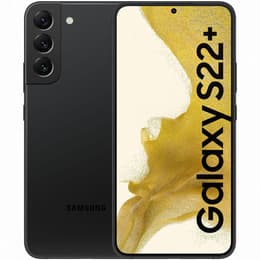
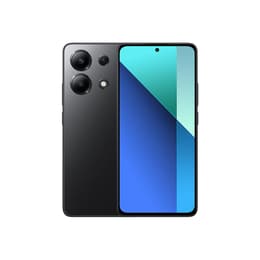


Galaxy S22+ 5G Vs Xiaomi Redmi Note 13

Galaxy S22+ 5G
Galaxy S22+ 5G
Starting at

Refurbished price:194.00

Versus €1,174.01 new

See options
Xiaomi Redmi Note 13
Starting at

Refurbished price:133.00

Versus €340.00 new

See options

Ratings

The Samsung Galaxy S22 Plus 5G, released in early 2022, and the Xiaomi Redmi Note 13, launched globally in early 2024, represent different approaches to smartphone design and functionality. While the Galaxy S22 Plus was positioned as a premium device with advanced features, the Redmi Note 13 focuses on delivering a comprehensive experience within a more accessible segment. Key differentiators include their release timelines, performance capabilities, and camera systems, catering to distinct user priorities.

Scores

Durability

When considering the long-term usability of these devices, their release dates and manufacturer support policies are important factors.

  • Release Timeline: The Samsung Galaxy S22 Plus 5G was released in February 2022, making it an older device compared to the Xiaomi Redmi Note 13, which saw its global launch in January 2024. This two-year difference impacts their respective software support cycles. [5, 23, 32]
  • Software Longevity: Samsung typically provides four generations of Android OS upgrades and security updates for its flagship devices, extending support for the Galaxy S22 Plus 5G through approximately 2027. [29, 32] The Redmi Note 13 launched with Android 13 and MIUI 14, with an update to Android 15 and Xiaomi HyperOS 2 already available, and Xiaomi aims for minimal software slowdowns over 48 months. [2, 11, 28]
  • Physical Durability: The Galaxy S22 Plus 5G features an IP68 rating, indicating robust dust and water resistance, capable of submersion in up to 1.5 meters of water for 30 minutes. [25, 33] The Redmi Note 13 carries an IP54 rating, offering protection against splashes and dust, suitable for everyday exposure but not full submersion. [2, 4, 7, 16, 20] Both devices utilize Gorilla Glass for screen protection, with the S22 Plus featuring Gorilla Glass Victus+ and the Redmi Note 13 using Gorilla Glass 3. [7, 9, 25]

Year of Release

2022

2024

Compatible with latest Update

Yes

Yes

OS

Android

Android

Foldable

No

No

Performance

The performance of a smartphone is crucial for daily tasks, app usage, and multitasking efficiency.

  • Processing Power: The Galaxy S22 Plus 5G, powered by a former flagship-tier processor (Qualcomm Snapdragon 8 Gen 1 or Samsung Exynos 2200 depending on region), delivers robust performance for demanding applications, intensive gaming, and seamless multitasking. [5, 25, 32] The Redmi Note 13 (4G version) utilizes a processor designed for efficient everyday use, handling common apps and general navigation smoothly, though it may show limitations with graphically intensive games or very heavy multitasking. [2, 4, 6, 7, 15, 20, 26]
  • Memory and Storage: The Galaxy S22 Plus 5G typically comes with 8GB of RAM and offers 128GB or 256GB of internal storage, without an option for expandable memory. [5, 14, 25, 27, 34] The Redmi Note 13 provides more flexible options, with configurations including 6GB, 8GB, or 12GB of RAM and 128GB or 256GB of storage, alongside support for microSD card expansion up to 1TB. [3, 4, 7, 13, 15, 28]
  • Battery Behavior: The Galaxy S22 Plus 5G is equipped with a 4500 mAh battery, generally providing a full day of moderate to heavy use, often around 10-12 hours of screen-on time. [1, 29, 30, 33] The Redmi Note 13 features a larger 5000 mAh battery, which, combined with its efficient processor, often translates to longer usage times, frequently extending to 1.5 to 2 days on a single charge for many users. [10, 11, 15, 18]

Memory (GB)

8 GB

8 GB

Screen quality

The visual experience is a primary consideration for many users, and both devices offer capable displays.

  • Display Technology and Clarity: Both smartphones feature AMOLED display technology, known for deep blacks and vibrant colors. The Galaxy S22 Plus 5G has a 6.6-inch Dynamic AMOLED 2X display, while the Redmi Note 13 offers a slightly larger 6.67-inch AMOLED panel. Both provide a Full HD+ resolution (1080 x 2340 pixels for S22 Plus, 1080 x 2400 pixels for Redmi Note 13), ensuring sharp visuals for typical viewing distances. [2, 3, 5, 7, 9, 15, 25, 27]
  • Brightness and Outdoor Visibility: The Galaxy S22 Plus 5G boasts a high peak brightness of 1750 nits, making it exceptionally visible even in direct sunlight. [25] The Redmi Note 13 also offers impressive brightness, reaching up to 1800 nits peak brightness, which ensures good readability outdoors. [2, 3, 4, 6, 7, 9]
  • Refresh Rate and Smoothness: Both devices feature a 120Hz refresh rate, contributing to smoother scrolling, more fluid animations, and a more responsive feel during interactions and gaming. [3, 5, 7, 9, 15, 25]

Resolution

1080 x 2340

1080 x 2400

Screen type

Dynamic AMOLED 2X

AMOLED

Audiovisual

Photography and videography capabilities are often a deciding factor for smartphone users.

  • Rear Camera System: The Galaxy S22 Plus 5G features a versatile triple-camera setup, including a 50MP main sensor, a 12MP ultra-wide lens, and a 10MP telephoto lens with 3x optical zoom. [5, 25] This telephoto capability allows for clear zoomed-in shots without significant loss of detail. The Redmi Note 13 also has a triple-camera system, highlighted by a 108MP main sensor, an 8MP ultra-wide lens, and a 2MP macro lens. [2, 3, 4, 6, 15] Its high-resolution main sensor uses pixel-binning technology to capture detailed images.
  • Photography Performance: The Galaxy S22 Plus 5G generally offers strong performance in various lighting conditions, with good detail and color accuracy, and its telephoto lens provides an advantage for distant subjects. [25] The Redmi Note 13's 108MP main camera performs well in everyday scenarios, capturing clear photos, though its ultra-wide and macro lenses are more suited for specific creative shots. [3, 18]
  • Video Recording: The Galaxy S22 Plus 5G supports video recording up to 8K resolution, offering high-fidelity video capture. [14] The Redmi Note 13 records video at up to 1080p at 30 frames per second for both its front and rear cameras. [3, 4, 15]

Main camera

50 megapixels

108 megapixels

Front camera

10 megapixels

16 megapixels

Miscellaneous

Beyond core specifications, several practical features contribute to the overall user experience.

  • Connectivity: The Galaxy S22 Plus 5G supports 5G networks and Wi-Fi 6E, offering fast wireless speeds where available. [25, 27] The Redmi Note 13 is available in both 4G and 5G variants, with the 4G model supporting Wi-Fi 5 (802.11ac). Both include Bluetooth connectivity, with the S22 Plus featuring Bluetooth 5.2 and the Redmi Note 13 having Bluetooth 5.1 or 5.3 depending on the variant. [4, 11, 15, 19, 20, 26, 37]
  • Ports and Biometrics: The Galaxy S22 Plus 5G features a USB-C port but lacks a 3.5mm headphone jack. It includes an in-display fingerprint sensor for secure unlocking. [25, 33] The Redmi Note 13 also has a USB-C port and retains a 3.5mm headphone jack, a convenience for wired audio. The 4G version of the Redmi Note 13 features an in-display fingerprint sensor, while the 5G version typically has a side-mounted sensor. [2, 3, 4, 9, 15, 37]
  • Design and Handling: The Galaxy S22 Plus 5G has a premium build with an aluminum frame and glass back, weighing around 195-196g. [5, 25] The Redmi Note 13 features a sleek design with a composite panel back and a plastic frame, weighing approximately 188.5g. [4, 7, 15, 16, 20, 26] Both offer a comfortable in-hand feel for their respective sizes.

Weight

195 g

175 g

Screen size (in)

6.6

6.67

Network

5G

5G

SIM card

Physical SIM + eSIM

Dual Physical SIM

Carrier compatibility

Unlocked

Unlocked

Connector

USB-C

USB-C

The Samsung Galaxy S22 Plus 5G and the Xiaomi Redmi Note 13 cater to different user expectations, reflecting their respective market segments and release timelines. Users often praise the Galaxy S22 Plus 5G for its premium build quality, powerful performance for demanding tasks, and versatile camera system, particularly its telephoto capabilities. [25, 29] However, some users have noted that its battery life, while decent, might not be as exceptional as some rivals, and the absence of a charger in the box is a frequent point of discussion. [25, 30, 33]

The Redmi Note 13, on the other hand, is frequently lauded for its vibrant AMOLED display with high brightness, impressive battery longevity, and the inclusion of features like a 3.5mm headphone jack and expandable storage. [3, 18] Criticisms sometimes point to its processor being less powerful for intensive gaming or very heavy use compared to higher-end devices, and its video recording capabilities are more basic. [18, 26]

Users prioritizing a high-performance device with advanced camera features, robust water resistance, and a premium feel may find the Galaxy S22 Plus 5G well-suited to their needs. Those who value extended battery life, a large and bright display, expandable storage, and a more accessible overall package for everyday use might lean towards the Redmi Note 13. Both devices are available as quality-assured refurbished options, providing an eco-friendly alternative for consumers seeking reliable technology.


See all articles

Our recent comparisons