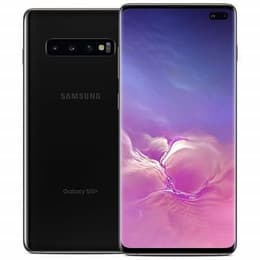
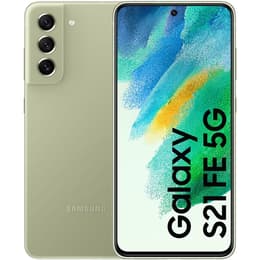


Galaxy S10+ Vs Galaxy S21 FE 5G

Galaxy S10+
Galaxy S10+
Starting at

Refurbished price:135.00

Versus €1,009.00 new

See options
Galaxy S21 FE 5G
Galaxy S21 FE 5G
Starting at

Refurbished price:159.00

Versus €829.91 new

See options

Ratings

The Samsung Galaxy S10 Plus, released in March 2019, and the Samsung Galaxy S21 FE 5G, launched in January 2022, are both Android smartphones from Samsung's flagship Galaxy S series. While they share a common lineage, the S21 FE 5G offers a more contemporary experience with a newer processor and 5G connectivity, whereas the S10 Plus provides a higher-resolution display and a traditional headphone jack.

Scores

Durability

When considering the long-term usability of these devices, their release timelines and software support are key factors.

  • Release Timeline and OS Support: The Galaxy S10 Plus launched with Android 9.0 (Pie) in March 2019. The Galaxy S21 FE 5G, released in January 2022, started with Android 12. Newer devices typically receive more years of operating system and security updates, meaning the S21 FE 5G will likely have a longer period of official software support.
  • Repairability: The Galaxy S10 Plus received a repairability score of 3 out of 10 from iFixit, indicating it is challenging to repair due to extensive use of adhesive and a fused fingerprint sensor. Information on the S21 FE 5G's repairability score is less widely available, but modern smartphone designs often present similar challenges.
  • Expected Practical Lifespan: Users seeking the longest possible software longevity and access to the latest Android features will find the S21 FE 5G more aligned with their needs due to its more recent release and extended update cycle. Both devices feature IP68 dust and water resistance, offering protection against environmental elements. The S10 Plus uses Corning Gorilla Glass 6 on the front and Gorilla Glass 5 on the back, while the S21 FE 5G features the more durable Gorilla Glass Victus on its display.

Year of Release

2019

2022

Compatible with latest Update

No

Yes

OS

Android

Android

Foldable

No

No

Performance

The performance of a smartphone is largely determined by its internal components and how efficiently they handle daily tasks.

  • Processing Power: The Galaxy S10 Plus is powered by a processor that, while capable for its time, is an older generation compared to the S21 FE 5G. The S21 FE 5G features a more recent processor, which generally translates to faster app loading, smoother transitions, and more efficient handling of demanding applications and modern games.
  • Battery Behavior: The Galaxy S10 Plus houses a 4100 mAh battery. Users reported that it could last a full day with intense use or up to a day and a half for lighter usage. The Galaxy S21 FE 5G comes with a larger 4500 mAh battery. While it is designed for all-day use, some users have noted heating issues and faster battery drain, particularly when utilizing 5G connectivity or during prolonged heavy tasks.
  • Multitasking and Storage: Both devices offer various RAM configurations, with the S10 Plus available with up to 12GB of RAM and the S21 FE 5G with up to 8GB of RAM. Both provide ample storage options, ranging from 128GB to 1TB for the S10 Plus and 128GB to 256GB for the S21 FE 5G. The S21 FE 5G's newer internal architecture generally provides a more responsive overall system experience.

Memory (GB)

8 GB

6 GB

Screen quality

The display is a primary interface for smartphone interaction, and both devices offer distinct visual experiences.

  • Display Technology and Resolution: The Galaxy S10 Plus features a 6.4-inch Dynamic AMOLED display with a resolution of 1440 x 3040 pixels, resulting in a high pixel density of approximately 522 pixels per inch (ppi). The Galaxy S21 FE 5G also has a 6.4-inch Dynamic AMOLED 2X display, but with a resolution of 1080 x 2400 pixels, yielding about 401 ppi. The S10 Plus offers a sharper image due to its higher pixel density.
  • Refresh Rate and Brightness: A key difference is the refresh rate; the S10 Plus has a standard refresh rate, while the S21 FE 5G boasts a 120Hz refresh rate, providing a noticeably smoother scrolling and gaming experience. Both displays support HDR10+ for enhanced contrast and color. The S21 FE 5G can reach a peak brightness of 1200 nits, which aids visibility in bright outdoor conditions.
  • Viewing Experience: Both phones offer vibrant and clear visuals characteristic of AMOLED technology. The S10 Plus provides a slightly more detailed image, while the S21 FE 5G delivers a more fluid visual experience, which can be particularly beneficial for fast-paced content.

Resolution

1440 x 3040

1080 x 2340

Screen type

Dynamic AMOLED

Dynamic AMOLED 2X

Audiovisual

Both smartphones are equipped with versatile camera systems designed to capture a range of photographic and video content.

  • Rear Camera Systems: The Galaxy S10 Plus features a triple rear camera setup: a 12MP wide-angle lens, a 12MP telephoto lens with 2x optical zoom, and a 16MP ultrawide lens. It was praised for its versatile combination and good color and exposure in bright light. The Galaxy S21 FE 5G also has a triple rear camera system, consisting of a 12MP wide-angle lens, an 8MP telephoto lens with 3x optical zoom, and a 12MP ultrawide lens. The S21 FE 5G's telephoto lens offers greater optical zoom capabilities.
  • Front Camera Performance: The S10 Plus includes a dual selfie camera system with a 10MP wide lens and an 8MP depth sensor, which was highly regarded for its detail and pleasant skin tones in good lighting. The S21 FE 5G features a single 32MP front camera. While both are capable, some users of the S21 FE 5G have reported a perceived downgrade in camera quality after certain software updates.
  • Video and Audio: Both devices are capable of recording video at 4K resolution at 60 frames per second. The S10 Plus includes a 3.5mm headphone jack and stereo speakers. The S21 FE 5G offers stereo speakers but omits the 3.5mm headphone jack.

Main camera

12 megapixels

12 megapixels

Front camera

10 megapixels

32 megapixels

Miscellaneous

Beyond core performance and display, several practical features contribute to the overall user experience.

  • Connectivity: The Galaxy S10 Plus supports Wi-Fi 6 and Bluetooth 5.0. The Galaxy S21 FE 5G offers the advantage of 5G connectivity, alongside Wi-Fi 6 and Bluetooth 5.0, providing faster mobile data speeds where available.
  • Ports and Sensors: Both devices utilize a USB-C port for charging and data transfer. The S10 Plus notably includes a 3.5mm headphone jack, which is absent on the S21 FE 5G. For security, both feature an under-display fingerprint sensor; the S10 Plus uses an ultrasonic sensor, while the S21 FE 5G employs an optical one. The S10 Plus also includes additional sensors like a heart rate monitor and SpO2 sensor.
  • Design and Handling: In terms of physical dimensions, the S10 Plus measures 157.6 x 74.1 x 7.8 mm and weighs between 175g and 198g (for the ceramic model). The S21 FE 5G is slightly more compact at 155.7 x 74.5 x 7.9 mm and weighs 177g. Both devices have an IP68 rating for dust and water resistance.

Weight

175 g

177 g

Screen size (in)

6.4

6.4

Network

4G

5G

SIM card

Physical SIM

Physical SIM

Carrier compatibility

Unlocked

Unlocked

Connector

USB-C + Jack 3.5mm

USB-C

The Samsung Galaxy S10 Plus and Galaxy S21 FE 5G cater to different user priorities, largely influenced by their respective release years and feature sets. The S10 Plus, a device from 2019, was praised for its vibrant, high-resolution display, versatile camera system, and the inclusion of a 3.5mm headphone jack. However, common criticisms included its lower repairability score and some reported issues with the fingerprint reader and occasional overheating.

The Galaxy S21 FE 5G, released in 2022, is often lauded for its smoother 120Hz display, more modern processor, and the inclusion of 5G connectivity. User feedback, however, sometimes points to concerns regarding heating during intensive use, battery drain, and network inconsistencies, with some also noting a perceived decline in camera quality after software updates.

Users who prioritize a higher-resolution display, a traditional headphone jack, and do not require 5G connectivity may find the Galaxy S10 Plus well-suited to their needs. Conversely, those who value a smoother screen experience, faster processing for demanding applications, and the benefits of 5G connectivity will likely lean towards the Galaxy S21 FE 5G. Both devices offer a robust Android experience, and choosing between them often comes down to which specific features align best with individual usage patterns. For those considering either model, exploring quality-assured refurbished options can be an eco-friendly alternative.


See all articles

Our recent comparisons