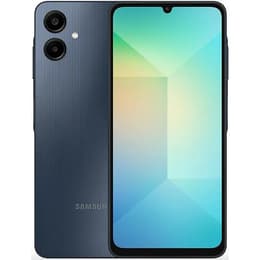
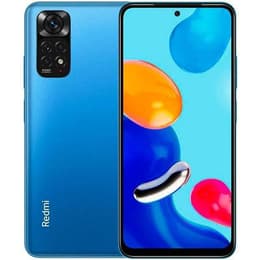


Galaxy A06 Vs Xiaomi Redmi Note 11

Galaxy A06
Galaxy A06
Starting at

Refurbished price:108.00

Versus €186.96 new

See options
Xiaomi Redmi Note 11
Starting at

Refurbished price:108.00

Versus €249.99 new

See options

Ratings

The Samsung Galaxy A06 and the Xiaomi Redmi Note 11 are both smartphones designed to offer essential features for everyday use. While the Galaxy A06 was released more recently in 2024, the Redmi Note 11, launched in 2022, distinguishes itself with a more advanced display technology and faster charging capabilities. Both devices operate on the Android platform, providing access to a wide ecosystem of applications and services.

Scores

Durability

When considering the practical lifespan of these devices, several factors come into play, including their release dates and expected software support.

  • Release Timeline: The Samsung Galaxy A06 was released in August 2024, making it a newer device compared to the Xiaomi Redmi Note 11, which launched in January 2022. This difference in release year can impact the duration of future software updates.
  • Software Longevity: The Galaxy A06 launched with Android 14 and Samsung's One UI 6.1, suggesting a longer period of official Android and security updates ahead. The Redmi Note 11, initially running Android 11 with MIUI 13, may have fewer major Android version updates remaining.
  • Build and Durability: The Redmi Note 11 features an IP53 rating for dust and splash resistance, offering a degree of protection against environmental elements. Information regarding a similar official IP rating for the Galaxy A06 is not widely available.

Year of Release

2024

2022

OS

Android

Android

Foldable

No

No

Performance

The performance of a smartphone is crucial for daily tasks, from navigating applications to managing multiple processes simultaneously.

  • Processor Capabilities: The Samsung Galaxy A06 is equipped with a MediaTek Helio G85 processor, which is designed to handle everyday applications and light multitasking. The Xiaomi Redmi Note 11 features a Qualcomm Snapdragon 680 processor, which also provides a responsive experience for general use. Users of both devices generally report smooth operation for common tasks like browsing and social media.
  • Multitasking and Responsiveness: Both phones offer various RAM configurations, typically ranging from 4GB to 6GB, which influences their ability to keep multiple apps open without significant slowdowns. Some users of the Redmi Note 11 have noted occasional stutters in the user interface, particularly when the 90Hz refresh rate is active or during demanding tasks. Similarly, some Galaxy A06 users have reported potential lag, especially with the 64GB storage variant or under heavy usage.
  • Battery Behavior: Both devices come with a 5000mAh battery, providing substantial power for extended use. The Redmi Note 11 supports 33W fast charging and typically includes a compatible charger, allowing for quicker recharges. The Galaxy A06 supports 25W wired charging, which also offers a reasonable charging speed.

Memory (GB)

4 GB

4 GB

Screen quality

The display is a primary interface for smartphone interaction, and there are notable differences between these two models.

  • Display Technology and Resolution: The Xiaomi Redmi Note 11 features a 6.43-inch AMOLED display with a Full HD+ resolution (1080 x 2400 pixels). This technology provides vibrant colors, deep blacks, and good contrast. In contrast, the Samsung Galaxy A06 has a larger 6.7-inch PLS LCD display with an HD+ resolution (720 x 1600 pixels).
  • Refresh Rate and Brightness: The Redmi Note 11 offers a 90Hz refresh rate, contributing to smoother scrolling and a more fluid visual experience, along with a peak brightness of up to 1000 nits for better outdoor visibility. The Galaxy A06 features a standard 60Hz refresh rate and a display that some users describe as less bright and more reflective, potentially impacting outdoor usability.
  • Viewing Experience: Users prioritizing a sharper image, more vivid colors, and a smoother scrolling experience may find the Redmi Note 11's AMOLED display more appealing. For those who prefer a larger screen size for content consumption, the Galaxy A06 offers a slightly bigger viewing area, though with a lower resolution.

Resolution

720 x 1600

1080 x 2400

Screen type

PLS LCD

AMOLED

Audiovisual

Both smartphones offer camera systems capable of capturing everyday moments, with some distinctions in their configurations and performance.

  • Rear Camera System: The Samsung Galaxy A06 features a dual-camera setup on the rear, consisting of a 50-megapixel main sensor and a 2-megapixel depth sensor. The Xiaomi Redmi Note 11 comes with a quad-camera system, including a 50-megapixel main lens, an 8-megapixel ultrawide lens, a 2-megapixel macro lens, and a 2-megapixel depth sensor. The inclusion of an ultrawide lens on the Redmi Note 11 provides more versatility for capturing broader scenes.
  • Photography Performance: Both devices are capable of taking decent photos in good lighting conditions with their main sensors. However, the Redmi Note 11's ultrawide camera and low-light performance are often noted as being less impressive. Similarly, the Galaxy A06's camera is generally considered average, with some users suggesting that image processing could be improved.
  • Front Camera and Video: For selfies, the Galaxy A06 has an 8-megapixel front camera, while the Redmi Note 11 features a 13-megapixel front camera. Both phones typically record video at up to 1080p resolution at 30 frames per second.

Miscellaneous

Beyond core specifications, several practical features contribute to the overall user experience.

  • Connectivity and Ports: Both the Galaxy A06 and Redmi Note 11 support 4G LTE networks. The Redmi Note 11 includes Wi-Fi 802.11ac and Bluetooth 5.0, while the Galaxy A06 features Bluetooth 5.3. Both devices utilize a USB Type-C port for charging and data transfer. The Redmi Note 11 also retains a 3.5mm headphone jack and an IR blaster, which can be used to control household appliances.
  • Security and Sensors: Both smartphones incorporate a side-mounted fingerprint sensor for secure unlocking. The Redmi Note 11 also offers AI Face Unlock and a broader array of sensors, including an accelerometer, ambient light sensor, compass, and gyroscope.
  • Design and Handling: The Galaxy A06 measures 167.3 x 77.3 x 8.0 mm and weighs 189g. The Redmi Note 11 is slightly more compact and lighter at 159.87 x 73.87 x 8.09 mm and 179g. The Redmi Note 11 is also noted for its sturdy build quality and an IP53 rating for splash resistance.

Weight

189 g

179 g

Screen size (in)

6.7

6.43

Network

4G

4G

SIM card

Dual Physical SIM

Dual Physical SIM

Carrier compatibility

Unlocked

Unlocked

User feedback for the Samsung Galaxy A06 often highlights its strong battery life and its ability to handle everyday tasks reliably. Users appreciate its performance for basic functions like social media, messaging, and light browsing. However, common criticisms point to its HD+ LCD display, which some find to be less vibrant and bright compared to alternatives, and its camera performance, which is generally considered average.

The Xiaomi Redmi Note 11 receives praise for its excellent AMOLED display with a 90Hz refresh rate, offering a more premium visual experience with vivid colors and smoother scrolling. Its fast charging capabilities and inclusion of a charger are also frequently mentioned as positive aspects. On the other hand, some users have reported occasional stutters in the user interface, especially when running at 90Hz, and the ultrawide and low-light camera performance are often cited as areas for improvement.

Users prioritizing a modern display with higher resolution and refresh rate, along with faster charging, may find the Xiaomi Redmi Note 11 to be a suitable choice. Conversely, those who value a newer device with a larger screen and the latest Android version out of the box, and primarily use their phone for essential daily tasks, might lean towards the Samsung Galaxy A06. Both devices offer a robust battery life, making them practical for users who need their phone to last through a full day. For consumers looking for an eco-friendly alternative, considering a quality-assured refurbished option for either model can be a sustainable choice.


See all articles

Our recent comparisons