

HP EliteBook 830 G6 13" Vs Lenovo ThinkPad T14 G2 14"

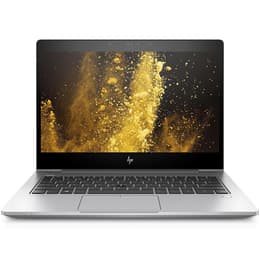
HP EliteBook 830 G6 13"
Starting at

Refurbished price:289.00

Versus €932.46 new

See options
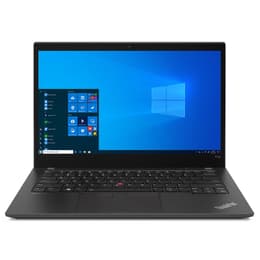
Lenovo ThinkPad T14 G2 14"
Starting at

Refurbished price:421.43

Versus €1,485.00 new

See options

Ratings

The HP EliteBook 830 G6, released in 2019, and the Lenovo ThinkPad T14 Gen 2, launched in 2021, are business-oriented laptops designed for productivity and reliability. While both offer robust features for professional use, the ThinkPad T14 Gen 2 benefits from a newer generation of internal components and updated connectivity options, whereas the EliteBook 830 G6 emphasizes strong security features and a compact design. Both devices operate on the Windows platform, providing a familiar user experience.

Scores

Durability

When considering the long-term usability of these laptops, several factors come into play, including their release dates, software support, and ease of maintenance.

  • Release Timeline: The HP EliteBook 830 G6 was released in 2019, making it an older model compared to the Lenovo ThinkPad T14 Gen 2, which debuted in 2021. This two-year difference typically translates to a longer expected period of official software and security updates for the ThinkPad.
  • Software Longevity: Both laptops run on Windows, and their support lifespan is largely tied to Microsoft's update policies and the manufacturers' driver support. The newer ThinkPad T14 Gen 2 is likely to receive operating system updates and security patches for a longer duration, potentially extending its practical lifespan by a couple of years beyond the EliteBook 830 G6.
  • Repairability and Upgrades: The HP EliteBook 830 G6 is noted for its relatively straightforward maintenance, allowing for easy upgrades of components like RAM (with two accessible slots), the M.2 SSD, keyboard, and battery. The Lenovo ThinkPad T14 Gen 2 also offers user-accessible components for repair and upgrades, though some RAM configurations may be soldered, limiting full upgrade flexibility. Both models are built with durability in mind, with the ThinkPad T14 Gen 2 specifically undergoing MIL-STD-810H testing for resilience in various conditions.

Year of Release

2018

2020

Last Os Compatibility

Yes

Yes

OS

Windows 11

Windows 11

Performance

The performance of these laptops is influenced by their respective generations of internal hardware, impacting how smoothly they handle daily tasks and more demanding applications.

  • Processor Capabilities: The HP EliteBook 830 G6 is equipped with 8th generation Intel Core processors, which provide reliable performance for general office tasks, web browsing, and light multitasking. The Lenovo ThinkPad T14 Gen 2, featuring 11th generation Intel Core processors or AMD Ryzen 5000 PRO series processors, offers a noticeable step up in processing power. This newer generation allows for more efficient handling of complex computations, faster application loading, and smoother performance in resource-intensive software.
  • Multitasking and Responsiveness: Both laptops support ample RAM configurations, with the EliteBook 830 G6 offering up to 32GB DDR4 and the ThinkPad T14 Gen 2 supporting up to 48GB DDR4-3200MHz. The ThinkPad's faster RAM and more modern processors contribute to a more responsive experience, especially when running multiple applications simultaneously or switching between tasks frequently. Users engaging in data analysis, advanced content creation, or virtual machine usage may find the ThinkPad's performance advantages more significant.
  • Storage and Battery Behavior: Both models utilize fast M.2 PCIe NVMe SSDs for storage, ensuring quick boot times and rapid data access. In terms of battery, the EliteBook 830 G6 typically offers around 10-12 hours of use under light loads, with some configurations claiming up to 19 hours. The ThinkPad T14 Gen 2, while also featuring a 50Wh battery, has varied real-world battery life reports, ranging from 7-10 hours for general use, with some Intel configurations reporting shorter durations of 3-4 hours under heavy use.

Memory (GB)

8 GB

8 GB

Processor

Core i5 - Gen 8 (U)

Core i5-1135G7

Graphic card

Integrated Graphics

Integrated Graphics

Screen quality

The visual experience on these laptops is shaped by their display technology, resolution, and additional features designed for clarity and privacy.

  • Display Technology and Resolution: Both the HP EliteBook 830 G6 and the Lenovo ThinkPad T14 Gen 2 feature 13.3-inch and 14-inch Full HD (1920x1080) IPS displays, respectively. IPS technology ensures wide viewing angles and consistent color reproduction. The ThinkPad T14 Gen 2 also offers a UHD (3840x2160) display option for enhanced detail and clarity.
  • Brightness and Special Features: The EliteBook 830 G6 often includes HP's SureView Gen3 integrated privacy screen technology, which can significantly boost brightness up to a claimed 1000 nits (around 692 nits in practice) to combat privacy concerns, though some users note viewing angle limitations when the privacy feature is disengaged. The ThinkPad T14 Gen 2 offers various display options, including a low-power 400-nit panel and a 500-nit PrivacyGuard option, which also restricts viewing angles for security.
  • Refresh Rate and Viewing Experience: Both laptops typically feature standard refresh rates suitable for productivity tasks. The slightly larger 14-inch screen of the ThinkPad T14 Gen 2 provides a marginally more expansive viewing area, which can be beneficial for multitasking or media consumption. However, both maintain a 16:9 aspect ratio, which some users might find less ideal for productivity compared to taller aspect ratios.

Resolution

1920 x 1080

1920 x 1080

Screen type

LED

IPS

Camera

Audiovisual

For communication and multimedia, the camera, microphone, and speaker systems are important considerations for users.

  • Camera System Capabilities: Both the HP EliteBook 830 G6 and the Lenovo ThinkPad T14 Gen 2 are equipped with HD 720p webcams. User feedback for the EliteBook 830 G6's camera often describes it as grainy and of low quality, suitable mainly for basic video calls. The ThinkPad T14 Gen 2's camera is generally considered decent in good lighting conditions but struggles in low-light environments.
  • Privacy and Security: Both laptops include a physical privacy shutter for the webcam, offering peace of mind by allowing users to physically block the camera when not in use. Additionally, both models offer optional IR cameras for facial recognition via Windows Hello, enhancing login security and convenience.
  • Audio Quality: The EliteBook 830 G6 features Bang & Olufsen dual stereo speakers and three multi-array microphones, providing above-average sound quality and clear voice pickup for calls. The ThinkPad T14 Gen 2 comes with stereo speakers (2W x2) enhanced with Dolby Audio and dual-array microphones, delivering a good audio experience for media consumption and virtual meetings.

Miscellaneous

Beyond core performance, practical elements like connectivity, physical design, and security features contribute to the overall user experience.

  • Connectivity Options: The HP EliteBook 830 G6 offers a Thunderbolt (USB-C) port, two USB 3.1 Gen 1 ports, HDMI 1.4, and an RJ-45 Ethernet port. It supports Wi-Fi 6 or Wi-Fi 5 and Bluetooth 5.0/5. The Lenovo ThinkPad T14 Gen 2, being newer, features more advanced connectivity with two Thunderbolt 4 ports (on Intel models), two USB 3.2 Gen 1 ports, HDMI 2.0, a microSD card reader, and RJ-45 Ethernet. It supports Wi-Fi 6E or Wi-Fi 6 and Bluetooth 5.1/5.2, with optional 4G LTE.
  • Physical Design and Handling: The EliteBook 830 G6 has a 13.3-inch display and starts at 1.33 kg, making it a compact and lightweight option for portability. Its chassis combines aluminum and magnesium for a sturdy build. The ThinkPad T14 Gen 2, with its 14-inch display, starts at 1.47 kg. It maintains the classic ThinkPad durable design, often described as robust and MIL-STD tested.
  • Security and Input: Both laptops include essential business security features such as fingerprint readers and TPM 2.0 chips. The EliteBook 830 G6 also offers HP Sure Sense for malware protection. Both feature comfortable, spill-resistant keyboards, with the ThinkPad known for its tactile typing experience and TrackPoint pointing device.

Weight

1330 g

7500 g

Screen size

13

14

Choosing between the HP EliteBook 830 G6 and the Lenovo ThinkPad T14 Gen 2 depends on individual priorities, particularly regarding performance, portability, and specific features.

Users often praise the HP EliteBook 830 G6 for its robust build quality, comprehensive security features, and comfortable keyboard. Its compact 13.3-inch form factor and relatively long battery life for its generation are also frequently highlighted as positives, making it a suitable option for professionals who prioritize portability and secure, all-day productivity. However, some users have noted the webcam's lower quality and potential viewing angle issues with the SureView display when the privacy feature is not active.

The Lenovo ThinkPad T14 Gen 2 is frequently lauded for its enhanced performance due to its newer generation processors and faster RAM, making it well-suited for more demanding tasks and multitasking. Its MIL-STD-tested durability and the renowned ThinkPad keyboard are consistent praise points. Criticisms sometimes revolve around its 16:9 display aspect ratio, which some find less ideal for productivity compared to taller screens, and varied reports on real-world battery life, especially for Intel configurations.

Users prioritizing a more recent platform with stronger processing power for intensive applications, along with modern connectivity like Thunderbolt 4, may find the Lenovo ThinkPad T14 Gen 2 to be a more fitting choice. Conversely, those who value a slightly more compact and lighter device with a strong emphasis on privacy features and a proven, easily repairable design might lean towards the HP EliteBook 830 G6. Both laptops are excellent choices for business users, and considering a quality-assured refurbished option for either model can provide a sustainable choice for acquiring these capable devices.


See all articles

Our recent comparisons






